Adriana’s Library

On My #Bookshelf: Lilac Girls, by Martha Hall Kelly #WWII #TrueStory #HistoricalNovel #Review

I was a very young teenager when my mother took me to see the documentary movie Mein Kampf. I’ve never been able to erase those visuals, black and white photographs of concentration camp victims. That was my mother’s point: We must never forget.

Perhaps for that reason, though I choose to read a lot of history and historical novels, I’m never thrilled to encounter Nazi horror up close on the pages I’m reading. I don’t wish to experience it again.

I picked up Lilac Girls on the recommendation of a good friend.

I made it through the early segments – the invasion of Poland, Caroline Ferriday’s work with refugees in New York City, the early violence against Jews in Germany. I set the book down when the narrative placed the German female doctor – Herta Oberheuser – in Ravensbrück. I didn’t want to go there.

When I told my friend, she said to keep reading, that it would be worth it.

And it was. Through the horror, in spite of the appalling devastation and loss, this is a story about redemption. And it is a true story, fleshed out with the author’s narrative of the main characters’ internal thoughts and reactions.

Through tracing the actions (and probable thoughts) of real characters New York socialite Caroline Ferriday and Herta Oberheuser, then weaving them with the narrative of the fictional polish teenager Kasia Kuzmerick, the author plunges us into the horror of the Ravensbrück Concentration Camp for Women.

Fast forward the narrative to the mid-fifties, after the war is over. I was unaware this story was real until I began to read about the role of Norman Cousins, editor of The Saturday Review. My family subscribed to that magazine, and through my early adulthood, I did, as well.

At that point I set down the book again and began chasing links online – yes, true story, impacted by people I “knew,” though not personally. Caroline Ferriday enlisted the help of Norman Cousins and his platform to raise funds to bring thirty five of the Ravensbrück survivors to the US for whatever corrective surgery was possible. In so doing, she was continuing a family legacy of political and charitable activism. Since the publication of Lilac Girls, author Martha Hall Kelly has released two additional books, chronicling the role of Caroline Ferriday’s ancestors during WWI (Lost Roses) and the Civil War (Sunflower Sisters). I highly recommend all three books.

Share this:

Like this:

Loading...

Filed Under:

Adriana’s Library

The Nightingale, by Kristin Hannah #Review #Mustread #Bookstoreread #MFRWAuthor

If you’ve hit my blog today, it goes without saying that you’re an avid reader, too. Welcome! My husband and I write together as Adriana Kraft, and you can browse our website and links to learn more about what we write.

When you read, do you typically stick to a single genre? Widely different genres? A Potpourri? I’m pretty eclectic, myself, and a lot of my pleasure-reading is in genres outside romance: history, biography, historical fiction, contemporary mainstream fiction. My Kindle says I have a 236 day reading streak. I don’t doubt that. I thought I’d share some of my favorites from time to time, in no particular order.

I’ll start with the book that got my current kick started, and one of the few in recent years I’ve read a second time: The Nightingale, by Kristin Hannah.

I love historical fiction, and I especially love when the main events are based on something that really happened. I’ve also long been drawn to novels (and history) about World War II, although I didn’t know that was a focus of this work when I started reading it. It was gifted to me by a close friend when I’d just had carpal tunnel surgery on my right wrist, and the surgeon had been unable to do it laparoscopically. I was functionally laid up and unable to write for several days.

I found this to be a five-star book, from start to finish. I’m a fast reader, but this was to be savored, even as I couldn’t wait to see what happened next. Since my first reading, I’ve pondered what the elements were that drew me into the story and back again for another round.

As a writer, I especially admired the structure Hannah used to present her story. She opens in 1995, in the reflective memories of one of the main characters. Here are that character’s opening lines:

If I have learned anything in this long life of mine, it is this: In love we find out who we want to be; in war we find out who we are.

Hannah does not tell us in that scene which of her two main characters is sharing memories – in fact, that discovery, towards the end of the book, is part of the book’s brilliance. We learn what happens across the war years, but we are never clear whose memory and present life we occasionally drop in on in the nineties. So part of the appeal of this book for me is its structure, both the weaving across the five-decade jump in time span, and the secrecy (one of many secrets) about whose memories and current life we are reading.

Two other aspects of the book are equally responsible for my “must read” (and re-read) recommendation. The first of these is her use of language. Of course it’s no surprise that a best-selling author creates magic with her words. When after the first 1990s scene she drops us into the bucolic setting of the Loire valley in 1939, I wanted to be there, in spite of knowing what was coming. Throughout, the text is rich, precise, inviting, invoking, equally powerful when the story is poignant or when it’s devastating. As always when I read a WWII story, there are some things I’d rather not see so clearly, but it’s important. We must never forget.

The final crucial feature of this book for me is that it tells a true story, in the broad sense of that word. During World War II, there were real people who experienced everything Hannah wrote. Everything. Her characters are not the actual heroes who did all those things, but nothing they’ve done across the span of the war was made up. It is all based on Hannah’s careful research and thorough understanding of Nazi-occupied France, Vichy France, and the countless stalwart, courageous ordinary citizens who risked everything to become resisters. Some, but not all, of the secrecy that pervades the story is driven by this fact: resisters must hide what they are doing. To reveal to the wrong person will cost lives – theirs, and those of countless others.

So I will close with another reflection from the opening scene: “As I approach the end of my years, I know that grief, like regret, settles into our DNA and remains forever a part of us.” Some of Hannah’s story is true about the past, but much of it, as this awareness, is equally true of the present.

Share this:

Like this:

Loading...

Filed Under:

Follow Adriana

Three-way fantasies? Curious about Swinging? Click above for our Swing Lifestyle series.

What if three (or more) people fall in love? Click above for our polyamory stories.

Looking for one woman, one man, hot sex, and perilous danger? Click above.

REVIEWS

Erotic Romance “Seducing Cat is a Must Read…Hot in all the right places!”

Love Bites and Silk Ties
Romantic Suspense: Mystery and Romance are woven well in The Painter is a Lady.

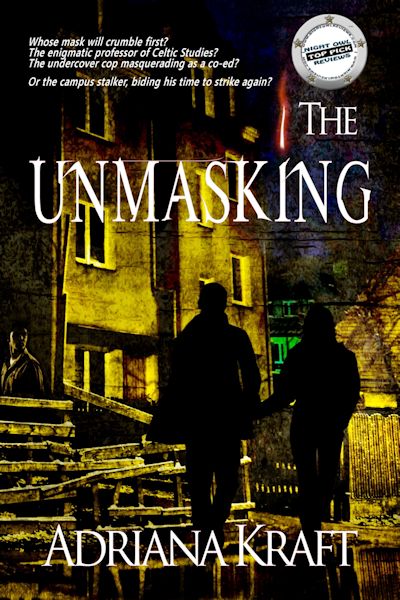
Romantic Suspense: “The Unmasking is a fascinating tale…some emotionally trying scenes.”

Erotic Romance FFM Menage: “Edgy characters, inclusive sexuality…The Reunion is not for the faint of heart.”

Erotic Romance FFM Menage: “The intimacy is genuine and breathtaking”

Subscribe to Blog via Email

Enter your email address to subscribe to this blog and receive notifications of new posts by email.

Join 1,357 other subscribers

Buy Adriana’s Books

Great Blog Guests!

Like and Follow our Author Page at SwingTowns!

If you’re curious about polyamory and the swing lifestyle, Swing Towns is a great place to check it all out!

Request an Authorgraph!

Categories

Contact Adriana

Want to get in touch? Click here to send us an email.