Book Title: The Falconer’s Apprentice
Author: Malve von Hassell
Publication Date: January 30, 2024 (second edition)
Publisher: Malve von Hassell
Pages: 214
Genre: Historical Fiction
BLURB
THE FALCONER’S APPRENTICE is a story of adventure and intrigue set in the intense social and political unrest of the Holy Roman Empire in the thirteenth century.
“That bird should be destroyed!”
Andreas stared at Ethelbert in shock. Blood from an angry-looking gash on the young lord’s cheek dripped onto his embroidered tunic. Andreas clutched the handles of the basket containing the young peregrine. Perhaps this was a dream—
Andreas, an apprentice falconer at Castle Kragenberg, cannot bear the thought of killing the young female falcon and smuggles her out of the castle. Soon he realizes that his own time there has come to an end, and he stows away, with the bird, in the cart of an itinerant trader, Richard of Brugge.
So begins a series of adventures that lead him from an obscure castle in northern Germany to the farthest reaches of Frederick von Hohenstaufen’s Holy Roman Empire, following a path dictated by the wily trader’s mysterious mission. Andreas continues to improve his falconry skills, but he also learns to pay attention to what is happening around him as he travels through areas fraught with political unrest.
Eventually, Richard confides in Andreas, and they conspire to free Enzio, the eldest of the emperor’s illegitimate sons, from imprisonment in Bologna.
BUY LINKS
This title is available to read on #KindleUnlimited.
Malve von Hassell is a freelance writer, researcher, and translator. She holds a Ph.D. in anthropology from the New School for Social Research. Working as an independent scholar, she published The Struggle for Eden: Community Gardens in New York City (Bergin & Garvey 2002) and Homesteading in New York City 1978-1993: The Divided Heart of Loisaida (Bergin & Garvey 1996). She has also edited her grandfather Ulrich von Hassell’s memoirs written in prison in 1944, Der Kreis schließt sich – Aufzeichnungen aus der Haft 1944 (Propylaen Verlag 1994).
She has taught at Queens College, Baruch College, Pace University, and Suffolk County Community College, while continuing her work as a translator and writer.
Malve has published two children’s picture books, Tooth Fairy (Amazon KDP 2012/2020), and Turtle Crossing (Amazon KDP 2023), and her translation and annotation of a German children’s classic by Tamara Ramsay, Rennefarre: Dott’s Wonderful Travels and Adventures (Two Harbors Press, 2012).
The Falconer’s Apprentice (2015/KDP 2024) was her first historical fiction novel for young adults. She has published Alina: A Song for the Telling (BHC Press, 2020), set in Jerusalem in the time of the crusades, and The Amber Crane (Odyssey Books, 2021), set in Germany in 1645 and 1945, as well as a biographical work about a woman coming of age in Nazi Germany, Tapestryof My Mother’s Life: Stories, Fragments, and Silences (Next Chapter Publishing, 2021), also available in German, Bildteppich Eines Lebens: Erzählungen Meiner Mutter, Fragmente Und Schweigen (Next Chapter Publishing, 2022), and is working on a historical fiction trilogy featuring Adela of Blois.
Title: Fangs, Fur and the Single Girl
Author: Lisabet Sarai
Paranormal Polyamory, Urban Fantasy
71,000 words, 257 pages
Smashwords and Amazon KDP
ISBN (Smashwords): 9798224674015
ASIN: B0CXF755SM
BLURB
A tragically attractive vampire, a hunky wolf-man and a skeptical but susceptible career gal. What could possibly go wrong?
Bianca Sorenson understands obsession. Her phenomenally successful Vamp magazine feeds the popular fascination with the undead. The city is full of fanatics who want to believe vampires are real. Bianca knows that’s a fantasy. Then a blond, blue-eyed blood drinker walks into her office looking for a model’s job and turns her universe upside down. Jim Bush hasn’t been a vampire for long, but his terrible history and seductive hunger undermine Bianca’s single-minded ambition and her cherished self-control.
Trying to escape from Jim’s disturbing influence, she collides with a shaggy giant of a man whose mere presence inspires irresistible lust. When Zack Kane reveals that he’s a wolf shifter and claims Bianca as his mate, she finds herself on the horns of a supernatural dilemma. How can she resolve her feelings for her two mutually hostile lovers while defusing a city-wide conflict between the vampire clique and the werewolf pack?
Fans of Twilight: get ready for a wilder ride than you ever imagined!
INTRODUCTION
Soul Mates (Plural)
The notion of finding one’s soul mate—the one individual in the universe whom you’re destined to love—is possibly the most fundamental romance trope. I can understand the appeal of this concept. It’s both reassuring and thrilling to imagine a lover perfectly attuned to your needs, your ideal complement and companion, a person who makes you whole and vice versa.
I find it hard to write stories about soul mates, though. I’m always aware that reality is much messier than romantic fantasy. Mostly I create contemporary stories where the relationships are realistically complicated. My heroines are frequently unsure about their own feelings. Sometimes they’re attracted to more than one person, in different ways. That’s one reason my back list contains so many ménage tales, I think, to save my heroines from having to choose whom they should love!
Paranormal romance frees me from the constraints of realism. In a world infused with magic, I can suspend disbelief about forever-after perfect matings. Magic imposes structure and symmetry on the tale. Perfect love may be kindled by enchantment, or may reflect age-old connections. Old souls, old lovers, may meet again in a new life. A quest, a struggle against evil forces, may bind two characters together for eternity.
In paranormal erotic romance, you can recognize your soul mate by the transcendent and irrational lust he inspires. The author doesn’t need to explain the attraction; it’s magic, a given.
What happens, though, when more than one character feels like the One? That’s the situation in my new paranormal erotic romance Fangs, Fur and the Single Girl. My heroine Bianca is a hard-headed businesswoman, supremely self-controlled and immune to flights of fancy. When she succumbs to temptation and offers her blood to an emotionally wounded vampire, though, she finds herself bound to him, both physically and psychically. Meanwhile, she encounters a shy but potent wolf shifter whose scent overwhelms her with desire. Each of them wants to claim her. Each of them feels “right”.
Is it possible to have more than one soul mate? Read Fangs, Fur and the Single Girl and find out!
EXCERPT
The shock of separation drove black spikes of pain into her temples. She opened her eyes, gasping for breath. Motes of red swam in her vision. She twisted around to look at him, in wonder and terror.
“Sorry.” He shrugged. “I didn’t know how else to convince you.”
“You’re—you’re the real thing, aren’t you?” Bianca thought her chest would burst. “Nosferatu. Undead.” She rubbed at her throbbing forehead. “But it can’t be! I never believed…”
“Believe,” he whispered, almost inaudible. Then all at once was back in his chair, leaving her heart slamming against her ribs. He smiled at her, that wide open, country-boy smile. Bianca worked to catch her breath, to calm herself to some semblance of normalcy.
It wasn’t possible. Vampires were a fiction, a legend. They were creatures of fantasy and nightmare. For some reason even she didn’t comprehend, the notion of vampires tapped into something fundamental in the human imagination. She personally knew dozens, maybe hundreds, of people who desperately wanted vampires to be real. These people, and others like them, fueled the engine of her success. However, even the most obsessed, the ones who caught and ate flies and slept in coffins in their cellars, knew the truth.
And now, here, that truth was being challenged.
He read her doubts, in her mind or on her face. He disappeared suddenly, then reappeared at her side with a glass of water. “Looks like you could use this.” Another blink and he was back where he started, smiling at her across the desk. The water was there, at her elbow, proof that she hadn’t been hallucinating. She took a sip and stopped fighting the evidence of her senses. It wasn’t possible that he was a vampire. But it was true.
“Are you very ancient?” she asked, finally. The question sounded absurd. What was she doing, continuing the interview?
Jim laughed, wholeheartedly this time.
“I’m twenty four. Or I was, that night six years ago at the frat party, when somebody’s girlfriend’s sister turned me. I admit that I was drunk. Barbara had just told me that she wanted a commitment, and I knew I wasn’t ready. I told her I loved her, but that wasn’t enough to satisfy her. So I went off, got plastered, and the next thing I knew I was in bed with this slutty-looking brunette who had very sharp teeth.” Bianca couldn’t help giggling. His tale was such a contrast to the mythology that she marketed.
“And then? What happened next? What about Barbara?”
Jim’s face grew shadowed. “Look, I don’t really want to talk about it. Not now, at least. Not here. Can we go somewhere quiet and dark for a drink?”
“You can drink? I mean, besides—well, you know.”
“Sure. I can’t eat solid food, though. It’s awful, because my senses are exceptionally acute. I can smell a juicy steak grilling half a block away. Pure torture.” He sighed. “Anyway, what about the job? Do you still think that I’m unqualified, Ms. Sorenson?”
Bianca took note of the challenge in his voice. Her body still trembled at the proximity of an honest-to-goodness creature of the night, but her mind was working overtime. How could she best use him to further her goals? To expand her vampiric empire? His photos were far too raw for her audience. Could he project the same level of intensity in a less extreme scene? And what about his co-models? Could he elicit the same sort of rapturous response from them that she had seen in Barbara’s face? Without actually taking them, of course?
She imagined herself in the woman’s position, offering her throat to those vicious fangs. The notion was seductive. She had just been given a taste. To give in completely to that kind of power—to be overwhelmed, consumed by an unnatural hunger… She’d scoffed before, but now she understood the temptation.
Bianca had always felt like the boss, even as a lower-than-dirt intern at Harper’s while she was still a student. She’d always wanted the power, never considered letting go. Now the thought of offering herself to this creature made her damp with desire. A wave of dizziness swept over her, followed by a surge of fear. This guy was dangerous. He was a threat to Bianca’s essential self. She wasn’t all that concerned that he’d kill her. No, she was afraid he’d somehow erase her, turn her into some craven, submissive creature begging to be bled. Like all those silly girls who snapped up her magazine as soon as it hit the stands.
Lisabet Sarai became addicted to words at an early age. She began reading when she was four. She wrote her first story at five years old and her first poem at seven. Since then, she has written plays, tutorials, scholarly articles, marketing brochures, software specifications, self-help books, press releases, a five-hundred page dissertation, and lots of erotica and erotic romance – over one hundred titles, and counting, in nearly every sub-genre—paranormal, scifi, ménage, BDSM, GLBT, and more. Regardless of the genre, every one of her stories illustrates her motto: Imagination is the ultimate aphrodisiac.
Book Title: The Dartington Bride
Series: Daughters of Devon
Author: Rosemary Griggs
Publication Date: 28th March 2024
Publisher: Troubador Publishing
Page Count: ~ 368 pages
Genre: Historical Fiction
Audiobook narrated by Rosemary Griggs
Blurb:
1571, and the beautiful, headstrong daughter of a French Count marries the son of the Vice Admiral of the Fleet of the West in Queen Elizabeth’s chapel at Greenwich. It sounds like a marriage made in heaven…
Roberda’s father, the Count of Montgomery, is a prominent Huguenot leader in the French Wars of Religion. When her formidable mother follows him into battle, she takes all her children with her.
After a traumatic childhood in war-torn France, Roberda arrives in England full of hope for her wedding. But her ambitious bridegroom, Gawen, has little interest in taking a wife.
Received with suspicion by the servants at her new home, Dartington Hall in Devon, Roberda works hard to prove herself as mistress of the household and to be a good wife. But there are some who will never accept her as a true daughter of Devon.
After the St Bartholomew’s Day Massacre, Gawen’s father welcomes Roberda’s family to Dartington as refugees. Compassionate Roberda is determined to help other French women left destitute by the wars. But her husband does not approve. Their differences will set them on an extraordinary path…
Excerpt
Chapter One
The Regicide
1559, Paris
‘Ton père a tué le roi!’ screamed the woman from the doorway. ‘Your father has killed the king!’ I stirred on the bed and my eyes flew open. Snatched from my dreams in a heartbeat, I strained my ears. Again, those words. ‘Your father has killed the king,’ but softer, quavering, less strident. The third time the voice was hardly more than a breath, cracking and breaking as the words dropped into the silent room like slivers of ice.
In the clammy heat of that night I had thrown the bed covers aside and my shift was clinging about me, the crumpled linen wound around me like a shroud. Caught between sleep and waking, I scrambled wildly to pull the velvet coverlet right up over my head. Knees curled up, I made myself as small as I could and tried to shut out the thumping noise thrashing in my ears. It was the sound of my heart banging like a drum.
Curiosity got the better of me and, trembling, I peeped out. A shaft of moonlight fell on the ghostly face of a woman framed in the doorway. A scream fought its way up to my voice box but no sound came. I swallowed hard and forced myself to look. She wore Clotilde’s clothes, the same green kirtle and crisp clean apron Clotilde had on when she put me to bed. But the woman was not Clotilde. My Clotilde had twinkling brown eyes set in a merry face as round and rosy as a Normandy apple. She had a soft, silvery voice as even and contented as a cat’s purr. The woman framed in the stone arch, the not-Clotilde, had put on a white mask; she had bulging, goggly eyes and a gaping mouth. She shook her head from side to side and twisted her hands in her apron as she croaked out the words again in brittle little gasps.
‘Your father has killed the king!’ So said the not-Clotilde.
‘Vite, Clotilde! Vite! Dépêche-toi.’ Other servants scurried in, pushing past her, frantically waking my sisters, shouting that they must dress quickly. I shrank back behind the hangings and tried to hide in the great bed.
All the shouting jolted her into action. The not-Clotilde stumbled forward, rushed to my coffer, picked up a cloak and heaped underwear and sleeves and caps and gowns onto it all higgledy-piggledy. She snatched the necklace from the little wooden casket by my bed, added that to the pile and knotted the cloak round it all. Somehow she got me into some clothes; not the pretty blue dress embroidered with pearls; not my best shift with the blackwork collar. Instead, with rough hands, the not-Clotilde bundled me into a plain shift and an old woollen kirtle. She was about to pick me up when I found I could scream.
‘Diane! I want Diane!’
The not-Clotilde groaned as she bent to retrieve the doll and tied the ribbon round my middle. Diane was always getting lost and this precaution saved a lot of searching.
The not-Clotilde grabbed me and clasped me to her chest, running through unlit passageways close on the heels of a scurrying maid. The maid’s hand trembled so much the candle she carried sputtered and all but died, only for the flame to revive and cast even more grotesque shadows on the old stone walls. That brought me out of my mute terror. I found my voice again and shrieked and kicked and hollered. But the not-Clotilde just gripped me more tightly as she ran on. Her breathing was ragged and wheezy by the time we were down the steps and out of the door. Strong arms hoisted me up onto a horse. I held tight to Diane the doll with one hand and rubbed the plump little fingers of my other hand up and down the familiar soft silky fabric of her gown.
The blanket they used to secure me in front of Alain du Bois, Papa’s sergeant-at-arms, was scratchy and rough. Alain had a prickly beard and his breath smelled of ale and onions. I heard muffled voices, then the hooves hammered on the cobbles, metallic echoes that lingered long in the still night air. I clutched my doll as she bumped along under the blanket. After a while I rested my head on Alain’s chest and eventually the steady beat of his heart must have lulled me to sleep.
Author and speaker Rosemary Griggs has been researching Devon’s sixteenth-century history for years. She has discovered a cast of fascinating characters and an intriguing network of families whose influence stretched far beyond the West Country and loves telling the stories of the forgotten women of history – the women beyond the royal court; wives, sisters, daughters and mothers who played their part during those tumultuous Tudor years: the Daughters of Devon.
Her novel A Woman of Noble Wit tells the story of Katherine Champernowne, Sir Walter Raleigh’s mother, and features many of the county’s well-loved places.
Rosemary creates and wears sixteenth-century clothing, a passion which complements her love for bringing the past to life through a unique blend of theatre, history and re-enactment. Her appearances and talks for museums and community groups all over the West Country draw on her extensive research into sixteenth-century Devon, Tudor life and Tudor dress, particularly Elizabethan.
Out of costume, Rosemary leads heritage tours of the gardens at Dartington Hall, a fourteenth-century manor house and now a visitor destination and charity supporting learning in arts, ecology and social justice.
Book Title: Stay with the Wagons
Series: Ghosts Along the Oregon Trail
Author: David Fitz-Gerald
Publication Date: March 15, 2024
Publisher: David Fitz-Gerald
Page Length: 221
Genre: Western, Historical Fiction
Venture deep into the uncharted wilderness and crest the continental divide.
Stay with the Wagons is the enthralling third chapter in the Ghosts Along the Oregon Trail series. Dorcas Moon has discarded her mourning dress and yearns for freedom and independence amidst the vast frontier. But a perilous world and a commanding wagon master keep her tethered. Ultimately, it’s a brutal bout of fever and ague that confine her to camp.
Relentless disasters and beguiling challenges unfold in this installment. A young man is crushed beneath a wagon wheel. Dorcas’ son breaks an arm, a grizzly bear attacks the wagon train, and the looming threat of attacking outlaws whips the emigrants into a worried frenzy. How many must perish before they reach the end of the trail?
As chaos reigns, her troubled daughter, Rose, disappears once again, leading Dorcas on a perilous quest. Tracking Rose to a sacred site, they encounter a blind seer and a legendary leader, Chief Washakie. Rose’s enchantment with Native American adornments sparks Dorcas’ concern about an unexpected suitor and raises worries about Rose’s age.
Stay with the Wagons is bursting with action, adventure, and survival. It is a story of resilience and empowerment on the Oregon Trail.
Claim your copy now and re-immerse yourself in a tale of high-stakes survival, unexpected alliances, and the indomitable spirit of Dorcas Moon.
Buy Links:
This title / series is available to read on #KindleUnlimited.
David Fitz-Gerald writes westerns and historical fiction. He is the author of twelve books, including the brand-new series, Ghosts Along the Oregon Trail set in 1850. Dave is a multiple Laramie Award, first place, best in category winner; a Blue Ribbon Chanticleerian; a member of Western Writers of America; and a member of the Historical Novel Society.
Alpine landscapes and flashy horses always catch Dave’s eye and turn his head. He is also an Adirondack 46-er, which means that he has hiked to the summit of the range’s highest peaks. As a mountaineer, he’s happiest at an elevation of over four thousand feet above sea level.
Dave is a lifelong fan of western fiction, landscapes, movies, and music. It should be no surprise that Dave delights in placing memorable characters on treacherous trails, mountain tops, and on the backs of wild horses.
Book Title: Covered in Flour
Author: Charles Presti
Publication Date: October 10th, 2023
Publisher: Charles Presti
Page Length: 220
Genre: Historical Fiction
Blurb:
It’s 1968 in Whisper Haven, and 8-year-old Carl Pozzi’s world is about to change.
For eight-year-old Carl Pozzi, 1968 begins like any other year—playing kickball with friends and enjoying the comforting aroma of Mom’s pasta dinners in their predominantly white suburban Whisper Haven home. But when Carl’s teacher introduces lessons about racial prejudice and injustice, his worldview cracks wide open.
How far can innocence stretch before it snaps?
As Carl flips through the pages of his 3-ring binder, each lesson serves as a gateway to a journey of self-discovery and understanding. It’s an expedition that not only changes him but reshapes his whole concept of family and justice—especially as he watches his father put on a police uniform during one of the most fraught periods in American history.
“Covered in Flour” is not just a heartfelt stroll down memory lane. It’s a captivating coming-of-age saga that digs deep beneath the surface of suburban tranquility. It beckons you to reconsider long-held family values and confront the societal norms you’ve taken for granted.
Written with genuine love, humor, and a tinge of sorrow, this story blends the nostalgia of tradition with the inevitability of change, offering a stirring mix that leaves you pondering long after the last page is turned. This book isn’t just a delightful read; it’s a catalyst for introspection, freshly baked and served for your soul.
Reflecting on 1968 from the perspective of being eight at the time and in the context of “Covered in Flour,” the preparation of my father for police riot control is the event most indelibly etched in my memory. Witnessing my father don his riot gear—white helmet, wooden baton, and notably, the sap, a leather-wrapped club filled with a metal rod—left a profound imprint on my young mind. The sap, in particular, symbolized the seriousness and danger of the situation, a stark contrast to the innocent and mundane aspects of my daily life.
The severity of the unrest during 1968, including the riots that erupted in nearby urban neighborhoods, was brought home not just by seeing my father prepare for duty but through the collective anxiety that permeated our household.
Much of what I learned about the events of that year came through snippets of overheard conversations, the tense and worried expressions of my family, and the fragmented images broadcast on television. School also played a role, with discussions and mock elections mirroring the national climate of division and unrest. Yet, the personal experience of my father’s involvement in riot control brought the reality of these historical moments to life for me, offering a firsthand glimpse into the complexities and dangers of adult responsibilities and societal conflicts.
This duality of witnessing both the public and private responses to the crisis of 1968 through the eyes of a child intertwined with the reflections of the adult I would become underscores the profound impact of that year. It was a turning point not just for the nation but in my understanding of the world, marking the end of innocence and the beginning of a more complex awareness of the societal forces around us.
Author Bio:
Charles Presti, emerging from the sun-drenched shores of Pensacola, Florida, crafts narratives that echo with the richness of his varied life. His journey from a USF College of Medicine graduate to a storyteller is as unconventional as it is inspiring. Drawing from his days as a physician and informatics specialist, Charles infuses his writing with a rare blend of scientific precision and heartfelt emotion. His debut novel, “Covered in Flour,” is a vivid tapestry of his Italian-American heritage, his experiences in the whirlwind era of the 1960s, and his personal journey as a gay man. These elements converge to create stories that not only entertain but resonate deeply with themes of family, discovery, and the delicate dance of life’s everyday moments.
Charles’s passion for storytelling is paralleled only by his commitment to fostering diversity and inclusion. Alongside his husband, Mike Bruce, and their beloved Wheaton Terrier, Zoey, he is a vibrant force and founder of “Sunday’s Child,” a local charity dedicated to nurturing inclusion and empowering LGBTQ+ and other marginalized communities through grants to local charities. A pillar in the Emerald Coast Writers group, he continually explores the nuances of identity, heritage, and a sense of belonging. Discover more about Charles’s captivating world and “Covered in Flour” at www.coveredinflour.com, where each story is a window into a life lived fully and authentically.
Series: Château de Verzat
Author: Debra Borchert
Book Titles: Her Own Legacy (Book 1) Her Own Revolution (Book 2)
Publication Date: Her Own Legacy: 9/1/22 Her Own Revolution: 7/14/23
Publisher: Le Vin Press
Page Length: Her Own Legacy: 568 Her Own Revolution: 422
Blurb
Her Own Legacy:
A Woman Fights for Her Legacy as the French Revolution Erupts
Determined to inherit her family’s vineyard, Countess Joliette de Verzat defies society’s rules, only to learn of her illegitimate half-brother, the rightful heir.
Her Own Revolution:
A Woman Forges a Treacherous Path to Save Hundreds from the Guillotine
If Geneviève Fouquier-Tinville had the same rights as a man, she wouldn’t have to dress like one. A suspenseful page-turner led by a renegade heroine whose compassion for innocent people leads to both loss and love.
Buy Links:
*Her Own Legacy will be only 0.99 in the UK, CA and AU stores
from March 5th – 15th, 2024!*
Her Own Legacy
Nantes, August 21, 1792 Joliette must board a ship during a storm
The officer clambered up the ropes to the ship’s deck fast as a monkey. A few lights from the vessel blinked and shimmered against the choppy water. The sky was indiscernible from the water. Darkness, as deep as that of the tunnels, fell.
Henri whispered to Étienne and turned to me. “You must climb the ropes. I will be above you, and Étienne will be below you.”
Everything stopped—my breath, my heart, my thoughts. The wind stirred a cacophony of waves crashing against the hulls. Cold spray drenched me. I stared at Henri’s eyes, dark and pinched.
“Climb…to the ship?”
He tied a rope around my waist and the other end around his own. He put out his hand. “Hurry. Before the storm worsens.” My mouth would not open. Henri’s fingers wrapped around my wrist. He stepped onto the rope ladder.
Étienne held out the bottom rung. My feet were part of the deck, as if rooted to it. Étienne took my other hand and coaxed, “Do not look down. Only up, at Henri.”
The makeshift ladder swayed above. Waves leaped through its rungs. Henri’s foot slipped, but he caught himself. “The first step’s the most difficult, but you’re braver than I am.” He gently tugged me.
Like Papa. They both knew I could not resist a challenge. I pressed my feet to the deck, lifted my foot, then grasped the side rope. A wave crashed, and the deck dropped from below me, leaving my foot pawing the air. I screamed but did not hear it. I clung to the side rope. Étienne’s hand pressed my foot onto the rung. I panted for breath and pressed my forehead against the ship. Cold, black waves jumped and swallowed my foot.
“Keep looking up!” Étienne shouted.
My legs vibrated so I pressed all my weight into my foot as soon as it found a rung. A sliver of pale light spilled over the ship’s deck. I wanted to fly to it.
The wind skirled, twisting the rope and me around so I faced out over the harbor. Like a giant hand it pushed me away from the ship, then slammed me back against its hull. My breath burst from me. I lost my grip. Henri held me tighter, and another hand grasped my flailing arm. My legs pedaled. Hands gripped my arms and hauled me up over the rail and onto the deck, landing me like a fish. I lay on my stomach, gasping as the world spun and rain thundered.
Henri draped a woolen blanket over me. He crouched down, helped me to sit up, and rubbed my back.
As if by magic, a pair of tall, shiny black boots appeared before us. The man’s uniform was spotless, all white, trimmed in red and blue, with brass epaulettes broadening his shoulders—le Capitaine. He looked down. Water streamed off his tricorne and puddled onto the blanket.
“You wish passage?” His voice was rough as the wind.
Henri stood. “Yes, Monsieur, le Capitaine.”
The man chuckled. “With a woman?”
Feeling like I still clung to the rope, I pushed myself up with the words searing my mouth. “I arranged for the wine shipment—”
Henri gripped my arm and pulled me back.
Le Capitaine let out a grunt, turned, and walked away. “We sail when the tide turns.”
Author Bio
Debra’s the author of the Château de Verzat series that follows headstrong and independent women and the four-hundred loyal families who protect a Loire Valley château and vineyard, and its legacy of producing the finest wines in France during the French Revolution. Her Own Legacy published 2022, Her Own Revolution published 2023, and Her Own War will be published in 2024. A passionate cook, she also wrote a companion cookbook to the series: Soups of Château de Verzat, A Culinary Tribute to the French Revolution, 2023.
A graduate of the Fashion Institute of Technology, she weaves her knowledge of textiles and clothing design throughout her historical fiction. She lives in the Pacific Northwest with her family and standard poodle, named after a fine French Champagne.
Shining a torch into the heart and mind
of England’s most tyrannical king.
BOOK INFORMATION
Book Title: A Matter of Time: Henry VIII, the Dying of the Light (Book Three)
Series: The Henrician Chronicle
Author: Judith Arnopp
Publication Date: 2nd February 2024
Publisher: independently published
Page Length: 302
Genre: Historical Biographical Fiction
Blurb:
With youth now far behind him, King Henry VIII has only produced one infant son and two bastard daughters. More sons are essential to secure the Tudor line, and with his third wife, Jane Seymour dead, Henry hunts for a suitable replacement.
After the break from Rome, trouble is brewing with France and Scotland. Thomas Cromwell arranges a diplomatic marriage with the sister of the Duke of Cleves but when it comes to women, Henry is fastidious, and the new bride does not please him. The increasingly unpredictable king sets his sights instead upon Katherine Howard and instructs Cromwell to free him from the match with Cleves.
Failure to rid the king of his unloved wife could cost Cromwell his head.
Henry, now ailing and ageing, is invigorated by his flighty new bride but despite the favours he heaps upon her, he cannot win Katherine’s heart. A little over a year later, broken by her infidelity, she becomes the second of his wives to die on the scaffold, leaving Henry friendless and alone.
But his stout heart will not surrender and leaving his sixth wife, Katheryn Parr, installed as regent over England, Henry embarks on a final war to win back territories lost to the French more than a century before. Hungry for glory, the king is determined that the name Henry VIII will shine brighter and longer than that of his hero, Henry V.
Told from the king’s perspective, A Matter of Time: Henry VIII: the Dying of the Light shines a torch into the heart and mind of England’s most tyrannical king.
Buy Links:
Universal Buy Links to the three titles in the series:
It is good to be home, and my spirits remain high. I jest with my gentlemen as my beard, greyer now than gold, is trimmed, my nails clipped. I select a doublet of black with silver thread embellishing the cuffs, the slashes across the sleeves and chest revealing a fine silk shirt beneath.
My looking glass reflects a king, a man in his prime, a wise and honest man. As my dress sword is arranged at my hip, I take the gloves Denny is offering and tuck them into my girdle.
“Where is my psalter?” I ask, and it is instantly produced. I tuck it beneath my arm and make my way to the chapel, wondering as I go if Katherine will make it to Mass so early.
My mind is not on prayer this morning. I am feeling spry enough to go for a ride. Brandon has returned to court this week, perhaps we can ride out together as we used to, if he is feeling up to it. I often forget that he too grows old.
The sound of the choir greets me, their voices ascending to the dizzy heights of the blue and gold ceiling. Immediately, I feel contrition that my mind had strayed to sport rather than giving thanks to God for another day. Before I enter and take my seat, I rearrange my face into a pious expression. But as I sit down, I notice a folded slip of paper. I pick it up, look about the chapel to discover the author of the note, but when no man meets my eye, I unfold the message and … the world around me crumbles.
Author Bio:
A lifelong history enthusiast and avid reader, Judith holds a BA in English/Creative writing and an MA in Medieval Studies. She lives on the coast of West Wales where she writes both fiction and non-fiction. She is best known for her novels set in the Medieval and Tudor period, focusing on the perspective of historical women but recently she has been writing from the perspective of Henry VIII himself.
Judith is also a founder member of a re-enactment group called The Fyne Companye of Cambria which is when she began to experiment with sewing historical garments. She now makes clothes and accessories both for the group and others. She is not a professionally trained sewer but through trial, error and determination has learned how to make authentic looking, if not strictly historically accurate clothing. Her non-fiction book, How to Dress like a Tudor was published by Pen and Sword in 2023.
Her novels include:
A Song of Sixpence: the story of Elizabeth of York
The Beaufort Chronicle: the life of Lady Margaret Beaufort (three book series)
A Matter of Conscience: Henry VIII, the Aragon Years (Book One of The Henrician Chronicle)
A Matter of Faith: Henry VIII, the Days of the Phoenix (Book Two of The Henrician chronicle)
A Matter of Time: Henry VIII, the Dying of the Light
The Kiss of the Concubine: a story of Anne Boleyn
The Winchester Goose: at the court of Henry VIII
Intractable Heart: the story of Katheryn Parr
Sisters of Arden: on the Pilgrimage of Grace
The Heretic Wind: the life of Mary Tudor, Queen of England
Peaceweaver
The Forest Dwellers
The Song of Heledd
Previously published under the pen name – J M Ruddock.
The Book of Thornhold
A Daughter of Warwick: the story of Anne Neville, Queen of Richard III
Book Title: The Shadow Network
Series: Secret Agent Series (but can be read as a stand-alone)
Author: Deborah Swift
Publication Date: 13th February 2024
Publisher: HQ Digital
Page Length: 376
Genre: Historical Fiction / WW2
BLURB
One woman must sacrifice everything to uncover the truth in this enthralling historical novel, inspired by the true World War Two campaign Radio Aspidistra…
England, 1942: Having fled Germany after her father was captured by the Nazis, Lilli Bergen is desperate to do something pro-active for the Allies. So when she’s approached by the Political Warfare Executive, Lilli jumps at the chance. She’s recruited as a singer for a radio station broadcasting propaganda to German soldiers – a shadow network.
But Lilli’s world is flipped upside down when her ex-boyfriend, Bren Murphy, appears at her workplace; the very man she thinks betrayed her father to the Nazis. Lilli always thought Bren was a Nazi sympathiser – so what is he doing in England supposedly working against the Germans?
Lilli knows Bren is up to something, and must put aside a blossoming new relationship in order to discover the truth. Can Lilli expose him, before it’s too late?
Set in the fascinating world of wartime radio, don’t miss The Shadow Network, a heart-stopping novel of betrayal, treachery, and courage against the odds.
EXCERPT
England, 1940
The knock came again.
‘Mads?’ Lilli called.
Maddie came out of her room with the newspaper under her arm, slopping to the door in her slippers. ‘You could see who it is,’ she grumbled. ‘Probably someone collecting for the Sally Army.’
Lilli let the square, no-nonsense figure of Maddie push past her to unlock the chain and the Yale lock, just as the insistent knock came again.
‘All right, all right, I’m coming.’ Maddie yanked the door open and three men forced their way into the hall. One in a wet trilby hat followed by two policemen.
‘Lilliana Bergen?’ asked the man in the trilby.
‘No, I’m Madeleine Kettering,’ Maddie said. ‘That’s Lilli. What do you want?’
The three men surrounded Lilli before she even had time to blink.
‘What is it? What have I done?’ She tried to back away, a chill rippling down her spine. This was how they came for people, back in Germany.
‘I’m sorry, miss,’ the man in the trilby said, ‘but all enemy aliens have to come with us. Orders of the government.’
Enemy aliens? No, it must be a mistake. ‘You’ve got the wrong person. I’m a refugee. I came here to escape the Nazis. I’ve been in London more than two years.’
‘We have our orders,’ one of the policemen said. ‘You can take a suitcase with you though, one suitcase.’
The words hit her like a fist. One suitcase. That was what they said to Papa. And she’d no word of him since.
But this was England, not Germany. ‘It’s a mistake, I tell you. I have all the correct paperwork. Ask anyone. I’ve a job here, friends here. I’m about to go to work. You can’t possibly believe I—’
‘We’ll give you five minutes to pack,’ the second, burlier policeman said.
‘Let me speak to someone,’ Maddie said. ‘She’s done nothing. She’s about to train as a warden with the WRVS. The letter came today. Wait there, I’ll get it.’
‘No!’ Lilli tried to protest but Maddie had gone to get the letter from the mantelpiece. The men looked a little more uncertain.
‘Here!’ Maddie said, thrusting it into their hands.
One of the men looked at the envelope. ‘Lily Berg? According to our records, you’re Lilliana Bergen. Who is this Lily Berg? And it says you’re Welsh.’ He turned to Maddie. ‘She’s not Welsh, is she?’
‘They got it wrong. It must be a mistake . . .’ Lilli tailed off. She was caught, and couldn’t answer.
‘I can vouch for her good character,’ Maddie said, ‘and so can her employer, Reg Benson; she works as a singer and as a domestic for Mrs—’
‘It doesn’t matter,’ said the man in the trilby. ‘All that will be looked into later.’
‘It’s an offence for a refugee to use a false name,’ the big policeman said. ‘She’s to come with us. Fetch your things, miss, or we’ll take you without them.’
Lilli looked at Maddie desperately, unable to believe what she was hearing.
‘Five minutes.’ The trilby man tapped his watch in a manner designed to intimidate.
She ran up the stairs again, her heart thudding. What to pack? Practical clothes. She was still wearing the silk dress, so she grabbed a cardigan and knitted jersey, plus a blouse and a skirt from the rail in the wardrobe, and another pair of flat shoes, the ones she used as a cleaner.
She was stopped in her tracks by the photo of her father, staring out at her from its silver frame.
Oh, Papa, she thought. Where will they take me?
She swept it up and pressed it to her heart, then thrust it into the inside pocket of her suitcase. From the dressing table she retrieved the gold Star of David on a chain that her mother had given her as a child. She never wore it, as it drew too much attention, but she couldn’t leave it behind.
‘Ready?’ A man’s voice from downstairs.
She grabbed her sheet music from the bedside table and at the last minute remembered her nightdress and squashed it in on top.
When she came down Maddie was complaining about how it was ridiculous, and she’d lose money from not having Lilli’s wages coming in.
‘Then get another lodger,’ the man in the trilby said. ‘One that isn’t a German.’
‘She’s a refugee,’ Maddie protested. ‘She came to get away from Hitler.’
‘Same difference.’ The burly policeman shrugged.
A police van idled at the kerb in a wreath of exhaust smoke. The officers yanked open the back doors and pushed Lilli to get in. Inside shivered another woman, an older lady, whose white face and carpet bag stuffed to overflowing, told Lilli she’d been caught equally unprepared.
‘Where are they taking us?’ Lilli asked.
The woman shook her head violently, her mouth sealed shut.
Lilli turned to see Maddie yelling, ‘I’ll report you! It’s disgusting! You can’t do this!’ and thumping on the side of the van. A noise that felt like small explosions. Then Maddie’s desperate voice; ‘Lilli! Write, hear me? You’d better write!’
MY REVIEW
Eight decades after the World War Two era, we continue to discover more and more about the colossal efforts of the Allied spy network and subversive efforts that collectively, ultimately, brought Hitler down.
In The Shadow Network, Author Deborah Swift has plunged us into a richly detailed and thrilling encounter with one of these operations: The clandestine broadcasts masquerading as Echt Deutsch (True German) that delivered false and disheartening information to the Reich troops, beginning in 1942.
I especially appreciated the author’s choice of a part-Jewish German refugee as her heroine. Lilli’s personal story kept me as a reader immersed in the horror of the Nazi regime and the absolute necessity of winning the war. The fear that held Lilli back from exposing what she knew was real, and it nearly cost her – and their broadcasting team – everything.
Deborah Swift is the English author of eighteen historical novels, including Millennium Award winner Past Encounters, and The Lady’s Slipper, shortlisted for the Impress Prize.
Her most recent books are the Renaissance trilogy based around the life of the poisoner Giulia Tofana, The Poison Keeper and its sequels, one of which won the Coffee Pot Book Club Gold Medal. Recently she has completed a secret agent series set in WW2, the first in the series being The Silk Code.
Deborah used to work as a set and costume designer for theatre and TV and enjoys the research aspect of creating historical fiction, something she loved doing as a scenographer. She likes to write about extraordinary characters set against the background of real historical events. Deborah lives in North Lancashire on the edge of the Lake District, an area made famous by the Romantic Poets such as Wordsworth and Coleridge.
In 1877, twenty Irish coal miners hanged
for a terrorist conspiracy that never occurred.
BLURB
Anywhere But Schuylkill is the story of one who escaped, Mike Doyle, a teenager trying to find a new home before his alcoholic uncle kills one of his siblings. He takes a job with a union leader, who is also a gangster, while secretly courting his daughter, and quickly learns that the gang leader, cops and rival gang all want him dead.
BOOK INFORMATION
Title: Anywhere but Schuykill
Series: The Great Upheaval Trilogy, Book One
Author: Michael Dunn
Publisher: Historium Press, September, 2023
ASIN: B0CJVW1BP2
Print length: 393 pages
Genres: Historical Fiction, U.S. Historical Fiction, 19th Century
Michael Dunn writes Working-Class Fiction from the Not So Gilded Age. Anywhere But Schuylkill is the first in his Great Upheaval trilogy. A lifelong union activist, he has always been drawn to stories of the past, particularly those of regular working people, struggling to make a better life for themselves and their families.
“There was a time in the history of France when the poor found themselves oppressed to such an extent that forbearance ceased to be a virtue, and hundreds of heads tumbled into the basket. That time may have arrived with us.”
A cooper said this to a crowd of 10,000 workers in St. Louis, Missouri in July, 1877. He was referring to the Paris Commune, which happened just six years prior. Like the Parisian workers, the Saint Louis strikers openly called for the use of arms, not only to defend themselves against the violence of the militias and police who were sent to crush their strike, but for outright revolutionary aims:
“All you have to do is to unite on one idea—that workingmen shall rule this country. What man makes, belongs to him, and the workingmen made this country.”
The Economic Roots of the Great Upheaval of 1877
Run on the Fourth National Bank, New York City, 1873. Public Domain, https://commons.wikimedia.org/w/index.php?curid=517809
The Great Upheaval was the first major worker uprising in the United States. It began in the fourth year of the Long Depression which, in many ways, was worse than the Great Depression of the 1930s. It lasted twenty-three years and included four separate financial panics. In 1873, over 5,000 business failed. Ove one million Americans lost their jobs. In the following two years, another 13,000 businesses failed. Railroad workers’ wages dropped 40-50%. And one thousand infants were dying each week in New York City.
The Long Depression followed a period of rapid wealth accumulation by a few large capitalists, particularly railroad owners. Congress granted them huge swaths of land in 1862. The following year, they passed the National Banking Act, greatly increasing the wealth and power of financial capitalists. In 1864, they placed a 47% tariff on foreign goods, further increasing the wealth of domestic capitalists. They also passed legislation making it easier to import foreign laborers, leading to the largest immigration wave in U.S. history. The lack of regulation and oversight produced large scale greed and corruption. In 1873, Jay Cooke and Company, the largest bank in the U.S., went bankrupt. Cooke’s failure led to a 10-day closure of the New York Stock exchange.
The Great Upheaval Begins
By 1877, workers had suffered four years of wage cuts and layoffs. In July, the B&O Railroad slashed wages by 10%, their second wage cut in eight months. On July 16, 1877, the trainmen of Martinsburg, West Virginia, refused to work. They occupied the rail yards and drove out the police. Local townspeople backed the strikers and came to their defense. The militia tried to run the trains, but the strikers derailed them and guarded the switches with guns. They halted all freight movement, but continued moving mail and passengers, to successfully maintain public support. When militia reinforcements were sent in, most mutinied or refused to fight. Many were former or current rail workers. 70 freight engines and 600 freight cars were soon out of service in the Martinsburg yard, as all divisions of B&O workers walked off the job. The Governor sent in a militia from Wheeling, but they also joined the strike.
The Strike Wave Spreads Along the Rail Lines
Maryland National Guard’s Sixth Regiment fighting its way west along main downtown commercial thoroughfare Baltimore Street through Baltimore, Maryland, July 20, 1877. Public Domain.
News of the Martinsburg victory quickly spread, inspiring other strikes along the B&O. But most of the unions took no action. Some were so heavily infiltrated by spies and Pinkertons that the bosses easily thwarted any actions they did take. Consequently, the strikes were almost entirely spontaneous wildcat actions. And the uprisings quickly spread from New York to Louisiana, and from Baltimore to the west coast. The majority of protests were directed against the bosses and the authorities. But in San Francisco, they turned into an anti-Asian riot.
In the Keyser-Piedmont region of West Virginia, black and white coal miners united to halt a train guarded by fifty U.S. soldiers. They posted a handbill that said: “Let the clashing of arms be heard. In the defense of our families, we shall conquer or we shall die.” In Baltimore, soldiers shot and killed between ten and twenty-two strikers.
Violence in Pennsylvania
In Lebanon, Pennsylvania, a National Guard company mutinied. In Altoona, strikers surrounded the troops and sabotaged the engines, forcing the soldiers to surrender. The soldiers then fraternized with the striking workers and marched home to the accompaniment of singers from an African-American militia company. In Harrisburg, the state capital, teenagers made up a large part of the multi-ethnic crowd.
Burning of Union Depot, Pittsburgh, Pennsylvania, July 21–22, 1877, engraving from Harper’s Weekly. Public Domain.
In Pittsburgh, workers struck against the mighty Pennsylvania Railroad, the largest corporation in the world. Young boys and men from the mills and factories joined in. Again, the militia refused to attack the workers. Many soldiers joined the strikers. So, the Governor brought in the Philadelphia militia. These were battle-hardened soldiers from the Civil and Indian Wars, with no ties to the Pittsburgh community, and no qualms about shooting civilians. They opened fire on the crowd, killing twenty workers in five minutes. The crowd retreated, but returned with their own militia. They burned the rail yards to the ground, holding off firefighters at gunpoint. The Philadelphia militia hid in the roundhouse, but the fire forced them to flee. The workers and police fired on them as they ran. In nearby Allegheny, strikers looted the armory. They dug trenches, took over the telegraph and railroad, and controlled all economic and political functions.
The South
Black longshoremen initiated a strike in Galveston, Texas, demanding a raise to $2.00 per day. Not only were they victorious, but they inspired white workers to join them. In Louisville, Kentucky, black sewer workers initiated a strike wave that quickly included coopers, textile workers, brick makers, cabinet workers and factory workers. Black workers in many parts of the south demanded equal pay to whites.
Chicago
In Chicago, the Workingmen’s Party (affiliated with the First International, in Europe), organized a rally of six thousand people. At this gathering, a former Confederate Army Officer from Waco, Texas, named Albert Parsons, gave a fiery speech. Parsons was radicalized by the events of the Great Upheaval. In the years following it, he became one of the nation’s leading anarchist organizers. He was executed in 1887 as one of the Haymarket Martyrs who had been fighting for the eight-hour workday. His widow, Lucy Parsons, an African American woman, went on to cofound the radical Industrial Workers of the World, in 1905, along with Mother Jones, Eugene Debs, Big Bill Haywood, and others.
The next day, a crowd of young people began moving through the railroad yards, closing down the freights. They went to the factories and stockyards and called out the workers. They shut down the brickyards and lumberyards. That same day, Albert Parsons was fired from his job with the Chicago Times and declared blacklisted.
As in other big cities, the police attacked the protestors in Chicago. One journalist wrote, “The sound of clubs falling on skulls was sickening for the first minute, until one grew accustomed to it. A rioter dropped at every whack, it seemed, for the ground was covered with them.” Police fired into the protest, killing three men. The next day, an armed crowd of 5,000 fought the police, who fired again, killing several more. During the Battle of the Viaduct (July 25, 1877), the police slaughtered thirty workers and injured over one hundred.
The Saint Louis Commune
The most well-organized and lasting uprising of the Great Upheaval occurred in Saint Louis. For nearly a week, workers controlled all functions of society. It was the only town besides Chicago where the actions were predominantly organized by socialists, led by the Workingmen’s Party. The party was organized in four sections, by nationality, to facilitate communication across different languages. Strikers included skilled and unskilled workers. Black and white workers united, even though the unions were all segregated. At one rally, a black steamboat worker asked the crowd if they would stand behind the levee workers, regardless of race. “We will!” they shouted back. Another speaker said, “The people are rising up in their might and declaring they will no longer submit to being oppressed by unproductive capital.”
Women played a prominent role in St. Louis, fighting shoulder to shoulder with the men. According to one news account: “Women with babes in arms joined the enraged female rioters. The streets were fluttering with calico of all shades and shapes. Hundreds were bareheaded, their disheveled locks streaming in the wind. Many were shoeless. Some were young, scarcely women in age, and not at all in appearances. Dresses were tucked up around the waist, revealing large underthings. Open busts were common as a barber’s chair. Brawny, sunburnt arms brandished clubs. Knotty hands held rocks and sticks and wooden blocks. Female yells, shrill as a curfew’s cry, filled the air.” The police clubbed and brutalized the women with the same enthusiasm they used on the men.
The First Uprising Against the Oligarchy
Karl Marx enthusiastically followed events during the Great Strike. He called it “the first uprising against the oligarchy of capital since the Civil War.” He predicted that it would inevitably be suppressed, but might still “be the point of origin for the creation of a serious workers’ party in the United States.”
Ironically, many of the Saint Louis activists were followers of Ferdinand Lasalle, whom Marx detested. And some, like Albert Currlin, a Workingmen’s Party leader in Saint Louis, were outright racists, who mistrusted the black strikers and refused to work with them, contributing to the ultimate failure of the commune.
Labor’s Downfall
Despite the many small victories, the upheaval ended by early August. No social revolution occurred and labor ultimately lost. Federal troops and militias had slaughtered 100 workers and imprisoned thousands more. Most workers did not get a pay raise. And in the aftermath, legislators passed numerous anti-union laws.
However, capital’s victory was not quick, nor easy. 100,000 workers had participated in the strikes. More than half the freight on the nation’s 75,000 miles of track had been halted. The strikers maintained considerable public support. The initial ineffectiveness of the military was due, in part, to the fact that many soldiers had enlisted just to secure a steady income during the depression, only to be forced to work for months without pay. Also, troop levels were relatively small, as many soldiers were still bogged down in battles with the Nez Perce, and with battles against the Indigenous populations of the Rio Grande and New Mexico. Lastly, capitalism itself was relatively young and inexperienced. The bosses weren’t as effective at undermining worker solidarity as they are today. They hadn’t yet mastered how to control public sentiment. But the capitalists did learn a lot from the Great Strike of 1877. In the wake of the uprisings, they constructed many of the old stone armories we see across the country today, in order to provide greater fire power for the next strike wave.
About The Great Upheaval Trilogy
About ten years ago, I set out to write an epic novel about these events. Cleary, there was plenty of excitement for a great work of historical fiction, but far too much for a single novel. So, I decided to write a series, the Great Upheaval Trilogy. And as I did the research, I discovered that just weeks before the Great Upheaval began, twenty innocent Irish miners were hanged in Schuylkill County, Pennsylvania—ten in a single day. It was the second largest mass execution in U.S. history. They were convicted of murder, accused of being terrorists from a secret organization called the Molly Maguires. Dozens were imprisoned. All were union activists. Some held public office, as sheriffs and school board members. And a few of the accused Mollies escaped and were never heard from again.
This became the basis for the first book in the series, Anywhere But Schuylkill, (published by Historium Press, September, 2023), which follows the life of a teenage coal miner, Mike Doyle, one of the Mollies who got away. I am currently working on the sequel, Red Hot Summer in the Big Smoke, which takes place during the train strike in Pittsburgh, and follows the life of Mike’s kid sister, Tara.
Check out other stops on the tour for additional informative essays by the author:
Book Title: Dude or Die
Series: H Double Bar Dude Ranch series
Author: Lynn Downey
Publication Date: October 15, 2023
Publisher: Pronghorn Press
Page Length: 328
Genre: Historical Fiction
BLURB:
It’s 1954, and San Francisco writer Phoebe Kelley is enjoying the success of her first novel, Lady in the Desert. When Phoebe’s sister-in-law asks her to return to Tribulation, Arizona to help run the H Double Bar Dude Ranch, she doesn’t hesitate. There’s competition from a new dude ranch this year, so the H Double Bar puts on a rodeo featuring a trick rider with a mysterious past. When accidents begin to happen around the ranch, Phoebe jumps in to figure out why, and confronts an unexpected foe. And a man from her own past forces her to confront feelings long buried. Dude or Die is the second book in the award-winning H Double Bar Dude Ranch series.
BUY LINK:
This title is available to read on #KindleUnlimited.
Synopsis: It’s 1954, and San Francisco writer Phoebe Kelley returns to the H Double Bar dude ranch in Tribulation, Arizona to help her late husband’s sister Mary, her husband Sam, and their young son Joe run the ranch for the fall season. Phoebe and the ranch were introduced in the first book in this series, Dudes Rush In. There’s stiff competition from a new guest ranch in town, called the Desert Grande, run by a powerful woman named Thelma Powell who seems determined to put other ranches out of business. Phoebe and Mary decide to put on a “dudeo,” a rodeo for both the ranch’s wranglers and the visiting dudes, to thwart Thelma’s efforts. They bring in a trick rider from California with a mysterious past named Eden Williams, and a man from Phoebe’s past also reappears. When accidents happen around the ranch, Phoebe must confront an unexpected foe.
Excerpt from Chapter 20:
Virgil Freeman, a man from Phoebe’s past in Dudes Rush In, is visiting the H Double Bar. They have breakfast the morning after a mysterious midnight fire in a tool shed, and after Phoebe acts on her suspicion that one of the guests is in league with Thelma Powell and the Desert Grande guest ranch.
“How are you this morning?” Virgil asked.
“OK, I guess. I managed to get some sleep, how about you?”
“Oh, I’m fine. Have you seen Mary?”
“Yes, I went over to the site of the fire a few minutes ago, and she is there talking with Sam about rebuilding. She already called her friend at the Bar K and he’s bringing over some tack for today’s trail ride.”
“It’s wonderful the way all the ranches pull together,” said Virgil, who had given his plate to Maryanne and asked for seconds on bacon.
“I know, it’s a very special kind of business,” said Phoebe. “Well, except for the Desert Grande, of course.”
“That place doesn’t sound much like a dude ranch to me.”
“That’s what Mary says. She is sure they are behind some of the mishaps that we’ve had around here.”
“Why would they do that?”
“To put her out of business? Who knows.”
“Have you had any more trouble here from that Carter fellow?”
Phoebe hesitated a moment, then made a decision.
“Well, not exactly trouble, but I did find out something about the both of them.”
She told Virgil about seeing Jayne at the Desert Grande, and about what she found when she searched the Carters’ cabin.
His reaction surprised her. She had never seen Virgil look mad.
“Phoebe, what were you thinking? First of all, that was completely illegal, and what if they came back early and found you? That could have been a disaster for Sam and Mary and their business. And dangerous for you. That Carter guy has a temper, he could have hurt you.”
Phoebe was shocked at his scolding tone, and then she got angry.
“Don’t lecture me, I was very careful, and I can take care of myself.”
“Just because you survived the last time a man threatened you, doesn’t mean it will happen again.”
A guest at the H Double Bar had been killed two years ago, and his murderer pulled a gun on Phoebe when she confronted him. She got away, but had nightmares for a long time.
“I’m worried about you,” Virgil continued.
Phoebe saw a couple of the guests looking their way and lowered her voice.
“Well, you don’t have to be,” Phoebe retorted.
“I know you love Mary and Sam, but does your loyalty to your late husband mean you have to put yourself in danger for them?”
Phoebe gaped at him.
“What the hell are you talking about?”
Maryanne brought Virgil’s bacon at that moment, saw the look on his face, and Phoebe’s, and set the plate down quickly.
When she had scurried away, Phoebe continued.
“First of all, I am not loyal to Jack. He died ten years ago and I’ve moved on with my life. I come here because Mary is like my own sister, and her family is my family. The Desert Grande is a real threat to their business and I will do whatever I can to protect it.”
“You’re being reckless, Phoebe. Please don’t do anything to get yourself hurt.”
“I am not reckless, I know what I’m doing.”
“I don’t think you do.” Virgil stood up. “And it’s obvious I can’t talk you out of any course you plan to take.”
He put his napkin on the table next to the untouched plate.
“I think I should go. Please thank Mary for her hospitality. And please take care of yourself.”
Before Phoebe could respond Virgil left the table and she watched him walk out the lodge door. She sat at the table for a few more minutes, then got up and looked out the front window. Virgil’s car was gone.
AUTHOR BIO:
Lynn Downey is an award-winning novelist, short story writer, historian of the West, and native Californian.
She was the Historian for Levi Strauss & Co. in San Francisco for 25 years. Her adventures as ambassador for company history took her around the world, where she spoke to television audiences, magazine editors, and university students, appeared in numerous documentaries, and on The Oprah Winfrey Show. She wrote many books and articles about the history of the company and the jeans, and her biography, Levi Strauss: The Man Who Gave Blue Jeans to the World, won the Foreword Reviews silver INDIE award.
Lynn got interested in dude ranches during her time at Levi’s. Her debut historical novel, Dudes Rush In, is set on an Arizona dude ranch in the 1950s; Arizona because she’s a desert rat at heart, and the 1950s because the clothes were fabulous.
Dudes Rush In won a Will Rogers Medallion Award, and placed first in Arizona Historical Fiction at the New Mexico-Arizona book awards. The next book in this series, Dude or Die, was released in 2023. And just for fun, Lynn wrote a screenplay based on Dudes Rush In, which is currently making the rounds of reviewers and competitions.
She pens short stories, as well. “The Wind and the Widow” took Honorable Mention in the History Through Fiction story contest, and “Incident at the Circle H” was a Finalist for the Longhorn Prize from Saddlebag Dispatches. The story “Goldie Hawn at the Good Karma Café,” won second place in The LAURA Short Fiction contest from Women Writing the West, and is based on her experiences in a San Francisco religious cult in the 1970s. (That will be another book one of these days.)
Lynn’s latest nonfiction book is American Dude Ranch: A Touch of the Cowboy and the Thrill of the West, a cultural history of the dude ranch. It was reviewed in The Wall Street Journal, True West, Cowgirl, and The Denver Post, and was a Finalist for the Next Generation INDIE Award in Nonfiction. Kirkus Reviews said the book is “…deeply engaging and balances accessible writing style with solid research.”
When she’s not writing, Lynn works as a consulting archivist and historian for museums, libraries, cultural institutions, and businesses. She is the past president of Women Writing the West, a member of the Western Writers of America, and is on numerous boards devoted to archives and historic preservation.
Lynn lives in Sonoma, California, where she sometimes makes wine from the Pinot Noir grapes in her back yard vineyard.
AUTHOR LINKS:
Website: https://www.lynndowney.com [My site is being redesigned and will be live in another week or so.]


 THE FALCONER’S APPRENTICE is a story of adventure and intrigue set in the intense social and political unrest of the Holy Roman Empire in the thirteenth century.
 Malve von Hassell is a freelance writer, researcher, and translator. She holds a Ph.D. in anthropology from the New School for Social Research. Working as an independent scholar, she published The Struggle for Eden: Community Gardens in New York City (Bergin & Garvey 2002) and Homesteading in New York City 1978-1993: The Divided Heart of Loisaida (Bergin & Garvey 1996). She has also edited her grandfather Ulrich von Hassell’s memoirs written in prison in 1944, Der Kreis schließt sich – Aufzeichnungen aus der Haft 1944 (Propylaen Verlag 1994).
 Is it possible to have more than one soul mate?
 Bianca Sorenson understands obsession. Her phenomenally successful Vamp magazine feeds the popular fascination with the undead. The city is full of fanatics who want to believe vampires are real. Bianca knows that’s a fantasy. Then a blond, blue-eyed blood drinker walks into her office looking for a model’s job and turns her universe upside down. Jim Bush hasn’t been a vampire for long, but his terrible history and seductive hunger undermine Bianca’s single-minded ambition and her cherished self-control.
 ABOUT LISABET
 1571, and the beautiful, headstrong daughter of a French Count marries the son of the Vice Admiral of the Fleet of the West in Queen Elizabeth’s chapel at Greenwich. It sounds like a marriage made in heaven…
 Author and speaker Rosemary Griggs has been researching Devon’s sixteenth-century history for years. She has discovered a cast of fascinating characters and an intriguing network of families whose influence stretched far beyond the West Country and loves telling the stories of the forgotten women of history – the women beyond the royal court; wives, sisters, daughters and mothers who played their part during those tumultuous Tudor years: the Daughters of Devon.

 Venture deep into the uncharted wilderness and crest the continental divide.
 David Fitz-Gerald writes westerns and historical fiction. He is the author of twelve books, including the brand-new series, Ghosts Along the Oregon Trail set in 1850. Dave is a multiple Laramie Award, first place, best in category winner; a Blue Ribbon Chanticleerian; a member of Western Writers of America; and a member of the Historical Novel Society.

 Blurb:
 Charles Presti, emerging from the sun-drenched shores of Pensacola, Florida, crafts narratives that echo with the richness of his varied life. His journey from a USF College of Medicine graduate to a storyteller is as unconventional as it is inspiring. Drawing from his days as a physician and informatics specialist, Charles infuses his writing with a rare blend of scientific precision and heartfelt emotion. His debut novel, “Covered in Flour,” is a vivid tapestry of his Italian-American heritage, his experiences in the whirlwind era of the 1960s, and his personal journey as a gay man. These elements converge to create stories that not only entertain but resonate deeply with themes of family, discovery, and the delicate dance of life’s everyday moments.

 Her Own Legacy:
 Her Own Revolution:
 Debra’s the author of the Château de Verzat series that follows headstrong and independent women and the four-hundred loyal families who protect a Loire Valley château and vineyard, and its legacy of producing the finest wines in France during the French Revolution. Her Own Legacy published 2022, Her Own Revolution published 2023, and Her Own War will be published in 2024. A passionate cook, she also wrote a companion cookbook to the series: Soups of Château de Verzat, A Culinary Tribute to the French Revolution, 2023.

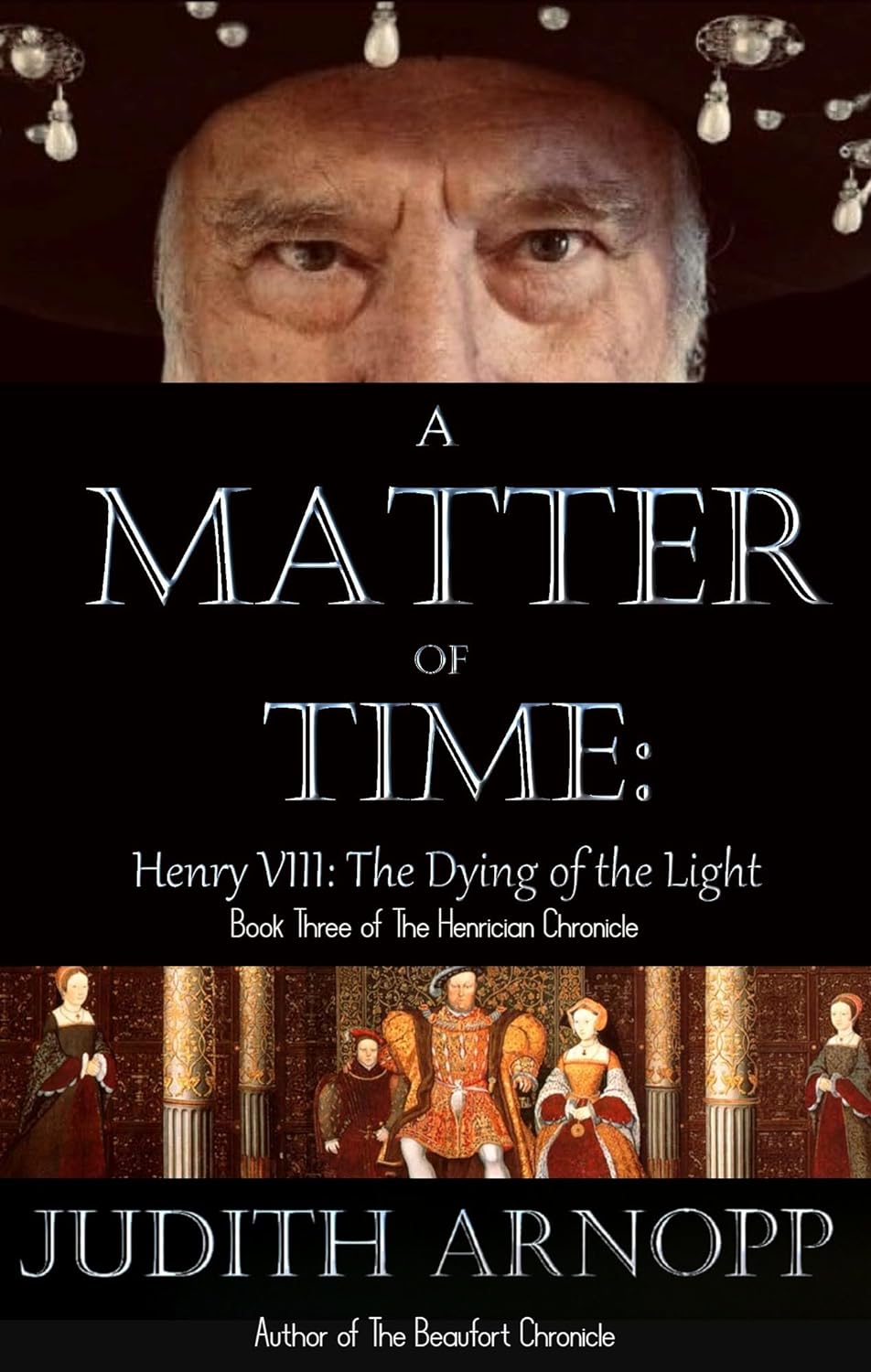 With youth now far behind him, King Henry VIII has only produced one infant son and two bastard daughters. More sons are essential to secure the Tudor line, and with his third wife, Jane Seymour dead, Henry hunts for a suitable replacement.
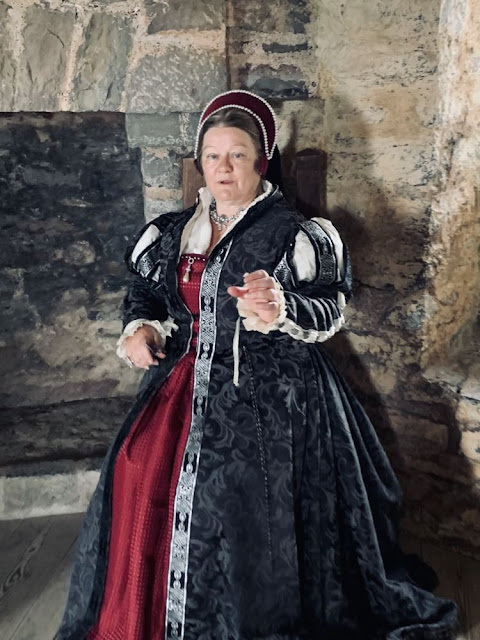 A lifelong history enthusiast and avid reader, Judith holds a BA in English/Creative writing and an MA in Medieval Studies. She lives on the coast of West Wales where she writes both fiction and non-fiction. She is best known for her novels set in the Medieval and Tudor period, focusing on the perspective of historical women but recently she has been writing from the perspective of Henry VIII himself.
 Betrayal, treachery, and courage against the odds
 One woman must sacrifice everything to uncover the truth in this enthralling historical novel, inspired by the true World War Two campaign Radio Aspidistra…
 Deborah Swift is the English author of eighteen historical novels, including Millennium Award winner Past Encounters, and The Lady’s Slipper, shortlisted for the Impress Prize.

 BOOK INFORMATION
 Author Bio:


 Synopsis: It’s 1954, and San Francisco writer Phoebe Kelley returns to the H Double Bar dude ranch in Tribulation, Arizona to help her late husband’s sister Mary, her husband Sam, and their young son Joe run the ranch for the fall season. Phoebe and the ranch were introduced in the first book in this series, Dudes Rush In. There’s stiff competition from a new guest ranch in town, called the Desert Grande, run by a powerful woman named Thelma Powell who seems determined to put other ranches out of business. Phoebe and Mary decide to put on a “dudeo,” a rodeo for both the ranch’s wranglers and the visiting dudes, to thwart Thelma’s efforts. They bring in a trick rider from California with a mysterious past named Eden Williams, and a man from Phoebe’s past also reappears. When accidents happen around the ranch, Phoebe must confront an unexpected foe.
 Lynn Downey is an award-winning novelist, short story writer, historian of the West, and native Californian.