Historical Fiction

On Tour: The Falconer’s Apprentice, by Malve von Hassell @MvonHassell @cathiedunn #HistoricalFiction #HolyRomanEmpire #FrederickII #CasteldelMonte #falconry #MedievalMedicine #BlogTour #TheCoffeePotBookClub

BOOK INFORMATION

Book Title: The Falconer’s Apprentice
Author: Malve von Hassell
Publication Date: January 30, 2024 (second edition)
Publisher: Malve von Hassell
Pages: 214
Genre: Historical Fiction

BLURB

THE FALCONER’S APPRENTICE is a story of adventure and intrigue set in the intense social and political unrest of the Holy Roman Empire in the thirteenth century.

“That bird should be destroyed!”

Andreas stared at Ethelbert in shock. Blood from an angry-looking gash on the young lord’s cheek dripped onto his embroidered tunic. Andreas clutched the handles of the basket containing the young peregrine. Perhaps this was a dream—

Andreas, an apprentice falconer at Castle Kragenberg, cannot bear the thought of killing the young female falcon and smuggles her out of the castle. Soon he realizes that his own time there has come to an end, and he stows away, with the bird, in the cart of an itinerant trader, Richard of Brugge.

So begins a series of adventures that lead him from an obscure castle in northern Germany to the farthest reaches of Frederick von Hohenstaufen’s Holy Roman Empire, following a path dictated by the wily trader’s mysterious mission. Andreas continues to improve his falconry skills, but he also learns to pay attention to what is happening around him as he travels through areas fraught with political unrest.

Eventually, Richard confides in Andreas, and they conspire to free Enzio, the eldest of the emperor’s illegitimate sons, from imprisonment in Bologna.

BUY LINKS

This title is available to read on #KindleUnlimited.

Universal Buy Link: https://books2read.com/u/31BMjD

Barnes & Noble: https://www.barnesandnoble.com/w/the-falconers-apprentice-malve-von-hassell/1121105739?ean=9781737101185/

AUTHOR BIO

Malve von Hassell is a freelance writer, researcher, and translator. She holds a Ph.D. in anthropology from the New School for Social Research. Working as an independent scholar, she published The Struggle for Eden: Community Gardens in New York City (Bergin & Garvey 2002) and Homesteading in New York City 1978-1993: The Divided Heart of Loisaida (Bergin & Garvey 1996). She has also edited her grandfather Ulrich von Hassell’s memoirs written in prison in 1944, Der Kreis schließt sich – Aufzeichnungen aus der Haft 1944 (Propylaen Verlag 1994).

She has taught at Queens College, Baruch College, Pace University, and Suffolk County Community College, while continuing her work as a translator and writer.

Malve has published two children’s picture books, Tooth Fairy (Amazon KDP 2012/2020), and Turtle Crossing (Amazon KDP 2023), and her translation and annotation of a German children’s classic by Tamara Ramsay, Rennefarre: Dott’s Wonderful Travels and Adventures (Two Harbors Press, 2012).

The Falconer’s Apprentice (2015/KDP 2024) was her first historical fiction novel for young adults. She has published Alina: A Song for the Telling (BHC Press, 2020), set in Jerusalem in the time of the crusades, and The Amber Crane (Odyssey Books, 2021), set in Germany in 1645 and 1945, as well as a biographical work about a woman coming of age in Nazi Germany, Tapestry of My Mother’s Life: Stories, Fragments, and Silences (Next Chapter Publishing, 2021), also available in German, Bildteppich Eines Lebens: Erzählungen Meiner Mutter, Fragmente Und Schweigen (Next Chapter Publishing, 2022), and is working on a historical fiction trilogy featuring Adela of Blois.

AUTHOR LINKS

Website: https://www.malvevonhassell.com
Twitter: https://twitter.com/MvonHassell
Facebook author page: https://www.facebook.com/malvevonhassellauthor/
Linkedin: https://www.linkedin.com/in/malve-von-hassell-02b61517/
Instagram: https://www.instagram.com/mvonhassell/
Bluesky: https://bsky.app/profile/malvevonhassell.bsky.social
Goodreads: https://www.goodreads.com/author/show/471746.Malve_von_Hassell
Bookbub: https://www.bookbub.com/authors/malve-von-hassell
Amazon author link: https://www.amazon.com/stores/Malve-von-Hassell/author/B0CTGLDQ7P/

Share this:

Like this:

Loading...

Filed Under:

Historical Fiction

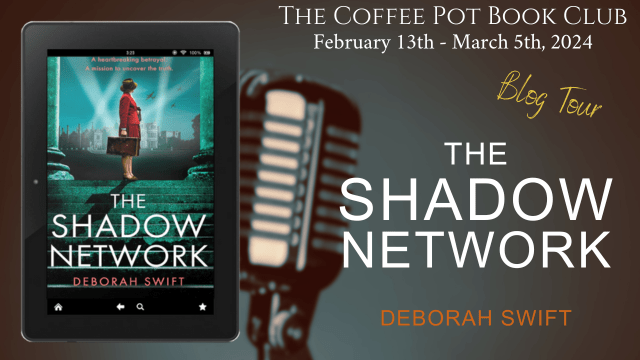
On Tour: The Shadow Network, by Deborah Swift @swiftstory @cathiedunn #WW2 #Thriller #HistoricalRomance #Review

Betrayal, treachery, and courage against the odds

BOOK INFORMATION

Book Title: The Shadow Network
Series: Secret Agent Series (but can be read as a stand-alone)
Author: Deborah Swift
Publication Date: 13th February 2024
Publisher: HQ Digital
Page Length: 376
Genre: Historical Fiction / WW2

BLURB

One woman must sacrifice everything to uncover the truth in this enthralling historical novel, inspired by the true World War Two campaign Radio Aspidistra…

England, 1942: Having fled Germany after her father was captured by the Nazis, Lilli Bergen is desperate to do something pro-active for the Allies. So when she’s approached by the Political Warfare Executive, Lilli jumps at the chance. She’s recruited as a singer for a radio station broadcasting propaganda to German soldiers – a shadow network.

But Lilli’s world is flipped upside down when her ex-boyfriend, Bren Murphy, appears at her workplace; the very man she thinks betrayed her father to the Nazis. Lilli always thought Bren was a Nazi sympathiser – so what is he doing in England supposedly working against the Germans?

Lilli knows Bren is up to something, and must put aside a blossoming new relationship in order to discover the truth. Can Lilli expose him, before it’s too late?

Set in the fascinating world of wartime radio, don’t miss The Shadow Network, a heart-stopping novel of betrayal, treachery, and courage against the odds.

EXCERPT

England, 1940

The knock came again.

‘Mads?’ Lilli called.

Maddie came out of her room with the newspaper under her arm, slopping to the door in her slippers. ‘You could see who it is,’ she grumbled. ‘Probably someone collecting for the Sally Army.’

Lilli let the square, no-nonsense figure of Maddie push past her to unlock the chain and the Yale lock, just as the insistent knock came again.

‘All right, all right, I’m coming.’ Maddie yanked the door open and three men forced their way into the hall. One in a wet trilby hat followed by two policemen.

‘Lilliana Bergen?’ asked the man in the trilby.

‘No, I’m Madeleine Kettering,’ Maddie said. ‘That’s Lilli. What do you want?’

The three men surrounded Lilli before she even had time to blink.

‘What is it? What have I done?’ She tried to back away, a chill rippling down her spine. This was how they came for people, back in Germany.

‘I’m sorry, miss,’ the man in the trilby said, ‘but all enemy aliens have to come with us. Orders of the government.’

Enemy aliens? No, it must be a mistake. ‘You’ve got the wrong person. I’m a refugee. I came here to escape the Nazis. I’ve been in London more than two years.’

‘We have our orders,’ one of the policemen said. ‘You can take a suitcase with you though, one suitcase.’

The words hit her like a fist. One suitcase. That was what they said to Papa. And she’d no word of him since.

But this was England, not Germany. ‘It’s a mistake, I tell you. I have all the correct paperwork. Ask anyone. I’ve a job here, friends here. I’m about to go to work. You can’t possibly believe I—’

‘We’ll give you five minutes to pack,’ the second, burlier policeman said.

‘Let me speak to someone,’ Maddie said. ‘She’s done nothing. She’s about to train as a warden with the WRVS. The letter came today. Wait there, I’ll get it.’

‘No!’ Lilli tried to protest but Maddie had gone to get the letter from the mantelpiece. The men looked a little more uncertain.

‘Here!’ Maddie said, thrusting it into their hands.

One of the men looked at the envelope. ‘Lily Berg? According to our records, you’re Lilliana Bergen. Who is this Lily Berg? And it says you’re Welsh.’ He turned to Maddie. ‘She’s not Welsh, is she?’

‘They got it wrong. It must be a mistake . . .’ Lilli tailed off. She was caught, and couldn’t answer.

‘I can vouch for her good character,’ Maddie said, ‘and so can her employer, Reg Benson; she works as a singer and as a domestic for Mrs—’

‘It doesn’t matter,’ said the man in the trilby. ‘All that will be looked into later.’

‘It’s an offence for a refugee to use a false name,’ the big policeman said. ‘She’s to come with us. Fetch your things, miss, or we’ll take you without them.’

Lilli looked at Maddie desperately, unable to believe what she was hearing.

‘Five minutes.’ The trilby man tapped his watch in a manner designed to intimidate.

She ran up the stairs again, her heart thudding. What to pack? Practical clothes. She was still wearing the silk dress, so she grabbed a cardigan and knitted jersey, plus a blouse and a skirt from the rail in the wardrobe, and another pair of flat shoes, the ones she used as a cleaner.

She was stopped in her tracks by the photo of her father, staring out at her from its silver frame.

Oh, Papa, she thought. Where will they take me?

She swept it up and pressed it to her heart, then thrust it into the inside pocket of her suitcase. From the dressing table she retrieved the gold Star of David on a chain that her mother had given her as a child. She never wore it, as it drew too much attention, but she couldn’t leave it behind.

‘Ready?’ A man’s voice from downstairs.

She grabbed her sheet music from the bedside table and at the last minute remembered her nightdress and squashed it in on top.

When she came down Maddie was complaining about how it was ridiculous, and she’d lose money from not having Lilli’s wages coming in.

‘Then get another lodger,’ the man in the trilby said. ‘One that isn’t a German.’

‘She’s a refugee,’ Maddie protested. ‘She came to get away from Hitler.’

‘Same difference.’ The burly policeman shrugged.

A police van idled at the kerb in a wreath of exhaust smoke. The officers yanked open the back doors and pushed Lilli to get in. Inside shivered another woman, an older lady, whose white face and carpet bag stuffed to overflowing, told Lilli she’d been caught equally unprepared.

‘Where are they taking us?’ Lilli asked.

The woman shook her head violently, her mouth sealed shut.

Lilli turned to see Maddie yelling, ‘I’ll report you! It’s disgusting! You can’t do this!’ and thumping on the side of the van. A noise that felt like small explosions. Then Maddie’s desperate voice; ‘Lilli! Write, hear me? You’d better write!’

MY REVIEW

Eight decades after the World War Two era, we continue to discover more and more about the colossal efforts of the Allied spy network and subversive efforts that collectively, ultimately, brought Hitler down.

In The Shadow Network, Author Deborah Swift has plunged us into a richly detailed and thrilling encounter with one of these operations: The clandestine broadcasts masquerading as Echt Deutsch (True German) that delivered false and disheartening information to the Reich troops, beginning in 1942.

I especially appreciated the author’s choice of a part-Jewish German refugee as her heroine. Lilli’s personal story kept me as a reader immersed in the horror of the Nazi regime and the absolute necessity of winning the war. The fear that held Lilli back from exposing what she knew was real, and it nearly cost her – and their broadcasting team – everything.

Five stars, highly recommend.

BUY LINKS

Universal Buy Link: mybook.to/RadioLies
Link to bookshop: https://harpercollins.co.uk/products/the-shadonetwork-ww2-secret-agent-series-deborah-swift

AUTHOR BIO

Deborah Swift is the English author of eighteen historical novels, including Millennium Award winner Past Encounters, and The Lady’s Slipper, shortlisted for the Impress Prize.

Her most recent books are the Renaissance trilogy based around the life of the poisoner Giulia Tofana, The Poison Keeper and its sequels, one of which won the Coffee Pot Book Club Gold Medal. Recently she has completed a secret agent series set in WW2, the first in the series being The Silk Code.

Deborah used to work as a set and costume designer for theatre and TV and enjoys the research aspect of creating historical fiction, something she loved doing as a scenographer. She likes to write about extraordinary characters set against the background of real historical events. Deborah lives in North Lancashire on the edge of the Lake District, an area made famous by the Romantic Poets such as Wordsworth and Coleridge.

Author Links:

Twitter https://twitter.com/swiftstory
Facebook: https://www.facebook.com/authordeborahswift/
Website: www.deborahswift.com
Pinterest: https://www.pinterest.co.uk/deborahswift1/
Amazon  http://author.to/DeborahSwift
BookBub: https://www.bookbub.com/authors/deborah-swift

Share this:

Like this:

Loading...

Filed Under:

Historical Fiction

On Tour: Lighten the Load, by David Fitz-Gerald @AuthorDAVIDFG @cathiedunn #Western #HistoricalFiction #OregonTrail

Book Title: Lighten the Load
Series: Ghosts Along the Oregon Trail (Book 2)
Author: David Fitz-Gerald
Publication Date: January 31, 2024
Publisher: David Fitz-Gerald
Page Length: 203
Genre: Western, Historical Fiction

Series Trailer:

https://youtu.be/sWvp6dtbXvA

Blurb:

After a devastating tragedy, Dorcas Moon faces brutal choices in the unforgiving wilderness.

An unsolved hometown murder casts a foreboding shadow over the journey. Mounting responsibilities weigh heavy on Dorcas’ shoulders while navigating the trail along the Platte River. Family, friends, and neighbors can’t seem to get along without her help.

The gruesome trail exacts a heavy toll. A sweeping grass fire blazes across the prairie. A doomed wagon careens down a treacherous hill. A fellow traveler is gored to death while hunting buffalo. Each disaster pushes the pioneers to the brink. Amidst the chaos, Dorcas grapples with the realization that she must dump her precious cook stove and her husband’s massive safe. The oxen can no longer haul the heavy weight of unnecessary cargo.

When her daughter mysteriously disappears while the wagons are at Fort Laramie, Dorcas Despairs. She is desperate to help her daughter when the troubled youth is found in the arms of a Brulé man in Spotted Tail’s village.

Secure your copy of Lighten the Load and delve into an unforgettable saga of empowerment, sacrifice, and the haunting echoes of the American frontier. Rejoin Dorcas Moon on the adventure of a lifetime as she confronts the challenges that shape her destiny.

Buy Links:

This title is available to read on #KindleUnlimited.

Universal Buy Link: https://books2read.com/lighten-the-load

Author Bio:

David Fitz-Gerald writes westerns and historical fiction. He is the author of twelve books, including the brand-new series, Ghosts Along the Oregon Trail set in 1850. Dave is a multiple Laramie Award, first place, best in category winner; a Blue Ribbon Chanticleerian; a member of Western Writers of America; and a member of the Historical Novel Society.

Alpine landscapes and flashy horses always catch Dave’s eye and turn his head. He is also an Adirondack 46-er, which means that he has hiked to the summit of the range’s highest peaks. As a mountaineer, he’s happiest at an elevation of over four thousand feet above sea level.

Dave is a lifelong fan of western fiction, landscapes, movies, and music. It should be no surprise that Dave delights in placing memorable characters on treacherous trails, mountain tops, and on the backs of wild horses.

Author Links:

Website: https://www.itsoag.com/GATOT
Twitter: https://twitter.com/AuthorDAVIDFG
Facebook: https://www.facebook.com/AuthorDaveFITZGERALD/
Instagram: https://www.instagram.com/authordavefitzgerald/
Pinterest: https://www.pinterest.com/AuthorDaveFITZGERALD/
Book Bub: https://www.bookbub.com/profile/david-fitz-gerald
Amazon Author Page: https://www.amazon.com/author/dfitzgerald
Goodreads: https://www.goodreads.com/author/show/17341792.David_Fitz_Gerald
Linktree https://linktr.ee/authordavidfitzgerald

Share this:

Like this:

Loading...

Filed Under:

Historical Fiction

On Tour: Anywhere But Schuylkill @MikeDunnAuthor @cathiedunn #MollyMaguires #HistoricalFiction #BlogTour #TheCoffeePotBookClub #TheGreatUpheaval

In 1877, twenty Irish coal miners hanged
for a terrorist conspiracy that never occurred.

BLURB

Anywhere But Schuylkill is the story of one who escaped, Mike Doyle, a teenager trying to find a new home before his alcoholic uncle kills one of his siblings. He takes a job with a union leader, who is also a gangster, while secretly courting his daughter, and quickly learns that the gang leader, cops and rival gang all want him dead.

BOOK INFORMATION

Title: Anywhere but Schuykill
Series: The Great Upheaval Trilogy, Book One
Author: Michael Dunn
Publisher: Historium Press, September, 2023
ASIN: ‎ B0CJVW1BP2
Print length: ‎ 393 pages
Genres: Historical Fiction, U.S. Historical Fiction, 19th Century

BUY LINKS

Universal Buy Link:

https://books2read.com/u/496Ag0

Historium Press

https://www.thehistoricalfictioncompany.com/it/michael-dunn

Author Bio:

Michael Dunn writes Working-Class Fiction from the Not So Gilded Age. Anywhere But Schuylkill is the first in his Great Upheaval trilogy. A lifelong union activist, he has always been drawn to stories of the past, particularly those of regular working people, struggling to make a better life for themselves and their families.


Author Links:

Website: https://michaeldunnauthor.com/
Twitter: https://twitter.com/MikeDunnAuthor
Facebook: https://www.facebook.com/Michael.Dunn.Fiction
Instagram: https://www.instagram.com/michaeldunnauthor/
Amazon Author Page: https://www.amazon.com/stores/Michael-Dunn/author/B0CJXGQYZ8
Goodreads: https://www.goodreads.com/author/show/45063197.Michael_Dunn

ABOUT THE GREAT UPHEAVAL

“There was a time in the history of France when the poor found themselves oppressed to such an extent that forbearance ceased to be a virtue, and hundreds of heads tumbled into the basket. That time may have arrived with us.”

A cooper said this to a crowd of 10,000 workers in St. Louis, Missouri in July, 1877. He was referring to the Paris Commune, which happened just six years prior. Like the Parisian workers, the Saint Louis strikers openly called for the use of arms, not only to defend themselves against the violence of the militias and police who were sent to crush their strike, but for outright revolutionary aims:

“All you have to do is to unite on one idea—that workingmen shall rule this country. What man makes, belongs to him, and the workingmen made this country.”

The Economic Roots of the Great Upheaval of 1877

Run on the Fourth National Bank, New York City, 1873. Public Domain, https://commons.wikimedia.org/w/index.php?curid=517809

The Great Upheaval was the first major worker uprising in the United States. It began in the fourth year of the Long Depression which, in many ways, was worse than the Great Depression of the 1930s. It lasted twenty-three years and included four separate financial panics. In 1873, over 5,000 business failed. Ove one million Americans lost their jobs. In the following two years, another 13,000 businesses failed. Railroad workers’ wages dropped 40-50%. And one thousand infants were dying each week in New York City.

The Long Depression followed a period of rapid wealth accumulation by a few large capitalists, particularly railroad owners. Congress granted them huge swaths of land in 1862. The following year, they passed the National Banking Act, greatly increasing the wealth and power of financial capitalists. In 1864, they placed a 47% tariff on foreign goods, further increasing the wealth of domestic capitalists. They also passed legislation making it easier to import foreign laborers, leading to the largest immigration wave in U.S. history. The lack of regulation and oversight produced large scale greed and corruption. In 1873, Jay Cooke and Company, the largest bank in the U.S., went bankrupt. Cooke’s failure led to a 10-day closure of the New York Stock exchange.

The Great Upheaval Begins

By 1877, workers had suffered four years of wage cuts and layoffs. In July, the B&O Railroad slashed wages by 10%, their second wage cut in eight months. On July 16, 1877, the trainmen of Martinsburg, West Virginia, refused to work. They occupied the rail yards and drove out the police. Local townspeople backed the strikers and came to their defense. The militia tried to run the trains, but the strikers derailed them and guarded the switches with guns. They halted all freight movement, but continued moving mail and passengers, to successfully maintain public support. When militia reinforcements were sent in, most mutinied or refused to fight. Many were former or current rail workers. 70 freight engines and 600 freight cars were soon out of service in the Martinsburg yard, as all divisions of B&O workers walked off the job. The Governor sent in a militia from Wheeling, but they also joined the strike.

The Strike Wave Spreads Along the Rail Lines

Maryland National Guard’s Sixth Regiment fighting its way west along main downtown commercial thoroughfare Baltimore Street through Baltimore, Maryland, July 20, 1877. Public Domain.

News of the Martinsburg victory quickly spread, inspiring other strikes along the B&O. But most of the unions took no action. Some were so heavily infiltrated by spies and Pinkertons that the bosses easily thwarted any actions they did take. Consequently, the strikes were almost entirely spontaneous wildcat actions. And the uprisings quickly spread from New York to Louisiana, and from Baltimore to the west coast. The majority of protests were directed against the bosses and the authorities. But in San Francisco, they turned into an anti-Asian riot.

In the Keyser-Piedmont region of West Virginia, black and white coal miners united to halt a train guarded by fifty U.S. soldiers. They posted a handbill that said: “Let the clashing of arms be heard. In the defense of our families, we shall conquer or we shall die.” In Baltimore, soldiers shot and killed between ten and twenty-two strikers.

Violence in Pennsylvania

In Lebanon, Pennsylvania, a National Guard company mutinied. In Altoona, strikers surrounded the troops and sabotaged the engines, forcing the soldiers to surrender. The soldiers then fraternized with the striking workers and marched home to the accompaniment of singers from an African-American militia company. In Harrisburg, the state capital, teenagers made up a large part of the multi-ethnic crowd.

Burning of Union Depot, Pittsburgh, Pennsylvania, July 21–22, 1877, engraving from Harper’s Weekly. Public Domain.

In Pittsburgh, workers struck against the mighty Pennsylvania Railroad, the largest corporation in the world. Young boys and men from the mills and factories joined in. Again, the militia refused to attack the workers. Many soldiers joined the strikers. So, the Governor brought in the Philadelphia militia. These were battle-hardened soldiers from the Civil and Indian Wars, with no ties to the Pittsburgh community, and no qualms about shooting civilians. They opened fire on the crowd, killing twenty workers in five minutes. The crowd retreated, but returned with their own militia. They burned the rail yards to the ground, holding off firefighters at gunpoint. The Philadelphia militia hid in the roundhouse, but the fire forced them to flee. The workers and police fired on them as they ran. In nearby Allegheny, strikers looted the armory. They dug trenches, took over the telegraph and railroad, and controlled all economic and political functions.

The South

Black longshoremen initiated a strike in Galveston, Texas, demanding a raise to $2.00 per day. Not only were they victorious, but they inspired white workers to join them. In Louisville, Kentucky, black sewer workers initiated a strike wave that quickly included coopers, textile workers, brick makers, cabinet workers and factory workers. Black workers in many parts of the south demanded equal pay to whites.

 Chicago

In Chicago, the Workingmen’s Party (affiliated with the First International, in Europe), organized a rally of six thousand people. At this gathering, a former Confederate Army Officer from Waco, Texas, named Albert Parsons, gave a fiery speech. Parsons was radicalized by the events of the Great Upheaval. In the years following it, he became one of the nation’s leading anarchist organizers. He was executed in 1887 as one of the Haymarket Martyrs who had been fighting for the eight-hour workday. His widow, Lucy Parsons, an African American woman, went on to cofound the radical Industrial Workers of the World, in 1905, along with Mother Jones, Eugene Debs, Big Bill Haywood, and others.

The next day, a crowd of young people began moving through the railroad yards, closing down the freights. They went to the factories and stockyards and called out the workers. They shut down the brickyards and lumberyards. That same day, Albert Parsons was fired from his job with the Chicago Times and declared blacklisted.

As in other big cities, the police attacked the protestors in Chicago. One journalist wrote, “The sound of clubs falling on skulls was sickening for the first minute, until one grew accustomed to it. A rioter dropped at every whack, it seemed, for the ground was covered with them.” Police fired into the protest, killing three men. The next day, an armed crowd of 5,000 fought the police, who fired again, killing several more. During the Battle of the Viaduct (July 25, 1877), the police slaughtered thirty workers and injured over one hundred.

The Saint Louis Commune

The most well-organized and lasting uprising of the Great Upheaval occurred in Saint Louis. For nearly a week, workers controlled all functions of society. It was the only town besides Chicago where the actions were predominantly organized by socialists, led by the Workingmen’s Party. The party was organized in four sections, by nationality, to facilitate communication across different languages. Strikers included skilled and unskilled workers. Black and white workers united, even though the unions were all segregated. At one rally, a black steamboat worker asked the crowd if they would stand behind the levee workers, regardless of race. “We will!” they shouted back. Another speaker said, “The people are rising up in their might and declaring they will no longer submit to being oppressed by unproductive capital.”

Women played a prominent role in St. Louis, fighting shoulder to shoulder with the men. According to one news account: “Women with babes in arms joined the enraged female rioters. The streets were fluttering with calico of all shades and shapes. Hundreds were bareheaded, their disheveled locks streaming in the wind. Many were shoeless. Some were young, scarcely women in age, and not at all in appearances. Dresses were tucked up around the waist, revealing large underthings. Open busts were common as a barber’s chair. Brawny, sunburnt arms brandished clubs. Knotty hands held rocks and sticks and wooden blocks. Female yells, shrill as a curfew’s cry, filled the air.” The police clubbed and brutalized the women with the same enthusiasm they used on the men.

The First Uprising Against the Oligarchy

Karl Marx enthusiastically followed events during the Great Strike. He called it “the first uprising against the oligarchy of capital since the Civil War.” He predicted that it would inevitably be suppressed, but might still “be the point of origin for the creation of a serious workers’ party in the United States.”

Ironically, many of the Saint Louis activists were followers of Ferdinand Lasalle, whom Marx detested. And some, like Albert Currlin, a Workingmen’s Party leader in Saint Louis, were outright racists, who mistrusted the black strikers and refused to work with them, contributing to the ultimate failure of the commune.

Labor’s Downfall

Despite the many small victories, the upheaval ended by early August. No social revolution occurred and labor ultimately lost. Federal troops and militias had slaughtered 100 workers and imprisoned thousands more. Most workers did not get a pay raise. And in the aftermath, legislators passed numerous anti-union laws.

However, capital’s victory was not quick, nor easy. 100,000 workers had participated in the strikes. More than half the freight on the nation’s 75,000 miles of track had been halted. The strikers maintained considerable public support. The initial ineffectiveness of the military was due, in part, to the fact that many soldiers had enlisted just to secure a steady income during the depression, only to be forced to work for months without pay. Also, troop levels were relatively small, as many soldiers were still bogged down in battles with the Nez Perce, and with battles against the Indigenous populations of the Rio Grande and New Mexico. Lastly, capitalism itself was relatively young and inexperienced. The bosses weren’t as effective at undermining worker solidarity as they are today. They hadn’t yet mastered how to control public sentiment. But the capitalists did learn a lot from the Great Strike of 1877. In the wake of the uprisings, they constructed many of the old stone armories we see across the country today, in order to provide greater fire power for the next strike wave.

About The Great Upheaval Trilogy

About ten years ago, I set out to write an epic novel about these events. Cleary, there was plenty of excitement for a great work of historical fiction, but far too much for a single novel. So, I decided to write a series, the Great Upheaval Trilogy. And as I did the research, I discovered that just weeks before the Great Upheaval began, twenty innocent Irish miners were hanged in Schuylkill County, Pennsylvania—ten in a single day. It was the second largest mass execution in U.S. history. They were convicted of murder, accused of being terrorists from a secret organization called the Molly Maguires. Dozens were imprisoned. All were union activists. Some held public office, as sheriffs and school board members. And a few of the accused Mollies escaped and were never heard from again.

This became the basis for the first book in the series, Anywhere But Schuylkill, (published by Historium Press, September, 2023), which follows the life of a teenage coal miner, Mike Doyle, one of the Mollies who got away. I am currently working on the sequel, Red Hot Summer in the Big Smoke, which takes place during the train strike in Pittsburgh, and follows the life of Mike’s kid sister, Tara.

Check out other stops on the tour for additional informative essays by the author:

Share this:

Like this:

Loading...

Filed Under:

Historical Fiction

On Tour: The Low Road, by Katharine Quarmby #WomensFiction #FeministFiction #HistoricalFiction #TheCoffeePotBookClub #BlogTour @katharineq @cathiedunn

In 1828, two young women were torn apart as they were sentenced to transportation to Botany Bay. Will they ever meet again?

Book Information

Book Title: The Low Road
Author: Katharine Quarmby
Publication Date: UK: 22nd June 2023. US: 19th September 2023. Australia/NZ: 2nd January 2024
Publisher: Unbound Publishing
Page Length: 400
Genre: Historical Fiction / Lesbian Fiction / Women’s Literature

Blurb:

Norfolk, 1813. In the quiet Waveney Valley, the body of a woman – Mary Tyrell – is staked through the heart after her death by suicide. She had been under arrest for the suspected murder of her newborn child. Mary leaves behind a young daughter, Hannah, who is later sent away to the Refuge for the Destitute in London, where she will be trained for a life of domestic service.

It is at the Refuge that Hannah meets Annie Simpkins, a fellow resident, and together they forge a friendship that deepens into passionate love. But the strength of this bond is put to the test when the girls are caught stealing from the Refuge’s laundry, and they are sentenced to transportation to Botany Bay, setting them on separate paths that may never cross again.

Drawing on real events, The Low Road is a gripping, atmospheric tale that brings to life the forgotten voices of the past – convicts, servants, the rural poor – as well as a moving evocation of love that blossomed in the face of prejudice and ill fortune.

Excerpt

CHAPTER THIRTY-SIX
We sail into Sydney Cove on a fine autumn May morning. The world turned upside down, right enough. As we near the quay other boats slide alongside, and there are men in them who look us up and down with hunger in their eyes, although they remain silent and the captain looks down at them with venom.

From deck I wonder if I am dreaming to see these miles and miles of sand and wooded shore and then we are in safe harbour. I look out, and find I am clutching at Jennet and Grace.

The streets are uneven, but the houses have gardens and I can see vegetables and fruit growing in them, and chickens and pigs grubbing for food inside wooden pens. I see a quantity of butchered beasts lying outside a great shop and the men with cleavers and bloody aprons. I look away. The houses are made of stone mostly but there are also huts, higher up where the roads run out between the rocks. There are stores too, and women working in the yards. Others gather water from the public well, or shop, or are even bathing. There is order, but also chaos, for “the streets are crooked and unlevel, and the throng immense. Houses perch on the slopes.

We are disembarked and then together we are helped up and onto land. Everything is swaying. We hold onto each other, form a circle of eight as our luggage is heaped up by us. I smell the sea, blood, spices that tickle the nose. London but not London, something else, somewhere else.

The captain comes towards us with papers in his hands. “Jennet will go to the work factory, Grace too. You have farming experience, Hannah?”

“Yes, as a child.”

“Wait here.”

He gestures for everyone to step aside, except me, but for a moment we huddle together and embrace. We promise to find each other, though how will we do it without addresses? But I tell them, desperately, “I will find you, somehow.”

The captain speaks then, seeing our faces. “The newspapers here are full of articles, the names of those assigned often appear in them. It is quite possible to trace somebody, or even place a notice that you are seeking them.” I wonder how we will ever pay for such a thing, but it is a sliver of hope.

Then the captain tells them that they must go to the factory and I feel their arms around me, one last time. We have loved each other on this journey and now Grace and Jennet pick up their bundles, their crates are loaded onto a boat and I watch as they embark and are rowed away, upriver, the vision blurs before me and I cannot see them any more. I am completely alone now.

The captain taps me on the shoulder. “You can milk, you said?” I rub at my eyes with my sleeve. The ground stills at last.

Beside him is a tall man, perhaps in his thirties, brown-skinned and with light blue eyes. He carries a leather hat in one hand, a bag in the other.

“I grew up in service, on a farm in the county of Norfolk.” I hesitate. “I was born on one, sir, in the east of England. I lived on a farm with my mama, until she died when I was still a child. I used to milk the cows and perform other tasks.” Not all of the truth, but enough.

“And could you nurse a little, when I cannot, when I am out, working?” He adds but his voice is jerky, “My wife is ailing.”

“Yes, sir. I nursed my mistress. With my mother, as I was just a child.” The truth again, measured out. I see the farmer’s wife, the spills of opium, and how small her coffin had been, how light. I can bear this.

He turns to the captain, and together they walk over to a table, sign some paperwork and thus I am assigned to work as a servant to Frank Emerson, farmer. I sign my name, and he tells me, “We are sailing to Newcastle, north from here, and then on by river. But first we will eat.”

He leads me through the streets and as I look around me, I wonder how it can be that so much is familiar, and yet I am on the other side of the world.”

Excerpt from
he Low Road
Katharine Quarmby
This material is protected by copyright.

Buy Links:

Universal Buy Link: https://books2read.com/u/mg5RAD

Bookshop: https://uk.bookshop.org/p/books/the-low-road-katharine-quarmby/7418138?ean=9781800182394

Author Bio:

Katharine Quarmby has written non-fiction, short stories and books for children and her debut novel, The Low Road, is published by Unbound in 2023. Her non-fiction works include Scapegoat: Why We Are Failing Disabled People (Portobello Books, 2011) and No Place to Call Home: Inside the Real Lives of Gypsies and Travellers (Oneworld, 2013). She has also written picture books and shorter e-books.

She is an investigative journalist and editor, with particular interests in disability, the environment, race and ethnicity, and the care system. Her reporting has appeared in outlets including the Guardian, The Economist, The Atlantic, The Times of London, the Telegraph, New Statesman and The Spectator. Katharine lives in London.

Katharine also works as an editor for investigative journalism outlets, including Investigative Reporting Denmark and the Bureau of Investigative Journalism.

Author Links:

Website: https://www.katharinequarmby.com

Twitter: https://twitter.com/KatharineQ

Facebook: https://www.facebook.com/katharinequarmbywriter/

LinkedIn: Katharine Quarmby – Writer, Journalist, Editor – Self-employed | LinkedIn

Instagram: https://www.instagram.com/katharinequarmby_/

Amazon Author Page: https://www.amazon.co.uk/stores/Katharine-Quarmby/author/B004GH8LS6

Goodreads: https://www.goodreads.com/author/show/2082356.Katharine_Quarmby


Share this:

Like this:

Loading...

Filed Under:

Historical Fiction

On Tour: London Tales, by Tim Walker @timwalker1666 #ShortStories #HistoricalFiction #London #BlogTour #TheCoffeePotBookClub @timwalker1666 @cathiedunn

BOOK INFORMATION

Book Title: London Tales
Series: Short Stories, Book Two
Author: Tim Walker
Publication Date: 8th November 2023
Publisher: Independently published
Page Length: 203
Audiobook: 3 hours

Genres: short stories; historical fiction; contemporary fiction; dystopian

BLURB:

This collection of eleven tales offers dramatic pinpricks in the rich tapestry of London’s timeline, a city with two thousand years of history. They are glimpses of imagined lives at key moments, starting with a prologue in verse from the point of view of a native Briton tribeswoman absorbing the shock of Roman invasion. The first story is a tense historical adventure set in Roman Londinium in 60 CE from the perspective of terrified legionaries and townsfolk facing the vengeful Iceni queen, Boudica, whose army burnt the fledgling city to the ground.

Further historical dramas take place in 1381 during the Peasant’s Revolt, the Great Fire of London in 1666 and the last ice fair on the frozen Thames in 1814. These are followed by a romance set during the Blitz in 1941, then the swinging Sixties and wide-flared seventies are remembered in the life story of fictional policeman, Brian Smith. Moving on, an East End family get a fright from copycat killings that are a throwback to the 1888 Jack the Ripper murders.

There’s a series of contemporary stories that reference recent events, including the London terrorist bombings of 2005, a literary pub crawl and a daring prison break, building to the imagined death throes of London in a chilling, dystopian vision. These stories are loosely inspired by the author’s personal experiences and reflections on his time living and working in London in the 1980’s and 90’s. Adaptability, resilience, conformity and resolve are recurring themes.

London Tales evokes the city’s rich history and the qualities that were needed by Londoners at various times to survive and prosper – from the base and brutal, devious and inspired, to the refined and civilized.

Available from Amazon in e-book, paperback, Kindle Unlimited and audiobook formats, London Tales is a companion volume to Thames Valley Tales.

Book cover designed by Sean McClean, shows elements from stories.

BUY LINK:

This title is available to read on #KindleUnlimited.

Universal link: http://mybook.to/LondonTales

AUTHOR BIO:

Tim Walker is an independent author living near Windsor in the UK. Although born in Hong Kong in the sixties, he grew up in Liverpool where he began his working life as a trainee reporter on a local newspaper. After attaining a degree in Communication Studies he moved to London where he worked in the newspaper publishing industry for ten years before relocating to Zambia where, following a period of voluntary work with VSO, he set up his own marketing and publishing business. He returned to the UK in 2009.

His creative writing journey began in earnest in 2013, as a therapeutic activity whilst recovering from cancer treatment. He began writing an historical fiction series, A Light in the Dark Ages, in 2014, inspired by a visit to the part-excavated site of former Roman town Calleva Atrebatum at Silchester in Hampshire. The series connects the end of Roman Britain to elements of the Arthurian legend and is inspired by historical source material, presenting an imagined historical fiction of Britain in the fifth and early sixth centuries.

The last book in the series, Arthur, Rex Brittonum, was published in June 2020. This is a re-imagining of the story of King Arthur and follows on from 2019’s Arthur Dux Bellorum. Both titles are Coffee Pot Book Club recommended reads. The series starts with Abandoned (second edition, 2018); followed by Ambrosius: Last of the Romans (2017); and book three, Uther’s Destiny (2018). Series book covers are designed by Canadian graphic artist, Cathy Walker.

Tim has also written two books of short stories, Thames Valley Tales (second edition 2023), London Tales (2023); a book of verse, Perverse (2020); a dystopian thriller, Devil Gate Dawn (2016); and three children’s books, co-authored with his daughter, Cathy – The Adventures of Charly Holmes (2017), Charly & the Superheroes (2018) and Charly in Space (2020).

Tim took early retirement on medical grounds and now divides his time between writing and helping out at a Berkshire-based charity, Men’s Matters.

Find out more about the author at his website: www.timwalker1666.wixsite.com/website

AUTHOR LINKS:

Goodreads Author Page: https://goodreads.com/author/show/678710.Tim_Walker
Amazon Author Page: http://author.to/TimWalkerWrites
Facebook Pages:             https://facebook.com/TimWalkerWrites
https://facebook.com/LondonPostcards
Twitter:                       https://twitter.com/timwalker1666
Instagram:                   https://instagram.com/timwalker1666

AUDIO BOOK NARRATOR

London Tales and Thames Valley Tales audiobooks were narrated and produced by actor, author and playwright Richard James who has been appearing on stage and screen for over thirty years. Most recently, he played a guest role in Miss Scarlet & The Duke for PBS and Alibi Films and was nominated for ‘Best Supporting Performance’ at the Off West End Awards for his roles in A Sherlock Carol at the Marylebone Theatre in 2022. The play will be reprised in winter 2023/4.

Richard is on Twitter as @RichardNJames


Share this:

Like this:

Loading...

Filed Under:

Historical Fiction

New Release Party Blast: Historical Stories of Exile #ExileAnthology #HistoricalFiction #Exile #NewRelease #BookBlast #TheCoffeePotBookClub

BOOK INFORMATION

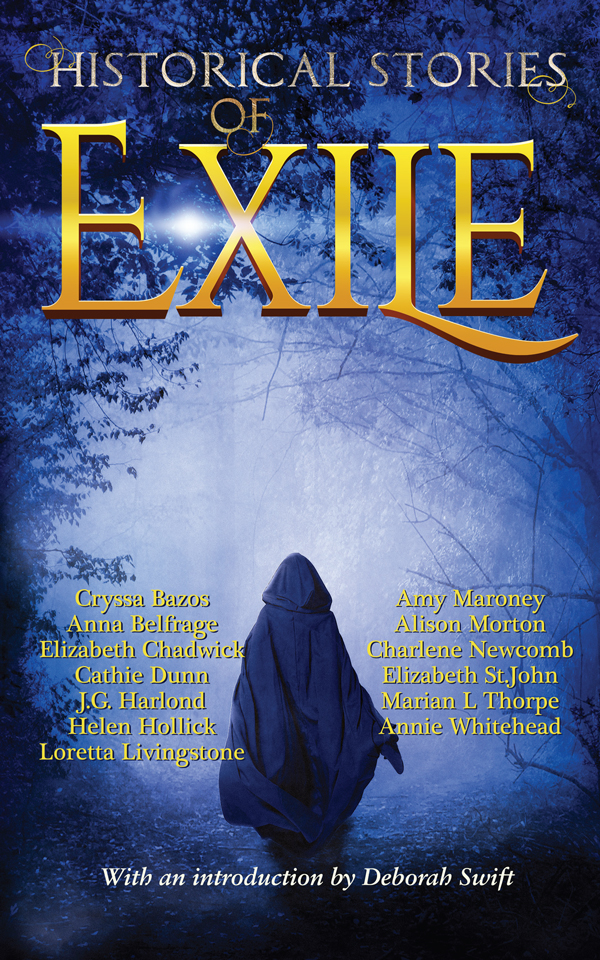
Book Title: Historical Stories of Exile

Authors: Cryssa Bazos, Anna Belfrage, Elizabeth Chadwick, Cathie Dunn, J G Harlond, Helen Hollick, Loretta Livingstone, Amy Maroney, Alison Morton, Charlene Newcomb, Elizabeth St.John, Marian L. Thorpe, Annie Whitehead.

With an introduction by Deborah Swift

OFFICIAL LAUNCH  PARTY Date: 16th November 2023

Publisher: Taw River Press
Page Length: 323
Genre: Historical Fiction / Short Story Anthology

Blurb:
Exile: a risky defiance, a perilous journey, a family’s tragic choice – or an individual’s final gamble to live. Exile: voluntary or enforced, a falling-out between friends, a lost first love, a prejudiced betrayal – or the only way to survive persecution?

In this historical fiction anthology thirteen authors (they are not superstitious!) have written exclusive short stories on the theme of exile. Some are based on true history, others are speculative fiction. All mine the depths of human emotions: fear, hope, love, and the fortitude to survive.

Join an inspiring Anglo-Saxon queen of Wales, a courageous Norwegian falconer, and a family fleeing back in time to escape the prospect of a ruthless future. Oppose the law with the legendary Doones of Exmoor, or defy the odds with two brave WWII exiles. Meet a Roman apprehensively planning exile to preserve the ‘old ways’, and a real Swedish prince forcibly expelled in heart-wrenching circumstances. Thrill to a story based on the legend of Robin Hood, sail with a queen of Cyprus determined to regain her rightful throne; escape religious persecution, discover the heart-rending truth behind the settlement of Massachusetts and experience the early years that would, eventually, lead to the founding of Normandy. Experience the stirring of first love, and as an exclusive treat special guest author, Elizabeth Chadwick, reveals a tale about the 12th-century’s heiress, Isabelle de Clare, and the Greatest Knight of all time – William Marshal.

With an introduction by multi-award-winning author Deborah Swift, enjoy these tales of exile across the ages. Some are hopeful, some sad, some romantic, some tragic, but all explore the indomitable spirit of resolute, unforgettable characters

Buy Links:

This title is available to read on #KindleUnlimited

Universal Link: https://mybook.to/StoriesOfExile
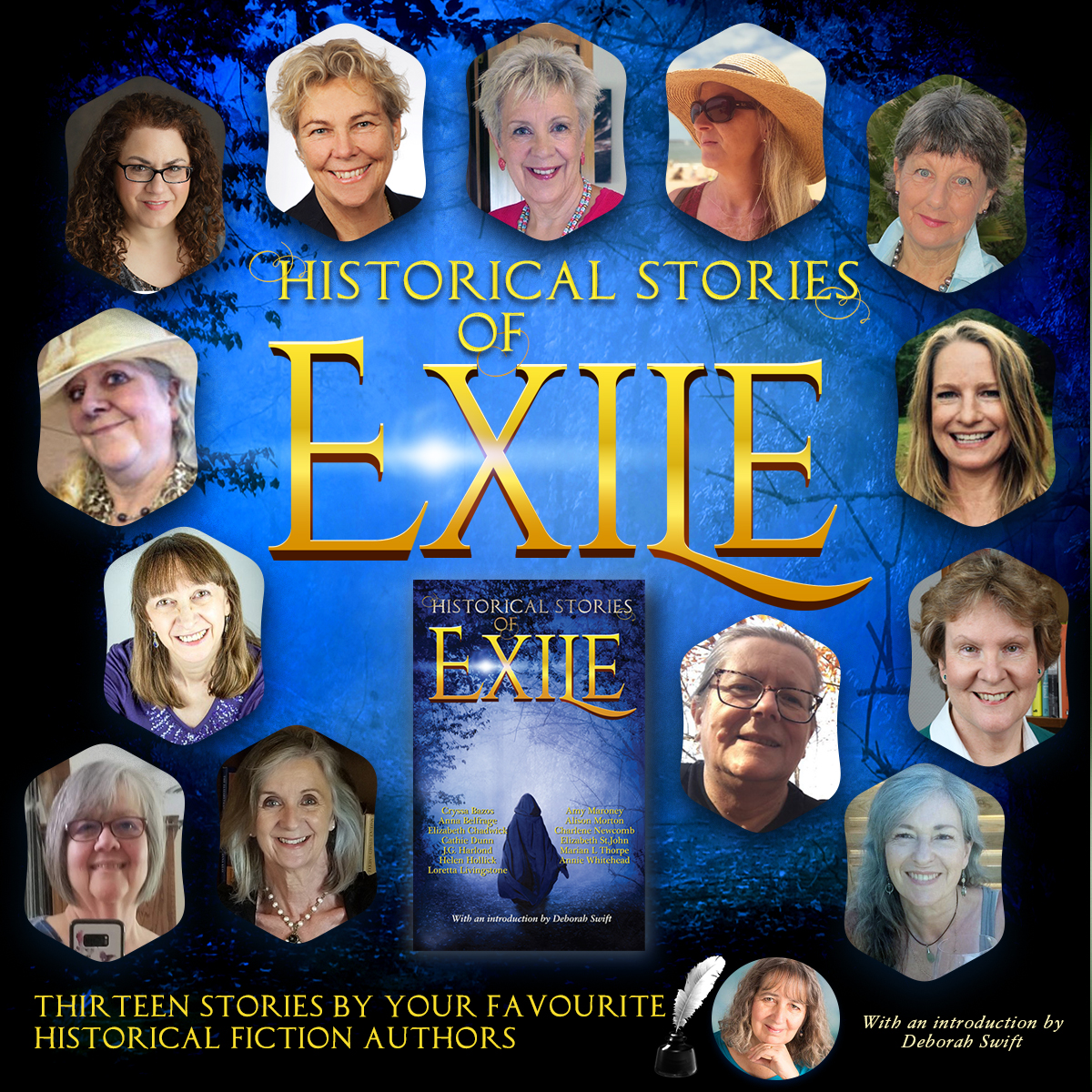
About the Authors:

ALISON MORTON writes award-winning thrillers featuring tough but compassionate heroines. Her ten-book Roma Nova series is set in an imaginary European country where a remnant of the ancient Roman Empire has survived into the 21st century and is ruled by women who face conspiracy, revolution and heartache but use a sharp line in dialogue. Several of her novels have hit  #1 in Amazon US, UK, Canada and Australia. The latest, Julia Prima, plunges us back to AD 370 when the founders of Roma Nova met.

She blends her fascination for Ancient Rome with six years’ military service and a life of reading crime, historical and thriller fiction. On the way, she collected a BA in modern languages and an MA in history.

 Alison now lives in Poitou in France, the home of Mélisende, the heroine of her two contemporary thrillers, Double Identity and Double Pursuit. Oh, and she’s writing the next Roma Nova story.

 Website: https://www.alison-morton.com

 AMY MARONEY studied English Literature at Boston University and worked for many years as a writer and editor of nonfiction. She lives in Oregon, U.S.A. with her family. When she’s not diving down research rabbit holes, she enjoys hiking, dancing, traveling, and reading. Amy is the author of The Miramonde Series, a bestselling historical mystery trilogy about a Renaissance-era female artist and the modern-day scholar on her trail. Amy’s award-winning historical adventure/romance series, Sea and Stone Chronicles, is set in medieval Rhodes and Cyprus.

An enthusiastic advocate for independent publishing, Amy is a member of the Alliance of Independent Authors and the Historical Novel Society.

Website: https://www.amymaroney.com/

 ANNA BELFRAGE Had Anna been allowed to choose, she’d have become a time-traveller. As this was impossible, she became a financial professional with three absorbing interests: history, romance and writing. Anna always writes about love and has authored the acclaimed time travelling series The Graham Saga, set in 17th century Scotland and Maryland, as well as the equally acclaimed medieval series The King’s Greatest Enemy which is set in 14th century England. Anna is presently hard at work with her other medieval series, The Castilian Saga ,which is set against the conquest of Wales. The third instalment, Her Castilian Heart, was published in 2022, and the fourth and final one will be out in 2024. She has recently released Times of Turmoil, a sequel to her time travel romance, The Whirlpools of Time.

Website, www.annabelfrage.com

 ANNIE WHITEHEAD is an author, historian, and elected Fellow of the Royal Historical Society, and has written four award-winning novels set in Anglo-Saxon England. She has contributed to fiction and nonfiction anthologies and written for various magazines, has twice been a prize winner in the Mail on Sunday Novel Writing Competition, and won First Prize in the 2012 New Writer Magazine’s Prose and Poetry Competition. She was a finalist in the 2015 Tom Howard Prize for Nonfiction and was shortlisted for the Exeter Story Prize/Trisha Ashley Award 2021.

She was the winner of the inaugural Historical Writers’ Association/Dorothy Dunnett Prize 2017 and is now a judge for that same competition. She has also been a judge for the HNS (Historical Novel Society) Short Story Competition.

Her nonfiction books are Mercia: The Rise and Fall of a Kingdom (Amberley Books) and Women of Power in Anglo-Saxon England (Pen & Sword). She has contributed to a new history of English Monarchs, Kings and Queens: 1200 Years of English and British Monarchs (Hodder & Stoughton) and has signed a contract to write her third nonfiction book, to be published by Amberley books in 2024.

Website: https://anniewhiteheadauthor.co.uk/

CATHIE DUNN writes historical fiction, mystery, and romance. The focus of her novels is on strong women through time. She has garnered awards and praise from reviewers and readers for her authentic description of the past. A keen Medievalist, she enjoys visiting castles and ruins, and reading about battles and political shenanigans of the times.

Cathie is a member of the Historical Novel Society, the Romantic Novelists’ Association, and the Alliance of Independent Authors. She also now runs The Coffee Pot Book Club, promoting historical fiction authors and their books.

Website: https://www.cathiedunn.com

CHARLENE NEWCOMB writes historical fiction and science fiction. Her award-winning Battle Scars trilogy is set in the 12th century during the reign of Richard the Lionheart. Her writing roots are in the Star Wars Expanded Universe (aka Legends) where she published 10 short stories in the Star Wars Adventure Journal. Scifi/space opera fans should check out Echoes of the Storm, her original novel published in 2020. She returned to medieval times with her novel Rogue in 2023.

Website: https://charlenenewcomb.com

CRYSSA BAZOS is an award-winning historical fiction author and a 17th-century enthusiast. Her debut novel, Traitor’s Knot is the Medalist winner of the 2017 New Apple Award for Historical Fiction and a finalist for the 2018 EPIC eBook Awards for Historical Romance. Her second novel,  Severed Knot is a B.R.A.G Medallion Honoree and a finalist for the 2019 Chaucer Award. Rebel’s Knot, the third instalment of the standalone series, Quest for the Three Kingdoms, is a B.R.A.G Medallion Honoree and 2021 Discovering Diamonds Book of the Year..

Website:  https://cryssabazos.com

DEBORAH SWIFT is a delver into archives, drinks too much tea, and loves antiques and old buildings. Her sturdy, stone-built house used to be the village primary school, and from her window she has a view of a few 17th century cottages, and behind those, green fields dotted with grazing sheep.

Historical fiction was a natural choice for Deborah as a writer because she always enjoyed the research aspect of design – poking about in archives and museums, not to mention the attraction of boned bodices and the excuse to visit old and interesting buildings.

She used to work as a set and costume designer for theatre and TV, so enjoys the research aspect of creating historical fiction.  In her books Deborah likes to write about extraordinary characters set against the background of real historical events. Her first novel was The Lady’s Slipper which was shortlisted for the Impress Prize, and her book The Poison Keeper, about the Renaissance poisoner Giulia Tofana, won the BookViral Millennium Award. She has written eighteen novels to date including two series set in WWII – her latest, The Shadow Network is due for release in early 2024.

Deborah lives in North Lancashire on the edge of the Lake District,  and divide her time between teaching and writing.

Website: https://deborahswift.com/

ELIZABETH CHADWICK New York Times bestselling author Elizabeth Chadwick lives in a cottage in the Vale of Belvoir in Nottinghamshire with her husband and their four terriers, Pip, Jack, Billy and Little Ted. Her first novel, The Wild Hunt, won a Betty Trask Award and To Defy a King won the RNA’s 2011 Historical Novel Prize. She was also shortlisted for the Romantic Novelists’ Award in 1998 for The Champion, in 2001 for Lords of the White Castle, in 2002 for The Winter Mantle and in 2003 for The Falcons of Montabard. Her sixteenth novel, The Scarlet Lion, was nominated by Richard Lee, founder of the Historical Novel Society, as one of the top ten historical novels of the last decade. She often lectures at conferences and historical venues, has been consulted for television documentaries and is a member of the Royal Historical Society.

Website: https://elizabethchadwick.com/

ELIZABETH ST.JOHN’s critically acclaimed historical fiction novels tell the stories of her ancestors: extraordinary women whose intriguing kinship with England’s kings and queens brings an intimately unique perspective to Medieval, Tudor, and Stuart times.

Inspired by family archives and residences from Lydiard Park to the Tower of London, Elizabeth spends much of her time exploring ancestral portraits, diaries, and lost gardens. And encountering the occasional ghost. But that’s another story.

Living between California, England, and the past, Elizabeth is the International Ambassador for The Friends of Lydiard Park, an English charity dedicated to conserving and enhancing this beautiful centuries-old country house and park. As a curator for The Lydiard Archives, she is constantly looking for an undiscovered treasure to inspire her next novel.

Elizabeth’s books include her trilogy, The Lydiard Chronicles, set in 17th Century England during the Civil War, and her medieval novel, The Godmother’s Secret, which explores the mystery of the missing Princes in the Tower of London.

Website: http://www.elizabethjstjohn.com/

HELEN HOLLICK and her husband and adult daughter moved from north-east London in January 2013 after finding an eighteenth-century North Devon farmhouse through being a ‘victim’ on BBC TV’s popular Escape to The Country show. The thirteen-acre property was the first one she was shown – and it was love at first sight. She enjoys her new rural life, and has a variety of animals on the farm, including Exmoor ponies, dogs, cats, hens, ducks and geese and her daughter’s string of show jumpers.

First accepted for publication by William Heinemann in 1993 – a week after her fortieth birthday – Helen then became a USA Today Bestseller with her historical novel, The Forever Queen (titled A Hollow Crown in the UK) with the sequel, Harold the King (US: I Am the Chosen King), novels that explore the events that led to the Battle of Hastings in 1066. Her Pendragon’s Banner Trilogy is a fifth-century version of the Arthurian legend, and she also writes a pirate-based nautical adventure/fantasy series, The Sea Witch Voyages, where you can read more about Jesamiah Acorne, son of Charles St Croix – and the Doones.

Despite being impaired by the visual disorder of Glaucoma, she is also branching out into the quick read novella, ‘Cosy Mystery’ genre with the Jan Christopher Mysteries, set in the 1970s, with the first in the series, A Mirror Murder incorporating her, often hilarious, memories of working for thirteen years as a library assistant.

Her non-fiction books are Pirates: Truth and Tales and Life of a Smuggler. She also runs a news and events blog and a Facebook page for her village, and supports her daughter’s passion for horses and showjumping – and occasionally gets time to write…

Website: https://helenhollick.net

 J.G. HARLOND Secret agents, skulduggery, and crime that crosses continents.

British author of historical crime fiction, J.G. (Jane) Harlond writes award-winning, page-turning novels set in the mid-17th and mid-20th centuries. Each story weaves fictional characters into real events. She describes her WWII Bob Robbins Home Front Mysteries as ‘cosy crime with a sinister twist’. Prior to becoming a full-time author, Jane taught English and World Literature in international colleges. She also wrote school text books for many years using her married name.

Jane is married to a retired Spanish naval officer and they have a large, grown-up family living in various parts of Europe and the USA. After travelling widely (she has lived in or visited most of the places that feature in her novels) they are now settled near Málaga in Spain.

J.G. Harlond is a member of the British Crime Writers Association and the Dorothy Dunnett Society.

 Website: http://author.to/JGHarlond

 LORETTA LIVINGSTONE had no intention of writing anything but short stories or poetry, and especially not historical fiction. She stated it quite clearly on social media, only to suddenly find herself writing … historical fiction. Her debut novel, Out Of Time, set in the mythical Sparnstow Abbey, was shortlisted for the Historical Novel Society Indie Award in 2016, which stunned and elated her in equal measures.

It was supposed to be a one-off. It wasn’t. She went on to write two more stand-alone novels in the series; A Promise to Keep and Blossom on the Thorn. She had plans for more but has had ME for many years, and ill health has temporarily reined in her gallop. However, she intends to write again soon…

Her other books include short story collections and poetry, and can be found on Amazon.

Loretta is on Facebook: https://www.facebook.com/groups/217686418294125

MARIAN L. THORPE Taught to read at the age of three, words have been central to Marian’s life for as long as she can remember. A novelist, poet, and essayist, Marian has several degrees, none of which are related to writing. After two careers as a research scientist and an educator, she retired from salaried work and returned to writing things that weren’t research papers or reports.

Marian’s first published work was poetry, in small journals; her first novel was released in 2015. Her award-winning Empire’s Legacy series is historical fiction of another world, based to some extent on northern Europe after the decline of Rome.

In addition to her novels, Marian has read poetry, short stories, and nonfiction work at writers’ festivals and other juried venues.

Her other two passions in life are birding and landscape history, both of which are reflected in her books. Birding has taken her and her husband to all seven continents, but these days she’s mostly content to move between Canada and the UK.

Website: https://marianlthorpe.com/


Share this:

Like this:

Loading...

Filed Under:

Historical Fiction

On Tour: Champagne Widows, by Rebecca Rosenberg #ChampagneHistory #FrenchHistory #ChampagneWidows #BlogTour #TheCoffeePotBookClub @cathiedunn

TREASURE HUNT!

(or, digging for research nuggets that lead to Gold!)

Did you ever make a treasure hunt or hide eggs for children? I’ve done more hunts than I can possibly remember. But every day I find myself digging for treasure when I’m writing a novel. I’ll use examples from my novels to explain.

  1. The Chatelaine: Have you seen a Chatelaine in a Museum? A Chatelaine, means “mistress of a castle”, and is a chain holding various and sundry household tools like sand timers, needles, thimbles, scissors, magnifying glass. Madame Pommery received a Châtelaine from her husband for her birthday, much like getting a mop or set of deluxe sponges. What does it say about their relationship and her life?

 Each novel has many “props” that speak volumes about a character. It can be a personal item like a locket, or a vanity mirror with a large crack in it, or a wine-tasting cup, like Veuve Clicquot received from her great-grandmother. I also consider transportation, the environment, where the character lives, and what she wears (or doesn’t wear, as in my upcoming novel, SILVER DOLLAR) All of these can be intriguing symbols of the character and her plight.

  1. Curse or Gift? In Champagne Widows, Barbe Nicole-Clicquot is told she has Le Nez, the Nose, an extraordinary sense of smell that makes her a great wine maker. It also makes her particular, persnickety, and difficult. Her parents say Le Nez is a curse. Her grandmother says it is a gift that will change her life by making her an extraordinary wine maker.

Character traits form a character’s personality and also sets a course for her future. An ironic character trait makes for controversial and delectable conflict and soul-searching.

  1. Unrequited Love: I write Biographical Historical Fiction about real women who lived in our past. Inevitably there’s a love that did not work out. These are gold nuggets! Why didn’t they work out? Who was hurt? What are the consequences? Could they ever get together? And if not, how do they feel about it? All of these aspects of unrequited love add such emotion to a story.

In Madame Pommery, Creator of Brut Champagne, she hires a young intern, fifteen years younger than her, and his intelligence and helpfulness make her slowly fall in love with him, though it is quite inappropriate. She cannot marry him, or by law he’d own Pommery Champagne House. Ah, unrequited love.

  1. Family squabbles: Families are usually an unresolved dilemma. Madame Pommery has trouble with her son who wants to run the champagne house without knowing what to do. She has trouble with her daughter because the toddler is always underfoot. Her mother is cold and unloving. Ouch! Family differences make good reading, especially when they create havoc for the protagonist. To research information about these family squabbles, I look at the available facts and extrapolate what they could mean. For example, Madame Pommery’s son is 17 when she starts the winery, and he doesn’t join the business for 5 years. Even then, he was not given an important position. And, when Madame Pommery dies, she makes her assistant the head of Pommery, not her son. Those facts add up to a gold nugget for the story.
  1. Friend or Foe? Who can you trust? Who has an ulterior motive? In research, I look for clues about who were Madame Pommery’s business associates, friends, and foes. Then, I look for ways that their relationships can change during the book. For example, Madame Pommery’s banker helps her when her husband dies, but his ulterior motive is that he wants to be her partner.
  1. Habits and Hobbies. I love to research quirky habits and hobbies characters can have. In Champagne Widows, Barbe-Nicole Clicquot’s father has a secret room that he works on constantly, because he doesn’t have the money to hire it done. Barbe-Nicole’s mother loves outrageous fashion and falls deathly ill from the arsenic dye. Both of these are facts that I researched about those real people!
  1. Trials & Tribulations. What are the events of history that affect the characters? For example, in GOLD DIGGER, the Remarkable Baby Doe Tabor is about the Gold and Silver Rush in the nineteenth century, women’s right to vote, and the politics of the day, the Chinese workers imported to build the railroads and mines, then they were hated and killed. All these aspects add texture and context to the story. To research this information, I use libraries, buy books, internet searches, interview historians.
  1. Location, Location, Location! I visit the towns or area I’m writing about and visit every home, winery, mine and theater in search of clues about the person I am writing about so I can breathe life into them on the page.
  1. Skeletons: Everyone has skeletons in their closets, and if you can’t find them for your character, you didn’t look hard enough. The Skeleton can be a human condition like: mental illness, poverty, alcoholism. Or it can be a horrible wound the character suffered, like rape, or losing a child or an affair gone terribly wrong. Character skeletons need to be found and written on the page to make characters feel, hurt, and heal, or not.
  1. She said What? Since I write about real people, I search for real quotes, letters and stories about them to use in building her character. Madame Pommery’s quote informed the entire book, setting the stage from where she came, what she wanted and why, and what her success would look like.

“Inevitably, I find myself in a predicament where the rules do not apply, or worse, they contradict each other.”  ~Jeanne Alexandrine Pommery

~Rebecca Rosenberg, #1 Amazon Best Seller, Madame Pommery,
Creator of Brut Champagne

Book Information:

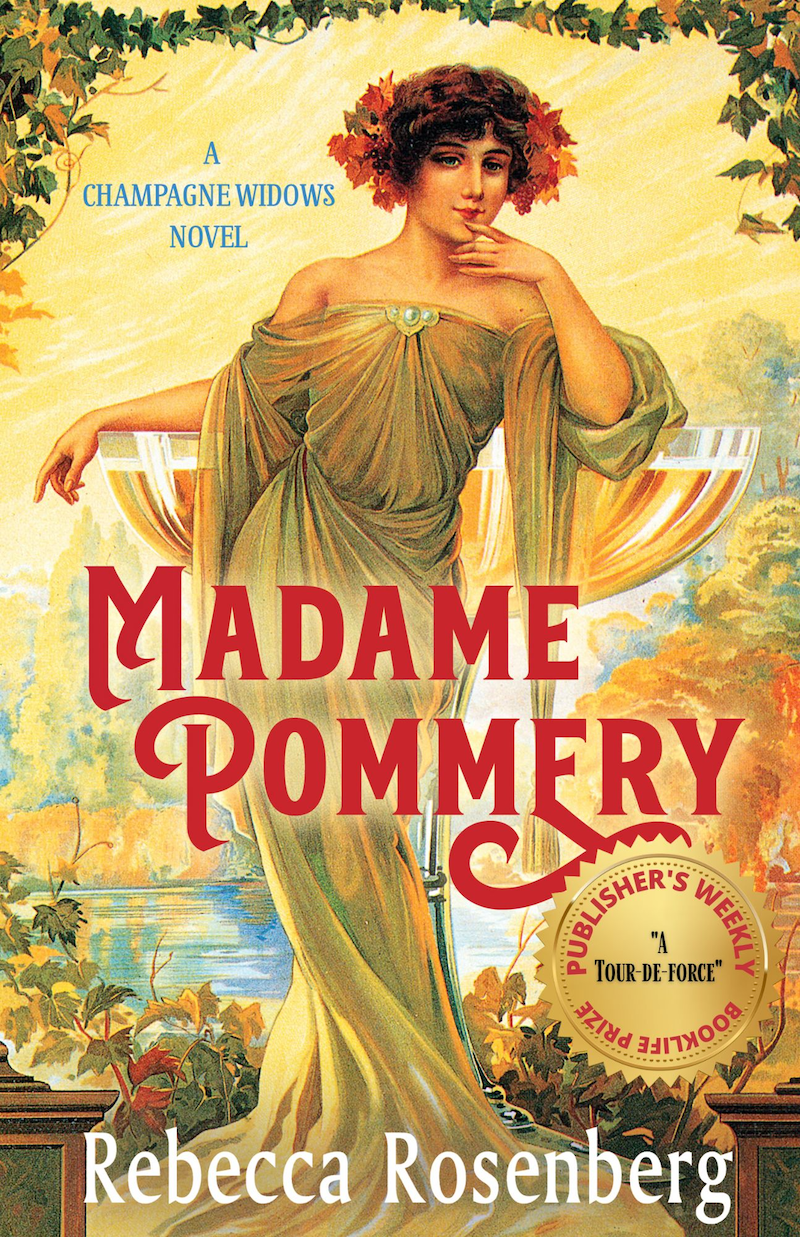
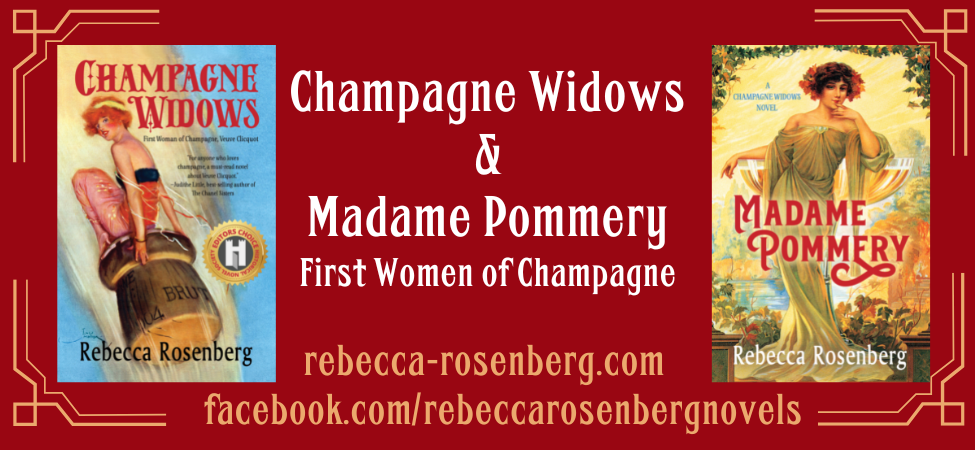
Champagne Widows, the first woman of champagne
Madame Pommery, Creator of Brut Champagne
By Rebecca Rosenberg
Series: Champagne Widows Series
Publication Dates: March 2022 / April 2023
Publisher: Lion Heart Publishing
Page Length: 368 pgs.
Genre: Historical Fiction

Blurbs:
EDITORS CHOICE HISTORICAL NOVEL SOCIETY

MADAME POMMERY, Creator of Brut Champagne

“A tour-de-force of historical fiction, Madame Pommery is a deeply fascinating work that blends true-to-life details with artfully crafted elements.” –Publishers Weekly BookLife Prize

Madame Pommery is a story of a woman’s indomitable spirit in the face of insurmountable odds. Set in Champagne, France in 1860, Madame Pommery is a forty-year-old widow and etiquette teacher whose husband has passed away. Now she must find a way to support her family. With no experience, she decides to make champagne, but no champagne makers will teach her their craft. Undeterred, Madame Pommery begins to secretly excavate champagne caves under the Reims city dump and faces numerous obstacles to achieve her dream. From the Franco-Prussian war that conscripts her son and crew to the Prussian General Frederick Franz occupying her home, Madame Pommery perseveres. She even must choose between her champagne dreams and a marriage proposal from her former lover, a Scottish Baron. Inspired by a true story, Madame Pommery is a heroic tale of a woman’s strength and determination to create a champagne legacy. If you enjoyed the novel Sarah’s Key, you will enjoy Madame Pommery.
~~

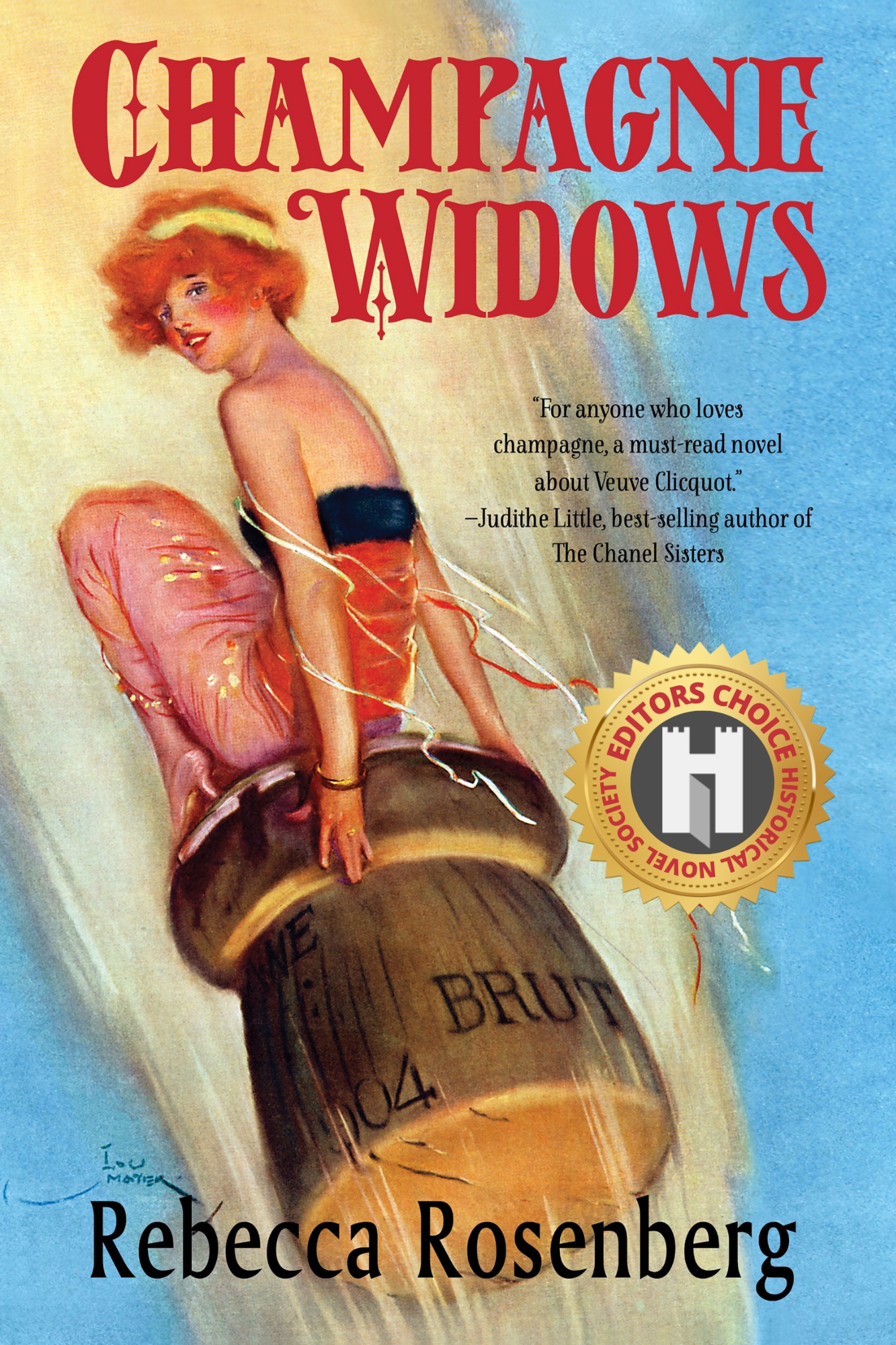
CHAMPAGNE WIDOWS, the First Woman of Champagne
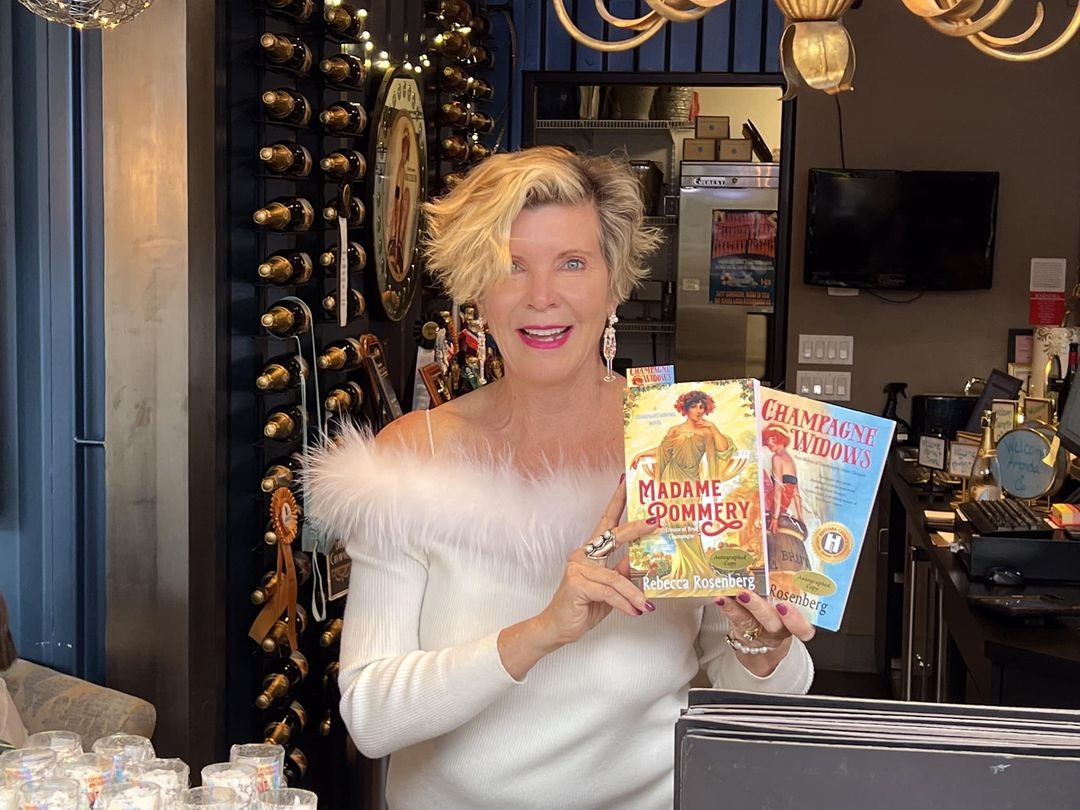
EDITORS CHOICE HISTORICAL NOVEL SOCIETY This engrossing historical novel by Rebecca Rosenberg follows Veuve Clicquot, a strong-minded woman determined to defy the Napoleon Code and become a master champagne maker. In 1800 France, twenty-year-old Barbe-Nicole inherits her great-grandfather’s uncanny sense of smell and uses it to make great champagne, despite the Code prohibiting women from owning a business. When tragedy strikes and she becomes a Veuve (widow), she must grapple with a domineering partner, the complexities of making champagne, and the aftermath of six Napoleon wars. When she falls in love with her sales manager, Louis Bohne, she must choose between losing her winery to her husband to obey the Napoleon Code, or losing Louis. In the ultimate showdown, Veuve Clicquot defies Napoleon himself, risking prison and even death. If you enjoyed books like ‘The Widow of the South’ by Robert Hicks or ‘The Paris Seamstress’ by Natasha Lester, you’ll love ‘Veuve Clicquot’.

Buy Links:

These titles are available to read on #KindleUnlimited.

Madame Pommery: https://books2read.com/u/bW6GL1

Champagne Widows:  https://books2read.com/u/3kBekW

Champagne Widows Series Links:

Amazon UK: https://www.amazon.co.uk/gp/product/B0BSTJPZX3

Amazon US: https://www.amazon.com/gp/product/B0BSTJPZX3

Amazon CA: https://www.amazon.ca/gp/product/B0BSTJPZX3

Amazon AU: https://www.amazon.com.au/gp/product/B0BSTJPZX3

Author Bio:

Rebecca Rosenberg is an award-winning novelist, champagne geek, and lavender farmer. Rebecca first fell in love with methode champenoise in Sonoma Valley, California. Over decades of delicious research, she has explored the wine cellars of France, Spain, Italy, and California in search of fine champagne. When Rebecca discovered the real-life stories of the Champagne Widows of France, she knew she’d dedicate years to telling the stories of these remarkable women who made champagne the worldwide phenomenon it is today.
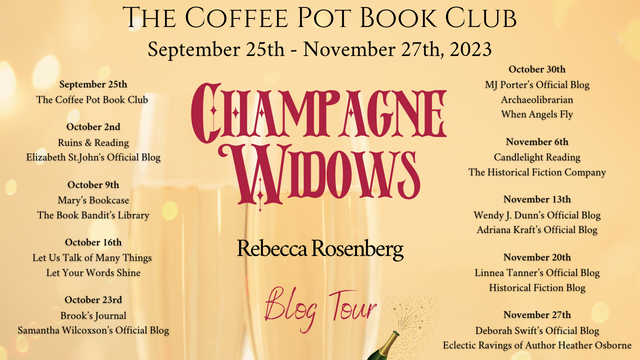
Rebecca is a champagne historian, tour guide, and champagne cocktail expert for Breathless Wines. Other award-winning novels include The Secret Life of Mrs. London and Gold Digger, the Remarkable Baby Doe Tabor.

Author Links:

Website: https://www.rebecca-rosenberg.com

Facebook: https://www.facebook.com/rebecca.rosenberg.novelist/

LinkedIn: https://www.linkedin.com/in/rebecca-rosenberg-novelist-a4906885/

Instagram: https://www.instagram.com/rebeccarosenbergnovelist

Book Bub: https://www.bookbub.com/profile/rebecca-rosenberg

Amazon Author Page: https://www.amazon.com/stores/Rebecca-Rosenberg/author/B075WGKJ3Y

Goodreads: https://www.goodreads.com/author/show/7652050.Rebecca_Rosenberg

Share this:

Like this:

Loading...

Filed Under:

Historical Fiction

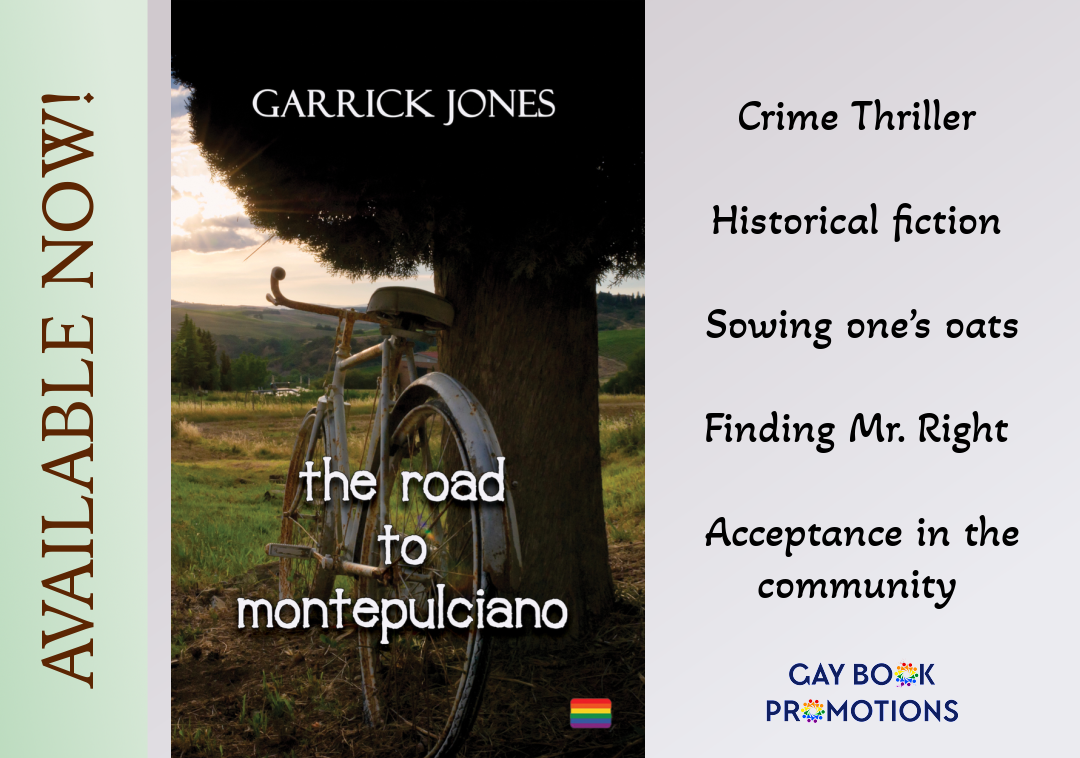
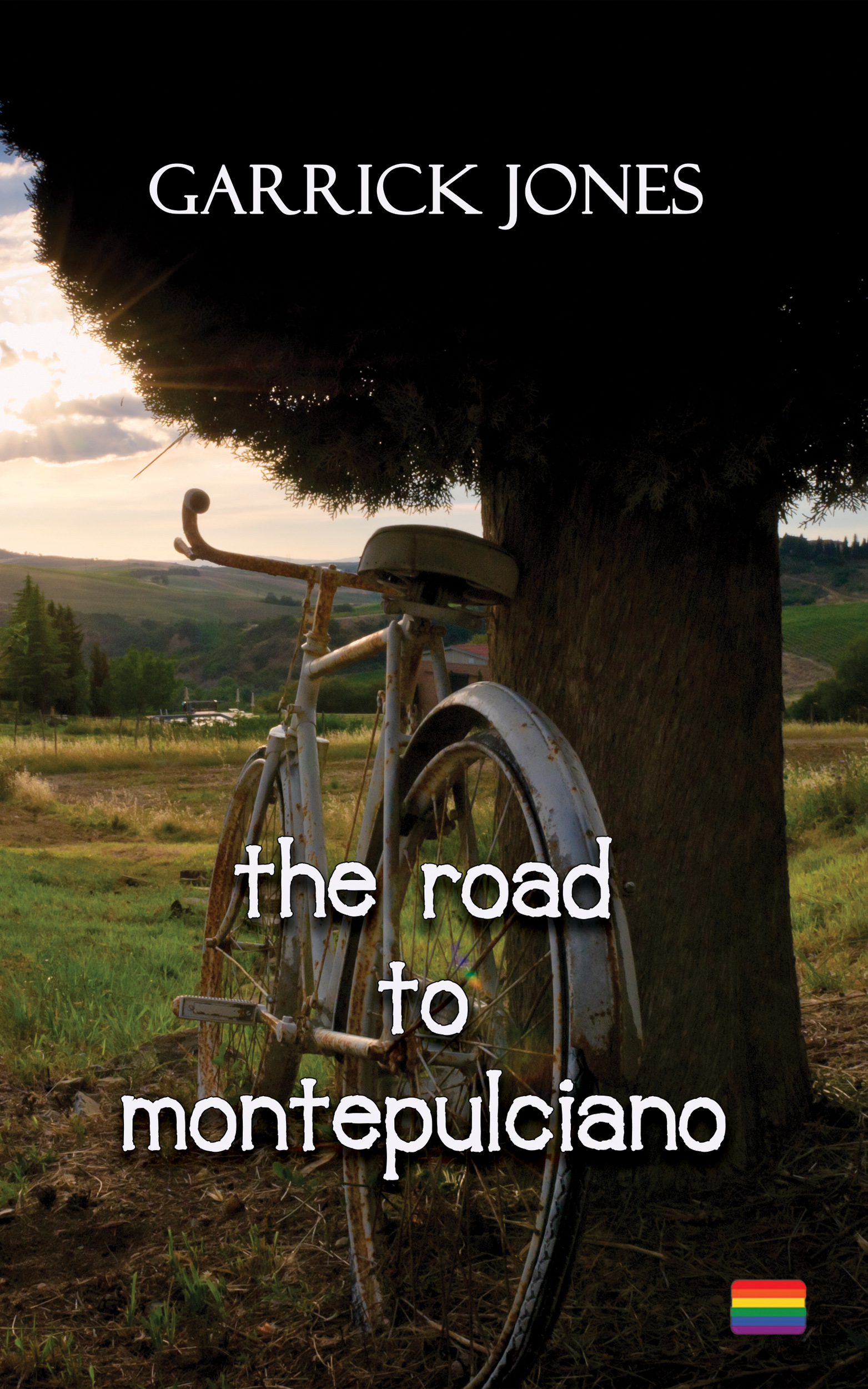
Book Blast! The Road to Montepulciano, by Garrick Jones @Gazrj01 #GayRomance #Thriller #HistoricalFiction #LGBTQ

BOOK BLAST

Book Title: The Road to Montepulciano

Author: Garrick Jones

Publisher: Moshpit Publications

Cover Artist: Garrick Jones

Release Date: September 19, 2023

Genre: Crime Thriller/Historical Fiction

Themes: Sowing one’s oats; Finding Mr. Right; Acceptance in community

Heat Rating: 5 flames

Length: 140 500 words/ 393 pages (paperback version)

It is a standalone book and does not end on a cliffhanger.

Goodreads


Buy Links

Amazon US | Amazon UK | Amazon AU | Smashwords


Blurb

Two years after finishing his tour of duty in the Occupational Forces in Japan, Damson O’Reilly arrives in Siena, Italy. Sight-unseen at a local auction, he buys an abandoned Tuscan farmhouse in which he aims to write, paint, and start a new life.

The house, passed over at auction, becomes an impulse buy when it’s put up for a final time. He’s prepared for a semi-ruin, happy to turn his hand to renovating the house—however, what he’s totally unprepared for are three dead bodies, one of which he stumbles over when he arrives at La Mensola, the name of his isolated farmhouse on the road between Siena and Montepulciano.

Against the backdrop of a series of grisly murders, The Road to Montepulciano is the story of a young man, still suffering the scars of war, who, despite betrayal of trust and surrounded by a complex web of lies, finds friendship, love and the warmth of community.


Excerpt

I was lying in bed listening to Donati potter around in the kitchen for a few minutes, trying to make up my mind whether or not to get out of bed. I checked my watch: half past five. It was still dark outside—it wouldn’t start getting light for another three-quarters of an hour.

He had to know, I thought, reflecting on the whole of last evening. He must have guessed that I was queer, otherwise what had happened wouldn’t have taken place. We’d have washed separately, each waiting in our rooms until the other had finished, then continued to drink, play cards and behave like kids, but with our clothes on … or at least our underwear.

Some people just seemed to know it about me, although I wasn’t aware that I’d ever telegraphed where my preferences lay. A few times during the war I’d found myself on the receiving end of some very not-so-subtle advances quite out of the blue, far more forthright than the almost imperceptible, ever-so-slightly charged evening I’d enjoyed last night. And as for him? Well, I wasn’t sure just yet. There was something though that made me wonder: a frequent holding of eye contact, as if he was trying to discover what I was thinking, always breaking away abruptly with a soft smile on his face.

I’d never been able to recognise who was one of the tribe like some of my bedfellows, although at the same time I’d never been shy to leap at an opportunity when it offered itself up. But I found it hard to initiate things. Usually I’d wait until the other person either made a move or gave me a sign that he was interested in more than passing the time of day.

I’d heard Italian men were basically open to anything—whether that was true or not, I had no idea. Maybe Donati was just a regular man who liked a bit of variety every so often—I’d met a few of those—or maybe he was just like me: lonely and looking for a friend.

Deciding to finally get up, I’d barely thrown back the sheet and sat up, my feet drawn up and knees splayed while I leaned over, searching for my cigarettes—which for some strange reason I’d thrown into my haversack last night—when Renzo walked into the room with a demitasse in each hand. The smell of the coffee made my stomach grumble.

He was naked too. It seemed that clothing was to be an optional extra during my stay … I returned his smile.

Buongiorno, Damson,” he said, handing one of the cups to me, then sat in the middle of the bed, one of his legs at an angle, the knee resting on my foot.

Buongiorno, Renzo. You. Sleep. Good?”

Hai dormito bene?” he corrected my Italian, saying the words slowly, twirling his finger in the air to encourage me to repeat the correct version.

“In English?” Renzo asked after I’d got it right.

“Did you sleep well?”

When he repeated the words, he made a pretty good fist of it, so I held out my hand. The shake happened directly over my crotch, mainly because having finished his coffee he’d stretched out over the bed. It was obvious that my genitals were right in front of his face, but his eyes hadn’t flicked away from my own, despite his Cheshire cat grin. This time I was the first to break eye contact, playfully nudging his shoulder with my foot, then reaching for my cigarettes once more.

We chatted for a while, trying out words with each other while smoking, Renzo idly playing with the hair trail below his navel while we traded vocabulary for items in the room. Then, after we’d given each other a lesson on conjugating the present tense of the verb “to be” in our own languages, I checked my watch. “Is that the time?” I said in English. I jumped out of bed, pulling on my only pair of slacks and grabbing a white American T-shirt from my haversack. It was wrinkled, but there was nothing I could do about it.

“No …?” he asked, making a plucking gesture at his waist with his thumb.

Damn, I’d been so distracted that I’d forgotten. Pulling off my trousers, I rummaged in my backpack again and found a pair of Y-fronts—they were a French brand and fairly new on the market. I usually washed my smalls every night, but there’d been too much going on and it had slipped my mind

Renzo whistled as I pulled them on, watching as I put my hand down inside the front of the waistband and adjusted myself in the pouch before pulling on my trousers once more.

“You. Like?” I asked.

He nodded, so I found another pair, still in its packet, and threw them to him. “Go ahead,” I said, while pulling on my socks, then lacing my canvas shoes.

He undid the packet, swung his legs off the bed, put both feet in the underpants, then, as he stood up, pulled them up, turning to look at his arse in the mirror of the wardrobe. “Che bel culo,” he said, winking over his shoulder at me.

I laughed. That phrase I did understand, and he did have a very nice arse.


About the Author

From the outback to the opera.

After a thirty-year career as a professional opera singer, performing as a soloist in opera houses and in concert halls all over the world, I took up a position as lecturer in music in Australia in 1999, at the Central Queensland Conservatorium of Music, which is now part of CQ University.

Brought up in Australia, between the bush and the beaches of the Eastern suburbs, I retired in 2015 and now live in the tropics, writing, gardening, and finally finding time to enjoy life and to re-establish a connection with who I am after a very busy career on the stage and as an academic.


Author Links

Blog/Website | Facebook | Twitter | Instagram

Pinterest | Newsletter Sign-up


Hosted by Gay Book Promotions

Share this:

Like this:

Loading...

Filed Under:

Historical Fiction

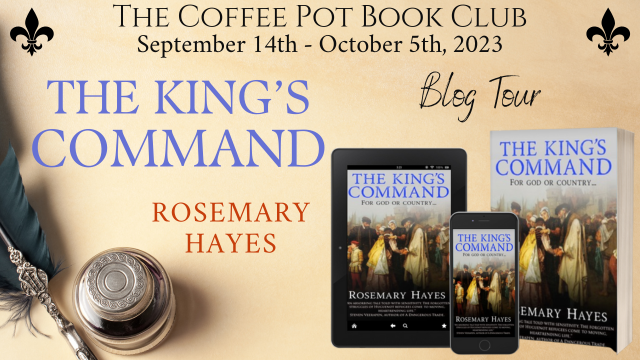
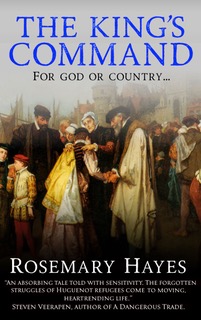
On Tour: The King’s Command, by Rosemary Hayes @HayesRosemary #BookReview #HistoricalFiction #Huguenots #LouisXIV #BlogTour #TheCoffeePotBookClub

Book Information 

Book Title: The King’s Command: For God or Country
Author: Rosemary Hayes
Publication Date: July 3rd, 2023
Publisher: Sharpe Books
Page Length: 415
Genre: Historical Fiction

Blurb:

Sixteen-year-old Lidie Brunier has everything; looks, wealth, health and a charming suitor, but there are dark clouds on the horizon. Lidie and her family are committed Huguenots, and Louis XIV has sworn to stamp out this ‘false religion’ and make France a wholly Catholic country. Gradually Lidie’s comfortable life starts to disintegrate as Huguenots are stripped of all rights and the King sends his brutal soldiers into their homes to force them to become Catholics. Others around her break under pressure, but Lidie and her family refuse to convert. With spies everywhere and the ever-present threat of violence, they struggle on. Then a shocking betrayal forces Lidie’s hand and her only option is to try and flee the country, a decision that brings unimaginable hardship, terror and tragedy and changes her life forever.

“One of the very best historical novels I have ever read.” Sandra Robinson, Huguenot Ancestry Expert

Buy Links: 

This title is available to read with #KindleUnlimited.
Universal Link: https://books2read.com/u/bW6zGG
Amazon UK: https://www.amazon.co.uk/dp/B0CB4RH68S
Amazon US: https://www.amazon.com/Kings-Command-God-Country-ebook/dp/B0CB4RH68S/
Amazon AU: https://www.amazon.com.au/Kings-Command-God-Country-ebook/dp/B0CB4RH68S/
Amazon CA: https://www.amazon.ca/Kings-Command-God-Country-ebook/dp/B0CB4RH68S/

Review

Do you have French Huguenot ancestors? If so, have any stories come down to you about their experience – what they endured, why they chose the risk of leaving France, how they decided to come to the country where they eventually settled? My answer to the first question is yes, but the scant information that was passed down through family stories and recorded over a century ago turns out to contain many errors. I blogged about my own Huguenot history yesterday and hope you will take a peek at it: https://wp.me/p9O7pv-3sP

In The King’s Command, author Rosemary Hayes has brought us a thoroughly researched and detailed account of life for one Huguenot family in southwestern France. Her story opens in 1680, some five years before King Louis XIV revoked the Edict of Nantes and required all protestants to convert to Catholicism: “One king, one country, one religion.” That the family are her direct ancestors and she has been able to visit the French town where they lived has added greatly to the richness and veracity of her fictionalized account.

I especially appreciated the author’s careful parsing of each step of the transition from respected freely worshipping tradesmen and professionals to a persecuted minority with no rights to property, profession, freedom of religion, or even life itself that took place in France over the decade of the 1680s and beyond.

The persecution and exodus were not a single event, although the crisis peaked in 1685. By opening her novel five years earlier, the author has succeeded in conveying  not only the gradual escalation of attacks and curtailment of rights that preceded the revocation, but also how news traveled, how families learned what was happening to others like them, how they first attempted to protect themselves and their assets, and how they began to consider whether to stay or flee. The peril and travails of her family in their escape is a story shared by thousands, many of whom did not make it.

The novel is well written, engaging, and rich with accurate historical detail. I found it easy to imagine my own ancestors, likely in a different region of France, gradually learning and observing those same changes and weighing their options as the depredations and dangers increased and came closer to home. A highly recommended read.  Adriana Kraft

About Rosemary Hayes:

Rosemary Hayes has written over fifty books for children and young adults. She writes  in different genres, from edgy teenage fiction (The Mark), historical fiction (The Blue Eyed Aborigine and Forgotten Footprints), middle grade fantasy (Loose Connections, The Stonekeeper’s Child and Break Out)  to chapter books for early readers and texts for picture books. Many of her books have won or been shortlisted for awards and several have been translated into different languages.


Rosemary has travelled widely but now lives in South Cambridgeshire. She has a background in publishing, having worked for Cambridge University Press before setting up her own company Anglia Young Books which she ran for some years. She has been a reader for a well-known authors’ advisory service and runs creative writing workshops for both children and adults.

Rosemary has recently turned her hand to adult fiction and her historical novel ‘The King’s Command’ is about the terror and tragedy suffered by the French Huguenots during the reign of Louis XIV.

Author Links:

Website: https://www.rosemaryhayes.co.uk

Twitter: https://twitter.com/HayesRosemary

Amazon Author Page: https://www.amazon.co.uk/Rosemary-Hayes/e/B00NAPAPZC

Goodreads: https://www.goodreads.com/author/show/80106.Rosemary_Hayes

Tour Schedule Page:  https://thecoffeepotbookclub.blogspot.com/2023/08/blog-tour-the-kings-command-by-rosemary-hayes.html

Share this:

Like this:

Loading...

Follow Adriana

Three-way fantasies? Curious about Swinging? Click above for our Swing Lifestyle series.

What if three (or more) people fall in love? Click above for our polyamory stories.

Looking for one woman, one man, hot sex, and perilous danger? Click above.

REVIEWS

Erotic Romance “Seducing Cat is a Must Read…Hot in all the right places!”

Love Bites and Silk Ties
Romantic Suspense: Mystery and Romance are woven well in The Painter is a Lady.

Romantic Suspense: “The Unmasking is a fascinating tale…some emotionally trying scenes.”

Erotic Romance FFM Menage: “Edgy characters, inclusive sexuality…The Reunion is not for the faint of heart.”

Erotic Romance FFM Menage: “The intimacy is genuine and breathtaking”

Subscribe to Blog via Email

Enter your email address to subscribe to this blog and receive notifications of new posts by email.

Join 1,357 other subscribers

Buy Adriana’s Books

Great Blog Guests!

Like and Follow our Author Page at SwingTowns!

If you’re curious about polyamory and the swing lifestyle, Swing Towns is a great place to check it all out!

Request an Authorgraph!

Categories

Contact Adriana

Want to get in touch? Click here to send us an email.