review

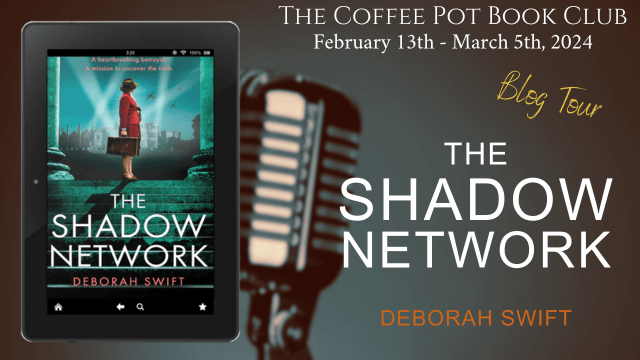
On Tour: The Shadow Network, by Deborah Swift @swiftstory @cathiedunn #WW2 #Thriller #HistoricalRomance #Review

Betrayal, treachery, and courage against the odds

BOOK INFORMATION

Book Title: The Shadow Network
Series: Secret Agent Series (but can be read as a stand-alone)
Author: Deborah Swift
Publication Date: 13th February 2024
Publisher: HQ Digital
Page Length: 376
Genre: Historical Fiction / WW2

BLURB

One woman must sacrifice everything to uncover the truth in this enthralling historical novel, inspired by the true World War Two campaign Radio Aspidistra…

England, 1942: Having fled Germany after her father was captured by the Nazis, Lilli Bergen is desperate to do something pro-active for the Allies. So when she’s approached by the Political Warfare Executive, Lilli jumps at the chance. She’s recruited as a singer for a radio station broadcasting propaganda to German soldiers – a shadow network.

But Lilli’s world is flipped upside down when her ex-boyfriend, Bren Murphy, appears at her workplace; the very man she thinks betrayed her father to the Nazis. Lilli always thought Bren was a Nazi sympathiser – so what is he doing in England supposedly working against the Germans?

Lilli knows Bren is up to something, and must put aside a blossoming new relationship in order to discover the truth. Can Lilli expose him, before it’s too late?

Set in the fascinating world of wartime radio, don’t miss The Shadow Network, a heart-stopping novel of betrayal, treachery, and courage against the odds.

EXCERPT

England, 1940

The knock came again.

‘Mads?’ Lilli called.

Maddie came out of her room with the newspaper under her arm, slopping to the door in her slippers. ‘You could see who it is,’ she grumbled. ‘Probably someone collecting for the Sally Army.’

Lilli let the square, no-nonsense figure of Maddie push past her to unlock the chain and the Yale lock, just as the insistent knock came again.

‘All right, all right, I’m coming.’ Maddie yanked the door open and three men forced their way into the hall. One in a wet trilby hat followed by two policemen.

‘Lilliana Bergen?’ asked the man in the trilby.

‘No, I’m Madeleine Kettering,’ Maddie said. ‘That’s Lilli. What do you want?’

The three men surrounded Lilli before she even had time to blink.

‘What is it? What have I done?’ She tried to back away, a chill rippling down her spine. This was how they came for people, back in Germany.

‘I’m sorry, miss,’ the man in the trilby said, ‘but all enemy aliens have to come with us. Orders of the government.’

Enemy aliens? No, it must be a mistake. ‘You’ve got the wrong person. I’m a refugee. I came here to escape the Nazis. I’ve been in London more than two years.’

‘We have our orders,’ one of the policemen said. ‘You can take a suitcase with you though, one suitcase.’

The words hit her like a fist. One suitcase. That was what they said to Papa. And she’d no word of him since.

But this was England, not Germany. ‘It’s a mistake, I tell you. I have all the correct paperwork. Ask anyone. I’ve a job here, friends here. I’m about to go to work. You can’t possibly believe I—’

‘We’ll give you five minutes to pack,’ the second, burlier policeman said.

‘Let me speak to someone,’ Maddie said. ‘She’s done nothing. She’s about to train as a warden with the WRVS. The letter came today. Wait there, I’ll get it.’

‘No!’ Lilli tried to protest but Maddie had gone to get the letter from the mantelpiece. The men looked a little more uncertain.

‘Here!’ Maddie said, thrusting it into their hands.

One of the men looked at the envelope. ‘Lily Berg? According to our records, you’re Lilliana Bergen. Who is this Lily Berg? And it says you’re Welsh.’ He turned to Maddie. ‘She’s not Welsh, is she?’

‘They got it wrong. It must be a mistake . . .’ Lilli tailed off. She was caught, and couldn’t answer.

‘I can vouch for her good character,’ Maddie said, ‘and so can her employer, Reg Benson; she works as a singer and as a domestic for Mrs—’

‘It doesn’t matter,’ said the man in the trilby. ‘All that will be looked into later.’

‘It’s an offence for a refugee to use a false name,’ the big policeman said. ‘She’s to come with us. Fetch your things, miss, or we’ll take you without them.’

Lilli looked at Maddie desperately, unable to believe what she was hearing.

‘Five minutes.’ The trilby man tapped his watch in a manner designed to intimidate.

She ran up the stairs again, her heart thudding. What to pack? Practical clothes. She was still wearing the silk dress, so she grabbed a cardigan and knitted jersey, plus a blouse and a skirt from the rail in the wardrobe, and another pair of flat shoes, the ones she used as a cleaner.

She was stopped in her tracks by the photo of her father, staring out at her from its silver frame.

Oh, Papa, she thought. Where will they take me?

She swept it up and pressed it to her heart, then thrust it into the inside pocket of her suitcase. From the dressing table she retrieved the gold Star of David on a chain that her mother had given her as a child. She never wore it, as it drew too much attention, but she couldn’t leave it behind.

‘Ready?’ A man’s voice from downstairs.

She grabbed her sheet music from the bedside table and at the last minute remembered her nightdress and squashed it in on top.

When she came down Maddie was complaining about how it was ridiculous, and she’d lose money from not having Lilli’s wages coming in.

‘Then get another lodger,’ the man in the trilby said. ‘One that isn’t a German.’

‘She’s a refugee,’ Maddie protested. ‘She came to get away from Hitler.’

‘Same difference.’ The burly policeman shrugged.

A police van idled at the kerb in a wreath of exhaust smoke. The officers yanked open the back doors and pushed Lilli to get in. Inside shivered another woman, an older lady, whose white face and carpet bag stuffed to overflowing, told Lilli she’d been caught equally unprepared.

‘Where are they taking us?’ Lilli asked.

The woman shook her head violently, her mouth sealed shut.

Lilli turned to see Maddie yelling, ‘I’ll report you! It’s disgusting! You can’t do this!’ and thumping on the side of the van. A noise that felt like small explosions. Then Maddie’s desperate voice; ‘Lilli! Write, hear me? You’d better write!’

MY REVIEW

Eight decades after the World War Two era, we continue to discover more and more about the colossal efforts of the Allied spy network and subversive efforts that collectively, ultimately, brought Hitler down.

In The Shadow Network, Author Deborah Swift has plunged us into a richly detailed and thrilling encounter with one of these operations: The clandestine broadcasts masquerading as Echt Deutsch (True German) that delivered false and disheartening information to the Reich troops, beginning in 1942.

I especially appreciated the author’s choice of a part-Jewish German refugee as her heroine. Lilli’s personal story kept me as a reader immersed in the horror of the Nazi regime and the absolute necessity of winning the war. The fear that held Lilli back from exposing what she knew was real, and it nearly cost her – and their broadcasting team – everything.

Five stars, highly recommend.

BUY LINKS

Universal Buy Link: mybook.to/RadioLies
Link to bookshop: https://harpercollins.co.uk/products/the-shadonetwork-ww2-secret-agent-series-deborah-swift

AUTHOR BIO
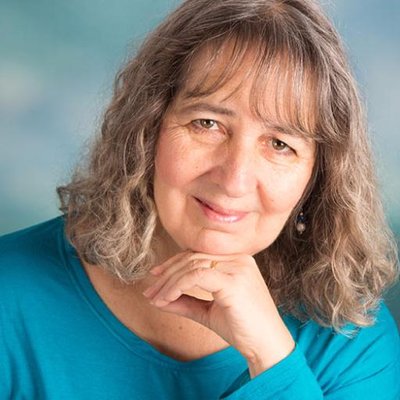
Deborah Swift is the English author of eighteen historical novels, including Millennium Award winner Past Encounters, and The Lady’s Slipper, shortlisted for the Impress Prize.

Her most recent books are the Renaissance trilogy based around the life of the poisoner Giulia Tofana, The Poison Keeper and its sequels, one of which won the Coffee Pot Book Club Gold Medal. Recently she has completed a secret agent series set in WW2, the first in the series being The Silk Code.

Deborah used to work as a set and costume designer for theatre and TV and enjoys the research aspect of creating historical fiction, something she loved doing as a scenographer. She likes to write about extraordinary characters set against the background of real historical events. Deborah lives in North Lancashire on the edge of the Lake District, an area made famous by the Romantic Poets such as Wordsworth and Coleridge.

Author Links:

Twitter https://twitter.com/swiftstory
Facebook: https://www.facebook.com/authordeborahswift/
Website: www.deborahswift.com
Pinterest: https://www.pinterest.co.uk/deborahswift1/
Amazon  http://author.to/DeborahSwift
BookBub: https://www.bookbub.com/authors/deborah-swift

Share this:

Like this:

Loading...

Filed Under:

review

Golden Years and Silver Linings ~ My Review #LesbianRomance #LaterInLife #Review #FiveStars @IHeartLesFic

For starters – a golf course in Palm Springs? Count me in! Mr. Kraft and I get to Palm Springs at least once a year, and our son and his partner join us from L.A. (where we absolutely refuse to drive any longer). We’ve taken in the marvelous Judy Show at the Purple Room, gone Tiki Bar hopping (the Reef is a favorite), hiked the stunning Andreas Canyon trail with its native palm trees and clear creek waters, explored the Art museum, taken the aerial tram and hiked at the top, toured modernism houses, and sampled more restaurants than are probably good for us.

Palm Springs may have been a reason I picked up this book and kept reading upon first opening it, but there is so much more.

BOOK INFORMATION

Golden Years and Silver Linings: A Lesbian Romance
by Linda M. Ford (Author), Patricia Grayhall (Author)
ASIN: ‎B0CFSG8X9V
Publisher: Rain City Press
Publication date: ‎August 14, 2023
Print length: 283 pages
Genres: Lesbian Fiction, Lesbian Romance, Women’s Divorce Fiction

MY REVIEW:

This book is a breath of fresh air for all of us over sixty. I could not put it down. Having lived through the Women’s Lib of the 60s and Consciousness Raising of the 70s, I was impressed with the realistic portrayal of that era – and chagrined yet again over how long it took for our culture to move from there to inclusiveness and acceptance for the LGBTQ community (a battle we are obviously still fighting).

If I had to identify two main themes that stood out to me, they would be fidelity and authenticity. Now in their late sixties, the two main characters first fell in love with each other in their early twenties, in 1972. By then Christina already identified as lesbian, but Robyn Elizabeth had never considered that there might be any other option than to fall in love with a man. I appreciated the authors’ authentic description of her inner struggle to accept her feelings and finally act on them in that era. In 2023, readers who are younger may write off Robyn Elizabeth as an undeserving wimp when she ultimately turns tail and runs, abandoning Christina. I fully understood her.

The dual timeline novel gives us a window into their 1972 experience, then drops us into a chance meeting 46 years later, in 2018, on a golf course in Palm Springs. As a sidebar, I love Palm Springs and thoroughly enjoyed it vicariously through the characters’ eyes.

Christina’s wife has died of cancer, in 2016, and Robyn Elizabeth is in a stable 40+ year marriage that is relatively comfortable but lacking passion. We are allowed to experience the inner world of both characters as they journey toward what many might think an impossibility – a late-in-life happy ending.

Christina is deeply afraid of being hurt again, as she was by the abrupt break-up in 1972. Robyn Elizabeth must once more examine her feelings and become faithful – not to a marriage that is already broken, but to her authentic self. Even knowing that all romance novels have a happy outcome, I was pulled into their experience and found myself struggling to envision how it all could ever work out. And that is what kept the pages turning.

BUY LINK:

https://www.amazon.com/gp/product/B0CFSG8X9V/

Available On Kindle Unlimited

Share this:

Like this:

Loading...

Filed Under:

review

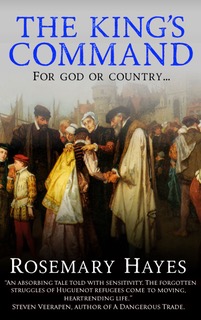
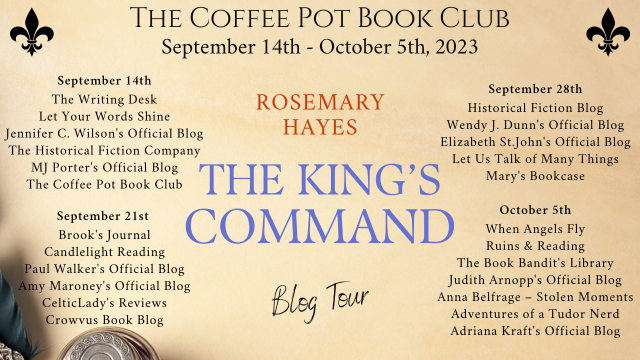
On Tour: The King’s Command, by Rosemary Hayes @HayesRosemary #BookReview #HistoricalFiction #Huguenots #LouisXIV #BlogTour #TheCoffeePotBookClub

Book Information 

Book Title: The King’s Command: For God or Country
Author: Rosemary Hayes
Publication Date: July 3rd, 2023
Publisher: Sharpe Books
Page Length: 415
Genre: Historical Fiction

Blurb:

Sixteen-year-old Lidie Brunier has everything; looks, wealth, health and a charming suitor, but there are dark clouds on the horizon. Lidie and her family are committed Huguenots, and Louis XIV has sworn to stamp out this ‘false religion’ and make France a wholly Catholic country. Gradually Lidie’s comfortable life starts to disintegrate as Huguenots are stripped of all rights and the King sends his brutal soldiers into their homes to force them to become Catholics. Others around her break under pressure, but Lidie and her family refuse to convert. With spies everywhere and the ever-present threat of violence, they struggle on. Then a shocking betrayal forces Lidie’s hand and her only option is to try and flee the country, a decision that brings unimaginable hardship, terror and tragedy and changes her life forever.

“One of the very best historical novels I have ever read.” Sandra Robinson, Huguenot Ancestry Expert

Buy Links: 

This title is available to read with #KindleUnlimited.
Universal Link: https://books2read.com/u/bW6zGG
Amazon UK: https://www.amazon.co.uk/dp/B0CB4RH68S
Amazon US: https://www.amazon.com/Kings-Command-God-Country-ebook/dp/B0CB4RH68S/
Amazon AU: https://www.amazon.com.au/Kings-Command-God-Country-ebook/dp/B0CB4RH68S/
Amazon CA: https://www.amazon.ca/Kings-Command-God-Country-ebook/dp/B0CB4RH68S/

Review

Do you have French Huguenot ancestors? If so, have any stories come down to you about their experience – what they endured, why they chose the risk of leaving France, how they decided to come to the country where they eventually settled? My answer to the first question is yes, but the scant information that was passed down through family stories and recorded over a century ago turns out to contain many errors. I blogged about my own Huguenot history yesterday and hope you will take a peek at it: https://wp.me/p9O7pv-3sP

In The King’s Command, author Rosemary Hayes has brought us a thoroughly researched and detailed account of life for one Huguenot family in southwestern France. Her story opens in 1680, some five years before King Louis XIV revoked the Edict of Nantes and required all protestants to convert to Catholicism: “One king, one country, one religion.” That the family are her direct ancestors and she has been able to visit the French town where they lived has added greatly to the richness and veracity of her fictionalized account.

I especially appreciated the author’s careful parsing of each step of the transition from respected freely worshipping tradesmen and professionals to a persecuted minority with no rights to property, profession, freedom of religion, or even life itself that took place in France over the decade of the 1680s and beyond.

The persecution and exodus were not a single event, although the crisis peaked in 1685. By opening her novel five years earlier, the author has succeeded in conveying  not only the gradual escalation of attacks and curtailment of rights that preceded the revocation, but also how news traveled, how families learned what was happening to others like them, how they first attempted to protect themselves and their assets, and how they began to consider whether to stay or flee. The peril and travails of her family in their escape is a story shared by thousands, many of whom did not make it.

The novel is well written, engaging, and rich with accurate historical detail. I found it easy to imagine my own ancestors, likely in a different region of France, gradually learning and observing those same changes and weighing their options as the depredations and dangers increased and came closer to home. A highly recommended read.  Adriana Kraft

About Rosemary Hayes:

Rosemary Hayes has written over fifty books for children and young adults. She writes  in different genres, from edgy teenage fiction (The Mark), historical fiction (The Blue Eyed Aborigine and Forgotten Footprints), middle grade fantasy (Loose Connections, The Stonekeeper’s Child and Break Out)  to chapter books for early readers and texts for picture books. Many of her books have won or been shortlisted for awards and several have been translated into different languages.
Rosemary has travelled widely but now lives in South Cambridgeshire. She has a background in publishing, having worked for Cambridge University Press before setting up her own company Anglia Young Books which she ran for some years. She has been a reader for a well-known authors’ advisory service and runs creative writing workshops for both children and adults.

Rosemary has recently turned her hand to adult fiction and her historical novel ‘The King’s Command’ is about the terror and tragedy suffered by the French Huguenots during the reign of Louis XIV.

Author Links:

Website: https://www.rosemaryhayes.co.uk

Twitter: https://twitter.com/HayesRosemary

Amazon Author Page: https://www.amazon.co.uk/Rosemary-Hayes/e/B00NAPAPZC

Goodreads: https://www.goodreads.com/author/show/80106.Rosemary_Hayes

Tour Schedule Page:  https://thecoffeepotbookclub.blogspot.com/2023/08/blog-tour-the-kings-command-by-rosemary-hayes.html

Share this:

Like this:

Loading...

review

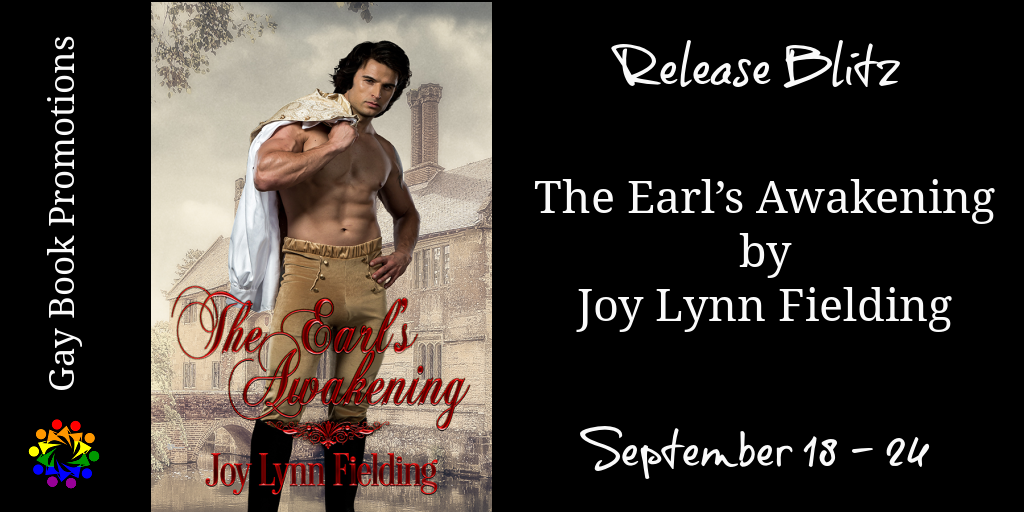
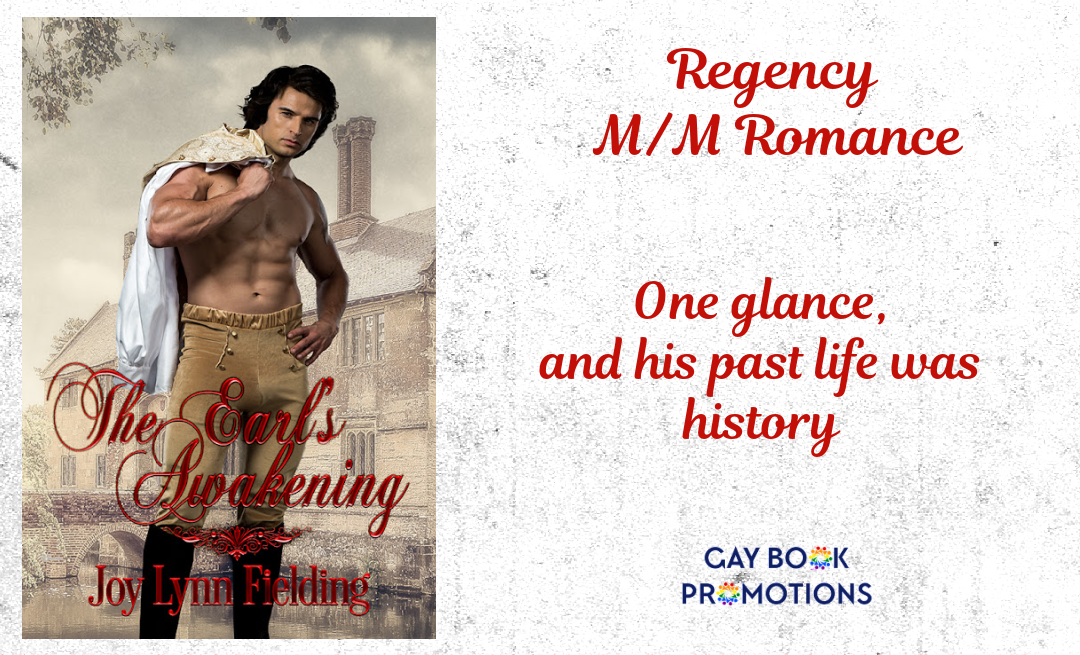
Recent Release: The Earl’s Awakening, by Joy Lynn Fielding #LGBTQ #GayRomance #Regency #Review #Giveaway

RECENT RELEASE

Book Title: The Earl’s Awakening

Author: Joy Lynn Fielding

Publisher: Extasy Books

Cover Artist: Martine Jardin

Release Date: September 8, 2023

Genre: Regency M/M romance

Tropes: Rake/bad boy romance

Themes: Learning to live, self-discovery.

Heat Rating: 5 flames

Length: 55 000 words/ 198 pages

It is a standalone story and does not end on a cliffhanger.

Goodreads


Buy Links

Extasy Books | Amazon US | Amazon UK


One glance, and his past life was history.

Blurb

Leander Talbot’s life changed forever when his wife died. He is now reluctantly venturing back into society, knowing that, as the Earl of Ockley, he must marry again to produce an heir. But he can’t bring himself to the sticking point. Instead, he spends his time evading the matchmaking mamas of the ton.

The dark and dangerous Duke of Arden is an infamous libertine. It is said that he seduces innocents, and there are even more sinister tales whispered of his predilections. Only the wild young blades who form his retinue know the truth, but he is shunned by all save those wishing to court notoriety.

A chance meeting brings Leander into Arden’s orbit. Ignoring the warnings about Arden’s intentions, Leander is drawn into a seductive world of sexual indulgence. There, he finds the freedom he craves from his overbearing family. By the time he suspects Arden might have ulterior motives, it may be too late to save his reputation—and his heart.

Excerpt

Leander sighed slightly. He had immersed himself in work and duty since Bella’s death, but it was only now he understood how removed from his contemporaries he had become. Most faces here were unfamiliar to him. Take the character in the corner—a dark complexion, his dress rich but careless in a way that proclaimed he cared little for the opinion of society. Leander was certain he had never set eyes on him, though the deference with which his circle of friends was treating him indicated that he was a man of some standing. He took the opportunity to ask the servant who brought him a glass of champagne.

“His Grace the Duke of Arden, my lord,” the man informed him.

The name was one with which Leander was familiar. It was a name with which all of London and some of the more enlightened provinces were familiar. Arden represented all that was decadent in the ton, his philandering ways extending far beyond opera dancers and actresses to ladies of quality. And it was not only widows or liaisons with married ladies, for it was said of him that he had ruined more than one young maiden. The number of duels that he had fought and won, the drunken orgies at which he presided, and his losses and gains at the gaming table had all assumed the proportions of legend. There were still darker things whispered about him. Only the coterie of wild young blades who formed his retinue knew the truth of these, but the intimations were there, and Arden remained unrecognised by all save those wishing to court notoriety.

Leander became aware that Arden was returning his gaze, his heavy-lidded eyes holding what appeared to be a gleam of amusement. As Leander watched, Arden raised his glass in a mocking salute before putting it to his lips and tossing back the contents.

Perhaps it was the champagne, perhaps it was the shock of realising that his acquaintances now viewed him as a prig. Whatever the reason, some demon prompted Leander to his feet. In defiance of all proper behaviour, he crossed the room to Arden and introduced himself.

Those dark eyebrows raised briefly, a noble head was inclined, and one of the young men clustered around Arden was moving from his seat, offering it to Leander.

“So you’re Ockley.” The duke’s aristocratic fingers curved elegantly around the stem of his glass and his dark eyes surveyed Leander as he sat. “I didn’t think this to be your sort of place. I’d thought you more of a White’s man.”

The provocation was there. It was well known that Arden had been pre-emptively blackballed by the respectable club lest any member lose their faculties and propose him for membership.

“Indeed?” Leander said stiffly, his somewhat lamentable temper aroused by Arden’s dismissal of him as a priggish bore. “And I thought you a legend, sir. A cautionary tale used by protective parents to keep young cubs in line.”

Reaction rippled through the assembled ranks, but Leander’s gaze was on Arden’s face. A smile touched his lips as he looked at Leander. “A palpable hit, Ockley,” he murmured. His voice was rich and soft, with a hint of steel that intrigued Leander.

“Lea.” Henry’s voice broke in. He was not precisely floored, but he was foxed enough to ignore all dictates of manners as he tugged insistently at his brother’s arm. Knowing that if he resisted, Henry would only become more forceful, Leander allowed himself to be raised to his feet. His brother had been the same since nursery days—when he wanted something, he wanted it now, and it was usually attention he craved. Leander directed a small bow towards Arden, whose smile had widened at the spectacle Henry was making of them both, before following his brother’s urgent strictures to leave immediately.

Review

I’m always eager to pick up a new LGBTQ romance set in the regency era, where we know such relationships had to be clandestine, deeply hidden, highly cloaked. Having read (and re-read, more times than I can count) all of Jane Austen’s groundbreaking novels from the era, I’m already steeped in what such a novel should look like, and The Earl’s Awakening did not disappoint.

Where the novel departs from the period regency, of course, is in its open bedroom – or ballroom, or card room, or wherever the participants engage in their flaming debauchery and wild orgies.

The novel maintains a single point of view throughout, that of Leander, Earl of Ockley. As the novel opens, his behavior in every aspect conforms with what is expected from an upstanding and desirable male member of the Ton. Having recently lost his beloved wife, he honors the needs of his lady mother and plans to re-marry to provide her with the required heir – just not at present.

Seeds of his dramatic transformation are sown in Chapter Two when he first meets the Duke of Arden at a London gaming salon and notices, in spite of himself, that “his voice was rich and soft, with a hint of steel that intrigued Leander.”

Leander’s internal struggle to deny his urgings and prevent himself from acting upon them is richly and authentically conveyed. At nearly every turning point, he responds with action – powerless to resist that hint of steel – then tries to deny that what has occurred satisfies his deepest desires. The many explicit scenes that propel his journey forward are crafted with superb eroticism.

Is he being played for a fool by a rake who intends merely to ruin him? As he comes to recognize and claim what he truly wants, will he find himself rejected? Afficionados of gay erotic romance will relish the journey and find its conclusion highly satisfying.

Five Stars.

About the Author

Joy Lynn Fielding lives in a small English market town, where she indulges her passions for vintage aircraft, horse riding and gardening (though not all at the same time).

Joy tends to wax lyrical about the fascinating facts she discovers during her research for books. Thankfully, she has a very patient Labrador who has a gift for looking interested in what she’s saying while he waits for the food to arrive.

Social Media Links

Blog/Website | Facebook | Newsletter Sign-up


Giveaway

Enter the Rafflecopter Giveaway for a chance to win

a $15 Amazon gift card

a Rafflecopter giveaway


Hosted by Gay Book Promotions

Share this:

Like this:

Loading...

review

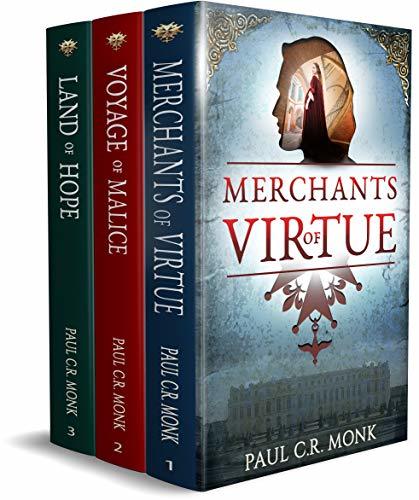
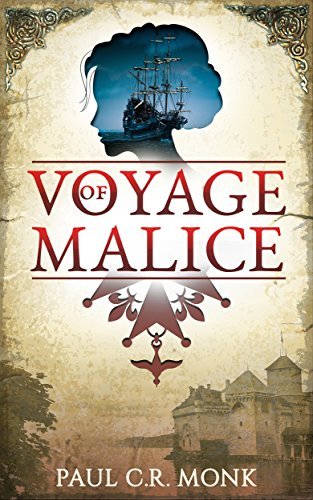
The Huguenot Chronicles, by Paul C. R. Monk @pcrmonk: Review and Reflections #Huguenot #HistoricalFiction #KU

Both my husband and I have French Huguenot ancestors. Each of our mothers carried the original immigrant’s Huguenot surname, though anglicized. Not long after the 1685 revocation of the Edict of Nantes, his mother’s ancestor emigrated from Normandy, France, to the Northern Neck of Virginia. He arrived sometime between 1687 and 1693. It is thought he may have come through England, possibly via Jersey in the Channel Islands. We have no family stories about this trip.
My mother’s ancestor arrived somewhat later. Along with his two brothers, he landed in Philadelphia in 1752, having set sail from Antwerp, Belgium. The story we have is that the boys’ mother had fled France with her family many years earlier and settled in Geneva, Switzerland. After her death, the three sons, by then adults, chose to come to the Colonies.

We have no records of the financial situation of either family at the time they left France or arrived in the Colonies. My mother’s ancestors, like many Huguenots, were well educated and quickly found jobs teaching in the Pennsylvania Dutch region west of Philadelphia. My husband’s ancestor must have come with resources. Though he had previously married in France, he fairly quickly married a Virginia woman. By the time he died some 35 years later, he had become the owner of a vast tobacco plantation in Westmoreland County, which he purchased from from Catherine Culpeper and her husband, Thomas Fairfax, 5th Lord Fairfax. His neighbors included the Washingtons, the Monroes, and the Lees.

So it was with great personal interest that each of us read a fairly recent release, The Huguenot Chronicles, by Paul C.R. Monk. The fictional story is, according to its description, “based on true events.” I do not know if this means it is true of a particular family, or more generally true. I certainly believe that every event reported in the series actually happened, over and over, to countless Protestants of conscience during the years preceding and following the edict’s revocation.

This series is a chilling story about a treacherous and hazardous period of history. Thousands of French Protestants did not survive the harsh turnabout that took place in 1685. Thousands more converted to Roman Catholicism to save their lives and those of their families.
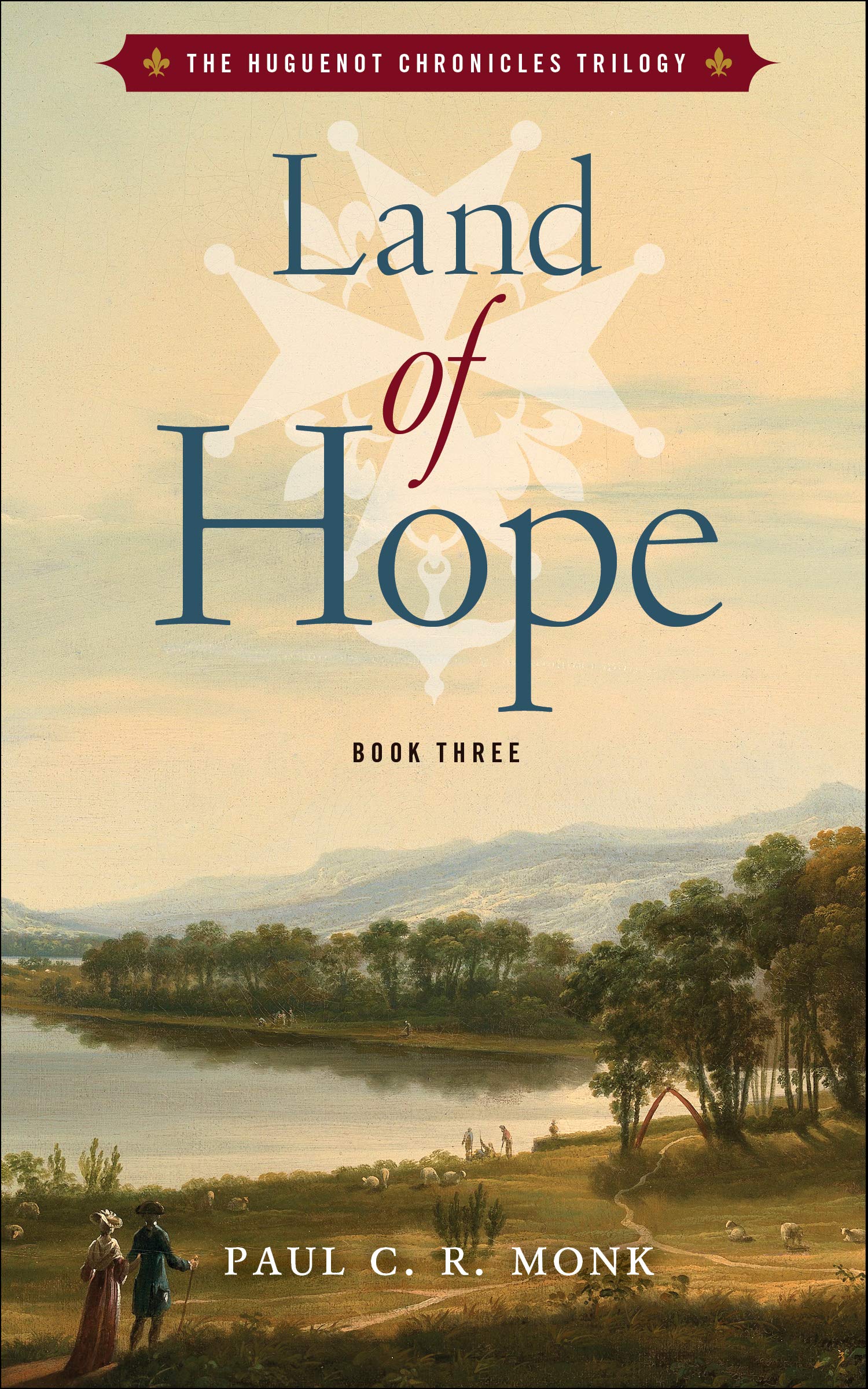
As I read these books, I was constantly imagining the experience and journey of my ancestor. Did that family, like the heroine, have a long trek on foot through France to reach the refuge offered by Switzerland? Did they, like her, travel with a small band of refugees, walking by night, hiding by day? Since I do not know when my ancestor’s mother fled with her three sons or how old they were then, I wonder how much her experience paralleled the travails so vividly brought forth in Monk’s work.

My husband’s ancestor likely travelled a different route; much of Normandy is not far from England. Perhaps he, along with other refugees, was able to cross the channel furtively and proceed with less threat from there. It is not clear from existing records whether his first wife had died in France, or whether he left her behind. Records do show that three children of that union reached adulthood in France. Perhaps, as with some of the families in Monk’s story, his wife was unwilling to make the sacrifice and chose instead to remain in France with her children and convert.

Can the fictional family in Monk’s series possibly have a happy ending? Odds are definitely against them; but so were the odds against safe and successful flight from persecution in France for my ancestor and my husband’s. Were this not true for thousands more, the early colonies and our infant nation would not have benefitted so greatly from the significant contributions of Huguenot immigrants.
In short, I found this trilogy of books to be well-told, gripping, and realistic. I highly recommend it, especially to anyone with Huguenot ancestry. More generally, it offers a vivid picture of prejudice, hatred, and power in a tumultuous period of history that many Americans know little about.

Five Stars.

Buy Link:

https://www.amazon.com/Huguenot-Chronicles-Merchants-historical-fiction-ebook/dp/B09J3RYL5G/

Read for Free on Kindle Unlimited


Share this:

Like this:

Loading...

Filed Under:

review

My Review: Code Girls, by Liza Mundy @lizamundy #WWII #WomensHistory #Review #KU

Code Girls, by Liza Mundy, is the third book in my current series of book reviews featuring the role of women in the WWII Allied victory. The first two books – The Atomic City Girls, and Daughters of the Night Sky – are historical fiction based very closely on actual events and characters.

Code Girls is not fiction, even though through most of its pages it reads as smoothly and dramatically as any novel. Following interviews with more than twenty participants and years of meticulous research, much of the data having spent decades as classified and unavailable, Liza Mundy has crafted the story of over 10,000 American women, most freshly out of college, who secretly worked during the war to break the German and Japanese military codes. These women saved thousands of lives and in no small part helped to bring down first Germany, and then Japan.

They – and their superiors – could tell no one about it for decades.

In November, 1941, letters began going out to select women who were seniors at several of the nation’s elite colleges. The letters invited the women to an interview, where the questions simply were whether they liked crossword puzzles and if they were engaged to be married. If they answered appropriately, they were invited to further meetings where they learned about “cryptanalysis” and were told never to utter that word to anyone else. They entered on-campus training in code breaking – again, about which they could tell no one, not even family members. Those who passed the rigorous training were the earliest recruits to facilities being readied for them in Washington, D.C., by both the Navy and the Army.

Over the ensuing years, recruitment criteria broadened, but secrecy, the ability to identify patterns, and having a bright mind remained paramount. Mundy’s account traces the initial American codebreaking developments between the wars, then proceeds through the war years chronologically. By weaving together historical data and material from her interviews, she provides a window into the mundane as well as the dramatic. We learn what interaction was like in the cramped working quarters; how the women were treated by outsiders – who could never know how technical and important their work was – how they spent their relatively few free hours; and, for many of them, how their lives unfolded after the war.

Most of them remained unacknowledged and unsung for the rest of their lives. Some family members never learned what a mother – an aunt – a grandmother – had accomplished, how many ships were sunk because the Navy “happened” to be in the right place at the right time, due to intelligence provided by the codebreakers.

I found this book to be both informative and very engaging, and I highly recommend it.

BUY LINK

https://www.amazon.com/gp/product/0316439894/

Code Girls is available exclusively at Amazon
and is currently on Kindle Unlimited

Share this:

Like this:

Loading...

Filed Under:

review

On My #Bookshelf: Lilac Girls, by Martha Hall Kelly #WWII #TrueStory #HistoricalNovel #Review

I was a very young teenager when my mother took me to see the documentary movie Mein Kampf. I’ve never been able to erase those visuals, black and white photographs of concentration camp victims. That was my mother’s point: We must never forget.

Perhaps for that reason, though I choose to read a lot of history and historical novels, I’m never thrilled to encounter Nazi horror up close on the pages I’m reading. I don’t wish to experience it again.

I picked up Lilac Girls on the recommendation of a good friend.

I made it through the early segments – the invasion of Poland, Caroline Ferriday’s work with refugees in New York City, the early violence against Jews in Germany. I set the book down when the narrative placed the German female doctor – Herta Oberheuser – in Ravensbrück. I didn’t want to go there.

When I told my friend, she said to keep reading, that it would be worth it.

And it was. Through the horror, in spite of the appalling devastation and loss, this is a story about redemption. And it is a true story, fleshed out with the author’s narrative of the main characters’ internal thoughts and reactions.

Through tracing the actions (and probable thoughts) of real characters New York socialite Caroline Ferriday and Herta Oberheuser, then weaving them with the narrative of the fictional polish teenager Kasia Kuzmerick, the author plunges us into the horror of the Ravensbrück Concentration Camp for Women.

Fast forward the narrative to the mid-fifties, after the war is over. I was unaware this story was real until I began to read about the role of Norman Cousins, editor of The Saturday Review. My family subscribed to that magazine, and through my early adulthood, I did, as well.

At that point I set down the book again and began chasing links online – yes, true story, impacted by people I “knew,” though not personally. Caroline Ferriday enlisted the help of Norman Cousins and his platform to raise funds to bring thirty five of the Ravensbrück survivors to the US for whatever corrective surgery was possible. In so doing, she was continuing a family legacy of political and charitable activism. Since the publication of Lilac Girls, author Martha Hall Kelly has released two additional books, chronicling the role of Caroline Ferriday’s ancestors during WWI (Lost Roses) and the Civil War (Sunflower Sisters). I highly recommend all three books.

Share this:

Like this:

Loading...

Filed Under:

review

The Nightingale, by Kristin Hannah #Review #Mustread #Bookstoreread #MFRWAuthor

If you’ve hit my blog today, it goes without saying that you’re an avid reader, too. Welcome! My husband and I write together as Adriana Kraft, and you can browse our website and links to learn more about what we write.

When you read, do you typically stick to a single genre? Widely different genres? A Potpourri? I’m pretty eclectic, myself, and a lot of my pleasure-reading is in genres outside romance: history, biography, historical fiction, contemporary mainstream fiction. My Kindle says I have a 236 day reading streak. I don’t doubt that. I thought I’d share some of my favorites from time to time, in no particular order.

I’ll start with the book that got my current kick started, and one of the few in recent years I’ve read a second time: The Nightingale, by Kristin Hannah.

I love historical fiction, and I especially love when the main events are based on something that really happened. I’ve also long been drawn to novels (and history) about World War II, although I didn’t know that was a focus of this work when I started reading it. It was gifted to me by a close friend when I’d just had carpal tunnel surgery on my right wrist, and the surgeon had been unable to do it laparoscopically. I was functionally laid up and unable to write for several days.

I found this to be a five-star book, from start to finish. I’m a fast reader, but this was to be savored, even as I couldn’t wait to see what happened next. Since my first reading, I’ve pondered what the elements were that drew me into the story and back again for another round.

As a writer, I especially admired the structure Hannah used to present her story. She opens in 1995, in the reflective memories of one of the main characters. Here are that character’s opening lines:

If I have learned anything in this long life of mine, it is this: In love we find out who we want to be; in war we find out who we are.

Hannah does not tell us in that scene which of her two main characters is sharing memories – in fact, that discovery, towards the end of the book, is part of the book’s brilliance. We learn what happens across the war years, but we are never clear whose memory and present life we occasionally drop in on in the nineties. So part of the appeal of this book for me is its structure, both the weaving across the five-decade jump in time span, and the secrecy (one of many secrets) about whose memories and current life we are reading.

Two other aspects of the book are equally responsible for my “must read” (and re-read) recommendation. The first of these is her use of language. Of course it’s no surprise that a best-selling author creates magic with her words. When after the first 1990s scene she drops us into the bucolic setting of the Loire valley in 1939, I wanted to be there, in spite of knowing what was coming. Throughout, the text is rich, precise, inviting, invoking, equally powerful when the story is poignant or when it’s devastating. As always when I read a WWII story, there are some things I’d rather not see so clearly, but it’s important. We must never forget.

The final crucial feature of this book for me is that it tells a true story, in the broad sense of that word. During World War II, there were real people who experienced everything Hannah wrote. Everything. Her characters are not the actual heroes who did all those things, but nothing they’ve done across the span of the war was made up. It is all based on Hannah’s careful research and thorough understanding of Nazi-occupied France, Vichy France, and the countless stalwart, courageous ordinary citizens who risked everything to become resisters. Some, but not all, of the secrecy that pervades the story is driven by this fact: resisters must hide what they are doing. To reveal to the wrong person will cost lives – theirs, and those of countless others.

So I will close with another reflection from the opening scene: “As I approach the end of my years, I know that grief, like regret, settles into our DNA and remains forever a part of us.” Some of Hannah’s story is true about the past, but much of it, as this awareness, is equally true of the present.

Share this:

Like this:

Loading...

Filed Under:

review

Addicted – Will Recommend Gladly! #romanticsuspense #MFRWAuthor #Review

Addicted – Will Recommend Gladly!

These are words authors LOVE to hear. Four out of five Bites for The Painter is a Lady from Love Bites and Silk Ties!

“Mystery and romance are woven well in this tale. I got caught up in the small-town gossip as well as the intrigue. Michael is hero worth falling for and Brenda is a heroine who knows what she wants and isn’t afraid to get it. The host of secondary characters also make for an engaging story. Fans of small-town romance or romantic suspense will enjoy this. Happy to recommend.”

Can you tell we’re pretty pumped? This is why we work so hard 🙂 . We totally lost count of how many editing rounds this story went through with our marvelous editor at Extasy Books. The plot is complex, with a lot of twists and turns (it’s suspense, after all), and he kept finding spots where readers might get confused or lost. We’re grateful he hung on through the process.


Secrets. Trust. Courage.


Who will knuckle under first—

the war hero?

The spirited single mom?

Or the former high school bully who still hates them both?


BUY LINKS

PRINT

Amazon

E-BOOK

Amazon   Smashwords   iTunes

Kobo   B&N   Extasy Books

Full blurb and an excerpt are available at this LINK

Share this:

Like this:

Loading...

Filed Under:

Tagged With:

review

Great New Review for Writing Skin!

“Can an erotic romance involving three people have a happy ending for everyone involved? Is it even possible? Yes, at least in the plausible-enough world of this novel…Chapter by chapter, the characters and the reader wade steadily deeper into unmapped territory. Somehow it all works, and the menu of the place has enough variety to please most appetites. The sex scenes range from gentle rituals to intense, spontaneous fucks, and each scene leads to greater trust among the characters. Throughout the saga, all three central characters keep the strangely innocent quality of people who never lose their ability to empathize with others. You’ll be glad you met them.”

Read the entire review at lizardlez

Buy Writing Skin at Extasy Books

Skin 150
What would it be like to be romanced by not one but two potential partners, simultaneously? Luci Parker has finally achieved the career of her dreams as an erotica author – but the only romance in her life these days is in the books she writes. Long attracted to both men and women, Luci despairs of ever finding just one person to settle down with.

Owners of a South Side Chicago bookstore, Chai and Frank Ferguson eagerly devour Luci’s books as fast as she can write them, and now they wonder if she might be the woman they’ve been looking for.

Frank is deeply in love with Chai but knows she’ll never be complete without a woman to love as well. Can he match the passion of not one but two exquisite and complicated women at the same time? Will Luci even want him? And if Chai truly falls in love with Luci, will there be room for him?

All three characters in this intense erotic love story wrestle with the meaning of love, lust and commitment as they struggle to find themselves—and each other.

Read an Excerpt

Share this:

Like this:

Loading...

Filed Under:

Follow Adriana

Three-way fantasies? Curious about Swinging? Click above for our Swing Lifestyle series.

What if three (or more) people fall in love? Click above for our polyamory stories.

Looking for one woman, one man, hot sex, and perilous danger? Click above.

REVIEWS

Erotic Romance “Seducing Cat is a Must Read…Hot in all the right places!”

Love Bites and Silk Ties
Romantic Suspense: Mystery and Romance are woven well in The Painter is a Lady.

Romantic Suspense: “The Unmasking is a fascinating tale…some emotionally trying scenes.”

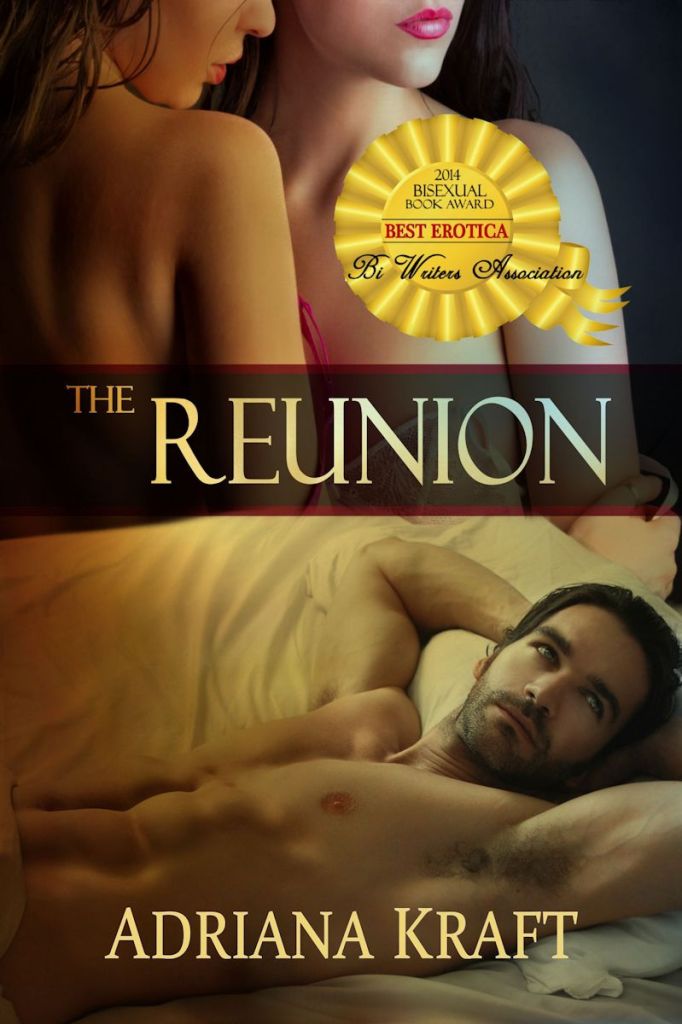
Erotic Romance FFM Menage: “Edgy characters, inclusive sexuality…The Reunion is not for the faint of heart.”

Erotic Romance FFM Menage: “The intimacy is genuine and breathtaking”

Subscribe to Blog via Email

Enter your email address to subscribe to this blog and receive notifications of new posts by email.

Join 1,357 other subscribers

Buy Adriana’s Books

Great Blog Guests!

Like and Follow our Author Page at SwingTowns!

If you’re curious about polyamory and the swing lifestyle, Swing Towns is a great place to check it all out!

Request an Authorgraph!

Categories

Contact Adriana

Want to get in touch? Click here to send us an email.