Adriana’s Library

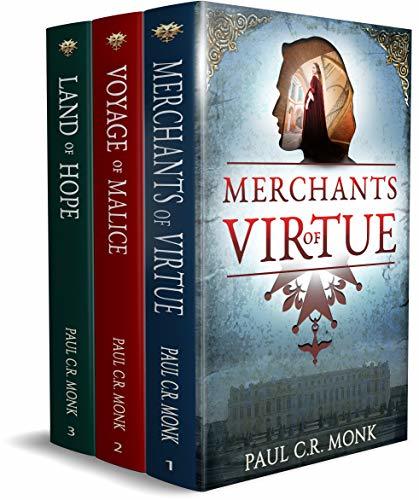
The Huguenot Chronicles, by Paul C. R. Monk @pcrmonk: Review and Reflections #Huguenot #HistoricalFiction #KU

Both my husband and I have French Huguenot ancestors. Each of our mothers carried the original immigrant’s Huguenot surname, though anglicized. Not long after the 1685 revocation of the Edict of Nantes, his mother’s ancestor emigrated from Normandy, France, to the Northern Neck of Virginia. He arrived sometime between 1687 and 1693. It is thought he may have come through England, possibly via Jersey in the Channel Islands. We have no family stories about this trip.

My mother’s ancestor arrived somewhat later. Along with his two brothers, he landed in Philadelphia in 1752, having set sail from Antwerp, Belgium. The story we have is that the boys’ mother had fled France with her family many years earlier and settled in Geneva, Switzerland. After her death, the three sons, by then adults, chose to come to the Colonies.

We have no records of the financial situation of either family at the time they left France or arrived in the Colonies. My mother’s ancestors, like many Huguenots, were well educated and quickly found jobs teaching in the Pennsylvania Dutch region west of Philadelphia. My husband’s ancestor must have come with resources. Though he had previously married in France, he fairly quickly married a Virginia woman. By the time he died some 35 years later, he had become the owner of a vast tobacco plantation in Westmoreland County, which he purchased from from Catherine Culpeper and her husband, Thomas Fairfax, 5th Lord Fairfax. His neighbors included the Washingtons, the Monroes, and the Lees.

So it was with great personal interest that each of us read a fairly recent release, The Huguenot Chronicles, by Paul C.R. Monk. The fictional story is, according to its description, “based on true events.” I do not know if this means it is true of a particular family, or more generally true. I certainly believe that every event reported in the series actually happened, over and over, to countless Protestants of conscience during the years preceding and following the edict’s revocation.
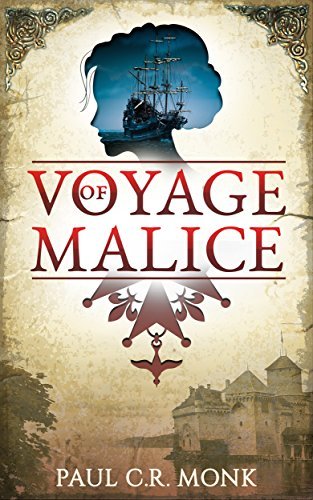
This series is a chilling story about a treacherous and hazardous period of history. Thousands of French Protestants did not survive the harsh turnabout that took place in 1685. Thousands more converted to Roman Catholicism to save their lives and those of their families.

As I read these books, I was constantly imagining the experience and journey of my ancestor. Did that family, like the heroine, have a long trek on foot through France to reach the refuge offered by Switzerland? Did they, like her, travel with a small band of refugees, walking by night, hiding by day? Since I do not know when my ancestor’s mother fled with her three sons or how old they were then, I wonder how much her experience paralleled the travails so vividly brought forth in Monk’s work.

My husband’s ancestor likely travelled a different route; much of Normandy is not far from England. Perhaps he, along with other refugees, was able to cross the channel furtively and proceed with less threat from there. It is not clear from existing records whether his first wife had died in France, or whether he left her behind. Records do show that three children of that union reached adulthood in France. Perhaps, as with some of the families in Monk’s story, his wife was unwilling to make the sacrifice and chose instead to remain in France with her children and convert.
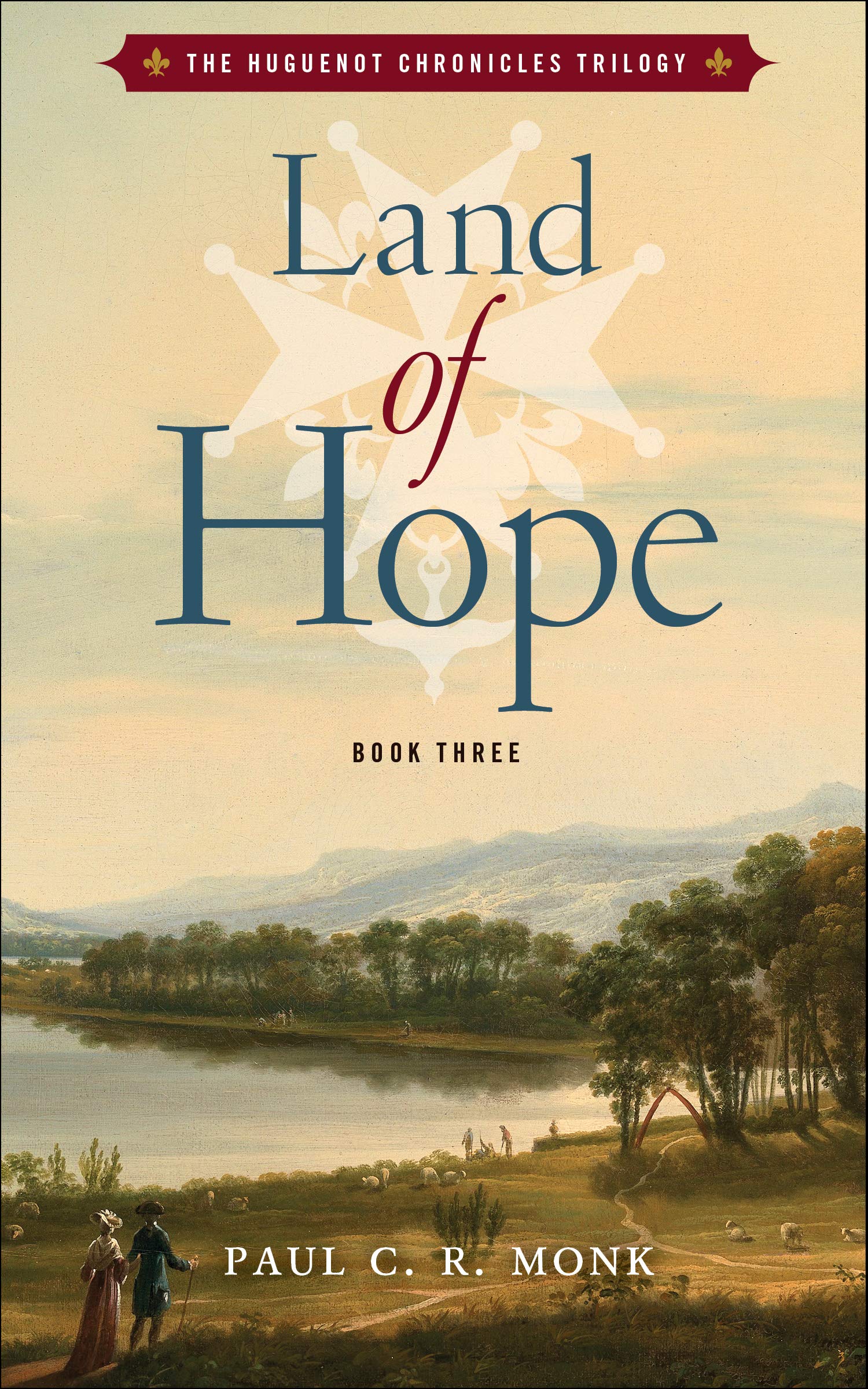
Can the fictional family in Monk’s series possibly have a happy ending? Odds are definitely against them; but so were the odds against safe and successful flight from persecution in France for my ancestor and my husband’s. Were this not true for thousands more, the early colonies and our infant nation would not have benefitted so greatly from the significant contributions of Huguenot immigrants.

In short, I found this trilogy of books to be well-told, gripping, and realistic. I highly recommend it, especially to anyone with Huguenot ancestry. More generally, it offers a vivid picture of prejudice, hatred, and power in a tumultuous period of history that many Americans know little about.

Five Stars.

Buy Link:

https://www.amazon.com/Huguenot-Chronicles-Merchants-historical-fiction-ebook/dp/B09J3RYL5G/

Read for Free on Kindle Unlimited
 

Share this:

Like this:

Loading...

Filed Under:

Adriana’s Library

My Review: The Forever Queen, by Helen Hollick @HelenHollick #MedeivalHistory #UKHistory

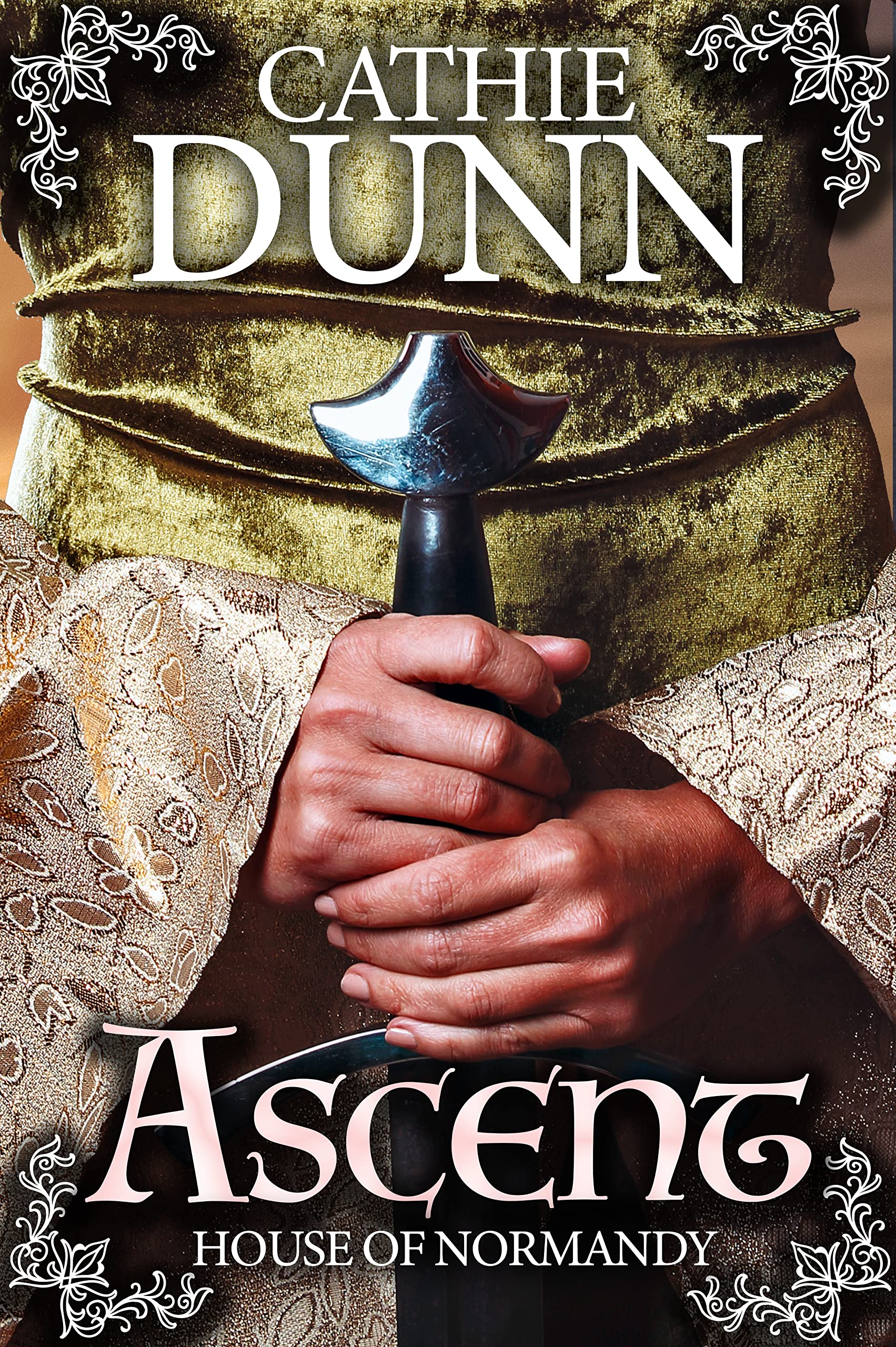
This week I’m continuing my reviews of fiction about women across the ages who’ve had an impact on the history of the British Empire. Two weeks ago I reviewed Cathie Dunn’s novel Ascent, focused on the Viking invader Rollo’s hand-fasted wife, Poppa. Poppa is the great grandmother of today’s impactful heroine, Queen Emma.

When I wrote about Poppa, I was writing about a direct – although very distant – ancestor of my husband. Like so many Americans of British descent, his lineage traces back to Edward III, in his case through Edward’s son John of Gaunt and John’s mistress and later wife, Katheryn Swynford.

Queen Emma is not my husband’s ancestor, and the British royal line descends not from her but from her brother. Nonetheless, she and her children had a profound and powerful impact on the course of UK history.

MY REVIEW

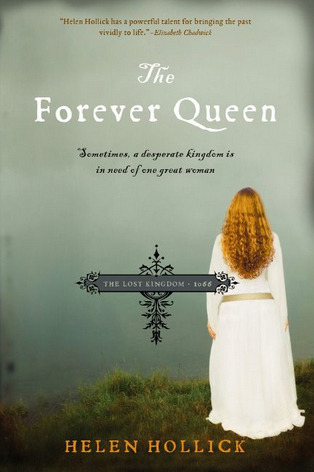
The Forever Queen, by Helen Hollick

Emma was but thirteen when her brother – the future Duke of Normandy – accompanied her across the channel from France in 1002 to wed King Æthelred, later known as Æthelred the Unready. Little could she know that as England’s future queen, she held in her hands both England’s rise to success across the middle decades of the century, and its fall to William the Conqueror, her grandnephew, in 1066.

Perhaps more is known about this pre-Norman queen than about any who preceded her, in part because late in her life, she commissioned a book about herself. One may need to take the details of that book with a grain of salt, but its broad strokes mesh with much that is documented elsewhere.

As Æthelred’s queen consort, Emma ruled England with him until his death except for a brief interim in 1013, in which the Dane Sweyn Forkbeard conquered the island and Æthelred fled with his family to Emma’s brother, by then Duke Richard, in Normandy. After Æthelred’s death in 1016, a son of Emma and Æthelred ruled briefly, but was defeated by Sweyn’s son Cnut the Great, who shortly married Emma; hence her title, the forever queen. She ruled with him until his death in 1032, and she was an active participant in the government of her two sons who succeeded him, Harthacnute and Edward the Confessor. Emma died in 1052. Counting her years as advisor to her ruling sons, Emma was central to English politics for nearly half a century, a ruler in fact if not in name.

Author Helen Hollick has taken these known and conjectured facts and delivered a compelling account of Emma, her inner world, her dilemmas, and her choices. In addition, she embeds this narrative in a rich and detailed presentation of Emma’s outer world – the backward state of England’s royal and liturgical structures, the complex medieval culture, the political interplay and some of its traitors, the powerful role of the Catholic church and its bishops, and the incessant Viking invasions.

The Emma who emerges is engaging, often admirable, sometimes devious, and clearly very clever to successfully navigate the swirling power plays that surround her. Is she a likable character? Yes and no. For me, Hollick succeeds in making us understand and empathize with her, so that even when she takes an action we might disapprove of, we know why. I found the presentation of her character and her era to be highly engaging and informative.

Five Stars ~ Highly Recommend.

BUY LINK

The Forever Queen: Sometimes, a desperate kingdom is in need of one great woman.

Helen Hollick

https://amazon.com/dp/B0042JU7QW/

Share this:

Like this:

Loading...

Filed Under:

Adriana’s Library

My Review: Ascent: A story of danger, adversity, and love (House of Normandy Book 1), by Cathie Dunn @cathiedunn #Normandy #HistoricalFiction #Rollo #KU

Since I wish to focus my next spate of Book Reviews on women across the ages who’ve had an impact on the history of the British Empire, where better to start than the hand-fasted first wife of of Rollo, the the Viking invader of Rouen, whose great-great-grandson conquered England in 1066?

Historical fiction author Cathie Dunn has penned a moving account of what could have been this important forebearer’s experience and influence in the decades immediately following Rollo’s late ninth century invasion and ultimate victory over what is now Normandy, France. Reliable records of Rollo’s life and actions are scarce, and those of his handfasted wife Poppa of Bayeux even more elusive. But weaving together what is known with what might be reasonably conjectured, Dunn has given us a brave, determined and hard working early French noblewoman who, given in marriage to the pagan invader against her will to secure advantages for her father, rose above hatred and prejudice and formed at least a tolerable relationship that surely impacted the course of history. It is the offspring of this union who form the foundation of what became the Duchy of Normandy and ultimately the House of Normandy in England.

I love reading about bold, impetuous women who none-the-less show good judgment when necessary and have their wits about them. This is who author Cathie Dunn has given us in fleshing out the bare bones of Poppa’s story. A mere fourteen years old upon Rollo’s arrival, Poppa is handfasted to him as wife but, in Dunn’s account, is left behind for several years as he moves further up the river valley, to Rouen, which he conquers. In the interim she develops skills in managing her father’s estate – skills that will be especially helpful when she must manage Rollo’s ever increasing dominions.

It required considerable boldness and dedication in that era for a Christian woman to consent to remain in what her church viewed as a non-sanctioned marriage to a pagan; yet there is no evidence that a Christian wedding ceremony ever took place between Poppa and Rollo. Many of the details Dunn has created in this highly engaging story are pure conjecture, but they surely fit with such boldness and as such, seem at least plausible. And, as any novelist hopes, they make for a story that will have readers rooting for Poppa. I highly recommend this novel.

This book is the first in a projected series about the first three Norman brides. I eagerly await the second installment, promised for sometime in 2023

BUY LINK

Available exclusively at Amazon.

Free to read on Kindle Unlimited.

https://amazon.com/dp/B09RNB6N5L/


Share this:

Like this:

Loading...

Filed Under:

Adriana’s Library

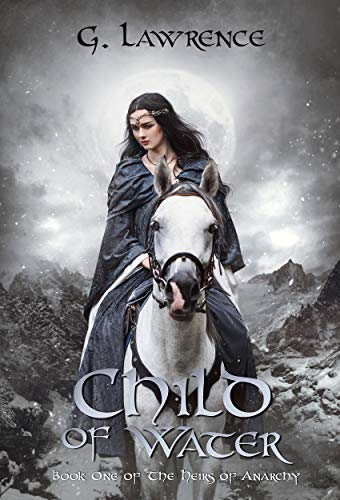
My Review: Child of Water, by G. Lawrence (@TudorTweep) #UKHistory #HistoricalFiction #Review

I’ve said elsewhere that I learned almost nothing in any of my history courses about the western world before the Renaissance. In recent years, I’ve read widely in both fiction and non-fiction about the British Isles throughout the millennium between the exit of the Romans (roughly 400 A.D.) and the onset of the Renaissance (1400 A.D.). And it has thrilled me to discover that not only is a great deal known about this era, but there is a vast amount of material about the powerful role of women. My next several reviews will feature some of these works.

One of the first Norman era books I picked up – available on Kindle Unlimited, which is always a treat – is Child of Water (The Heirs of Anarchy, Book I), by G. Lawrence. This book is the first of a four book series tracing the life of the only daughter of King Henry I (reigned1100 to 1135). Matilda (1102-1167), or Maude, as she was also known, came into power first as the Holy Roman Empress, through her marriage to the Holy Roman Emperor Henry V in 1110, when she was a mere child of eight; then, following his death, as the rival claimant to the English throne during the years of Anarchy, 1135-1154; and finally in Normandy, often acting as representative for her son, King Henry II, and presiding over the government of the Normandy Duchy

Almost all the events I just enumerated are things I knew nothing about before I picked up this book, but the book is nothing like a history lesson. Lawrence uses the first person point of view masterfully to create an engaging and highly readable narrative. There’s just enough detail about events to enable unfamiliar readers to anchor themselves, but never so much as to overwhelm. Characters and events materialize on the page because Matilda is affected by them. We see what she sees, learn what she learns, and come to know what she fears, hopes, and decides as the events unfold.

Child of Water opens in Rouen, Normandy, shortly before Matilda’s death, as she reflects on her life and her role. Here is a snippet that spoke to me:

One day, when I am gone, my ladies will tell their husbands and children of me. With a touch of pride, something they will attempt to conceal since noble women are not supposed to possess it, they will say that once they attended upon me, the Empress Matilda, Lady of the English, daughter of Henry I, wife to the Count of Anjou and the Holy Roman Emperor … the woman who waged war against men for a throne.

The book then drops us into the mind of eight-year-old Matilda as she waits on the beach for a longboat to bear her on the first step of her sea and land journey to marry the man who has been named Holy Roman Emperor but not yet crowned. We travel with her, study with her in her new home, grow up with her and see her crowned empress. This first volume then traces her life and her inner world as she returns to England upon the death of her husband. It concludes as she marries the man her father has chosen for her, Goeffrey, Count of Anjou – who wore a yellow flower in his hair and eventually ushered in the Plantagenet house of British royalty, through their son, Henry II. The details of these and subsequent events in Matilda’s life form the remaining three volumes in the series.

In summary, I found Child of Water to be an intriguing and informative read. I was especially struck by Matilda’s reflections (naturally the invention of the author, but plausible at the very least) as she navigated the male world of power plays among her husband the emperor, the Pope, the antipope, and the Germanic nobility, and then the world of her father and his holdings in England and Normandy. One might think such modern thoughts are anachronistic, but embedded as they were in very real events, I found them insightful.

I highly recommend this book for anyone interested in early Norman history in England, and even for those who are curious to discover if they might develop such an interest.


Child of Water (Heirs of Anarchy, Book I) is available exclusively at Amazon.

https://www.amazon.com/gp/product/B084KN8G8J/

Free to read at Kindle Unlimited


Share this:

Like this:

Loading...

Filed Under:

Adriana’s Library

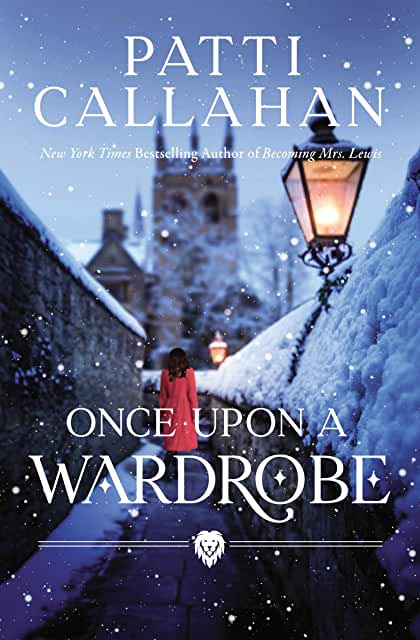
My Review: Once Upon a Wardrobe, by Patti Callahan (@pcalhenry) #Review #Narnia

Did you devour C.S. Lewis’s Chronicles of Narnia series as a kid? Or perhaps, like me, you read the books out loud to a child. My husband and I started a chapter a night when our son was about 8 years old, after we’d all been enchanted by a community theater production of The Lion, the Witch, and the Wardrobe. For me, as an adult, the entire series was magical, alluring, and profound.

Once Upon a Wardrobe delivers the same magic. The author, Patti Callahan, came to study Lewis’s life and meet his surviving stepson when she embarked on her earlier book, a biography of Joy Davidman, whom Lewis married in 1956. In Once Upon a Wardrobe, Callahan brings us C.S. Lewis in 1950, shortly after the first publication of The Lion, The Witch, and the Wardrobe, which he wrote in about 1948.

She does so through the eyes of a fictitious terminally ill eight year old child, George, and his older sister Megs, a seventeen year old Oxford math and physics student who loves her brother fiercely. George has just read The Lion, The Witch, and the Wardrobe, and is desperate to know whether Narnia is real and where it came from. When he learns that its author teaches where his sister is studying, he insists that Megs find him and ask him those questions.

Megs is ever practical, driven by what can be observed, measured, counted. But she knows she must do this for George. Through the interplay between Megs, an Irish fellow student of hers named Padraig,  George, and C. S. Lewis, Callahan draws us into a world every bit as luminescent and profound as the series itself.

In the story, Lewis is more than willing to engage in dialogue with Megs and takes an almost fatherly stance. But rather than answer questions, he tells stories – his early childhood, the brutality of a British boys school, World War I experiences, hosting “refugee” children during World War II, conversations with Tolkien and the Inklings. Megs records as much as she can of Lewis’s stories and returns faithfully to share them with her brother, who is worsening.

The message, which Megs resists but gradually comes to accept, is that truth is not confined to what can be counted and measured. Fairy tales aren’t just for children. As Lewis himself put it in a New York Times essay in 1956, “Sometimes fairy stories may say best what’s to be said.”

Not a fairy tale in any sense of the word, Once Upon a Wardrobe brings Lewis’s purpose and perspective to light in exquisite and richly textured prose, creating an experience reminiscent of Narnia itself. An immensely satisfying and uplifting read.

Share this:

Like this:

Loading...

Filed Under:

Adriana’s Library

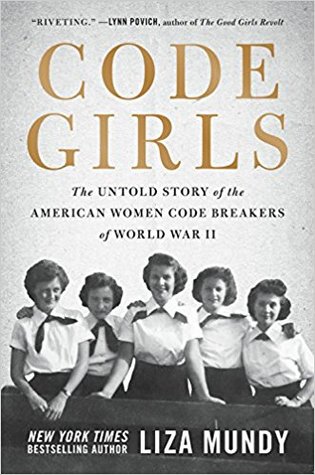
My Review: Code Girls, by Liza Mundy @lizamundy #WWII #WomensHistory #Review #KU

Code Girls, by Liza Mundy, is the third book in my current series of book reviews featuring the role of women in the WWII Allied victory. The first two books – The Atomic City Girls, and Daughters of the Night Sky – are historical fiction based very closely on actual events and characters.

Code Girls is not fiction, even though through most of its pages it reads as smoothly and dramatically as any novel. Following interviews with more than twenty participants and years of meticulous research, much of the data having spent decades as classified and unavailable, Liza Mundy has crafted the story of over 10,000 American women, most freshly out of college, who secretly worked during the war to break the German and Japanese military codes. These women saved thousands of lives and in no small part helped to bring down first Germany, and then Japan.

They – and their superiors – could tell no one about it for decades.

In November, 1941, letters began going out to select women who were seniors at several of the nation’s elite colleges. The letters invited the women to an interview, where the questions simply were whether they liked crossword puzzles and if they were engaged to be married. If they answered appropriately, they were invited to further meetings where they learned about “cryptanalysis” and were told never to utter that word to anyone else. They entered on-campus training in code breaking – again, about which they could tell no one, not even family members. Those who passed the rigorous training were the earliest recruits to facilities being readied for them in Washington, D.C., by both the Navy and the Army.

Over the ensuing years, recruitment criteria broadened, but secrecy, the ability to identify patterns, and having a bright mind remained paramount. Mundy’s account traces the initial American codebreaking developments between the wars, then proceeds through the war years chronologically. By weaving together historical data and material from her interviews, she provides a window into the mundane as well as the dramatic. We learn what interaction was like in the cramped working quarters; how the women were treated by outsiders – who could never know how technical and important their work was – how they spent their relatively few free hours; and, for many of them, how their lives unfolded after the war.

Most of them remained unacknowledged and unsung for the rest of their lives. Some family members never learned what a mother – an aunt – a grandmother – had accomplished, how many ships were sunk because the Navy “happened” to be in the right place at the right time, due to intelligence provided by the codebreakers.

I found this book to be both informative and very engaging, and I highly recommend it.

BUY LINK

https://www.amazon.com/gp/product/0316439894/

Code Girls is available exclusively at Amazon
and is currently on Kindle Unlimited
Share this:

Like this:

Loading...

Filed Under:

Adriana’s Library

My Review: The Atomic City Girls, by Janet Beard #WWII #WomensHistory #HerStory #ManhattanProject

This review is the second book in my three review series (so far!) on women who won the war – women without whose contribution we could so easily have lost.

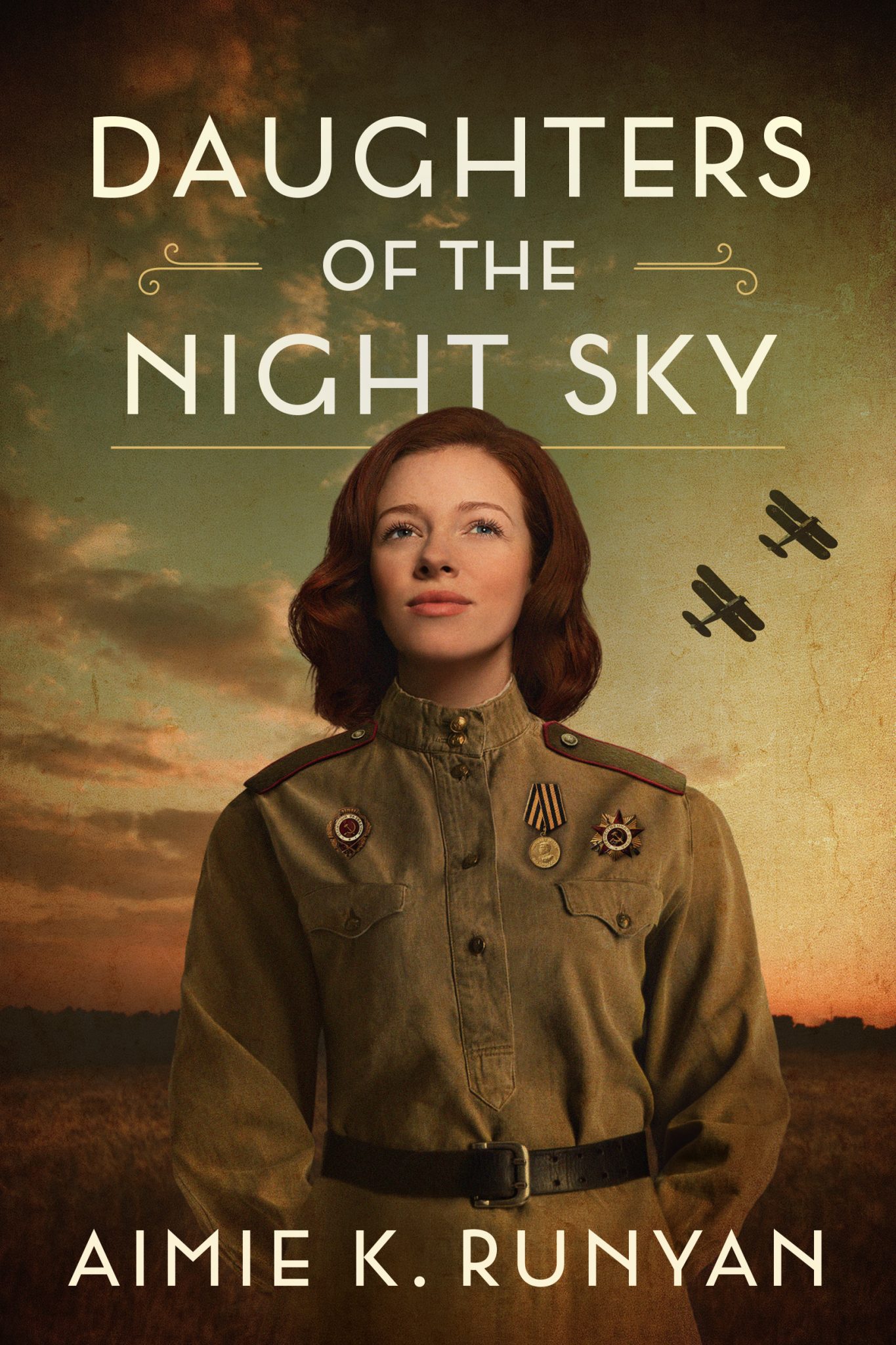
Daughters of the Night Sky, by Aimee K. Runyan Goodreads Review
The Atomic City Girls, by Janet Beard Goodreads Review
Code Girls, by Liza Mundy (review coming 11/19)

Growing up as a baby boomer, I naturally learned about Hiroshima and Nagasaki, as well as the first atomic bomb tests at Alamogordo, NM. Later, while I was studying at the University of Chicago, a Henry Moore sculpture commemorating the first atomic fusion was unveiled. It is situated on the university’s former football field, the site of Fermi’s laboratory in the 1940s. The sculpture’s shape vaguely resembles a mushroom cloud, which caused considerable controversy, as there was no explosion in Fermi’s successful experiment. But everyone involved in Fermi’s labs knew where the work was headed.

In spite of this awareness, until I picked up The Atomic City Girls, I was only familiar with “Oak Ridge” as the name of a famous country band, whose song “Elvira” I often dance to in line dance classes. Though I knew the term “Manhattan Project,” I had never heard of the massive calutrons that were secretly built in Oak Ridge, TN during World War II to enrich uranium for the atomic bomb. I was also unaware of the enormous and crucial role of so many women in the Manhattan Project.

The Atomic City Girls, written by a granddaughter and grand niece of two women who worked for the Manhattan Project in Tennessee, succeeds brilliantly in remedying this gap in my knowledge. Though the main characters are fictional, their experiences mirror the life and reality of the actual participants in the project.

The city of Oak Ridge was built nearly overnight in a remote Tennessee valley selected for the potential of its surrounding ridges to possibly contain an explosion, should there be a disaster in the project. Out of nothing, in very short order, grew a city of over 75,000, complete with housing, buses, movie theaters, bowling alleys, and other recreational venues. All who worked there were sworn to secrecy, and violations were not tolerated.

The project recruited recent female high school graduates chiefly from the surrounding region. For most of them, it was both their first paying job and their first time living away from their families. The ”girls,” most of them under 20, were trained to sit at a display of dials and keep them within a very narrow range of settings. In eight hour shifts, they did nothing but watch the displays and turn the dials when required. They were never told what the dials meant or what their work was producing.

Beard has created fictional characters both black and white, male and female, line workers and highly trained scientists and engineers. Thus she succeeds in conveying not only the daily experience of the young women, but also the inevitable tensions and cross currents of racial and status differences within the milieu. Within her story lies a microcosm of the changes that emerged in our society following the war in the roles of women and African Americans.

It turns out that the secrecy surrounding this project also impacted me personally. Shortly after reading the book, I was going through some family history accounts my mother passed along to me before her death. There I learned for the first time that her older brother, a chemical engineer at DuPont in Delaware, worked on the Manhattan project. DuPont was the US firm that designed and built the calutrons in Oak Ridge. My mother’s notes gave no further details about his role, so I do not know if his work was on site in Tennessee, or in Delaware during the planning and design stages.

In short, I found this book to be well written, thoroughly researched, highly informative, and very engaging, and I highly recommend it.

Buy Link https://www.amazon.com/gp/product/0062666711/

Share this:

Like this:

Loading...

Filed Under:

Adriana’s Library

Review: Daughters of the Night Sky, by Aimie K. Runyan @aimiekrunyan #Historical Fiction #WomenPilots #WWII

Apparently I’m a sucker for good WWII books – particularly if they feature more heroism than gore, if they’re true, and most especially, if they highlight the amazing women whose efforts and support were so crucial for the Allied victory. The more I read, the more it becomes clear we could not have won the war without them, and I’m not just talking about Rosie the Riveter.

Lately I’ve hit several books that meet these criteria, and I’ll be reviewing them each in turn. Today, I’m excited about Russian women pilots.

The WWII stories about how we won most often focus on men, and especially on American men, or maybe American and British troops. Rarely do we hear about heroism on the part of our Russian allies – perhaps because for so many of the post war years, Communist Russia was a deeply hated enemy.

Based on meticulous research, author Aimie K. Runyon has penned a dramatic and satisfying novel on the role of a crack group of female Russian pilots. Here are the author’s words:

So often in history, we dismiss women’s work as secondary to men’s. The Night Witches were a shining example of women who defied expectation and served with immense valor. Once I heard about these remarkable women, I had to make their story my own.

Runyan’s lead characters are fictional, but they (and their exploits and dynamics) are based on the very real women who challenged the male hierarchy, excelled at the rigorous training, and carried out mission after mission up until the very end of the war.

These women conducted close-in bombing raids on enemy outposts at the front throughout the latter part of the war, moving ever eastward as Hitler advanced, and then finally following the front and destroying barracks, ammunition, supplies and machines  every time the front advanced west. I never knew.

Their planes were unarmed old training bi-planes—small, outdated, and in need of constant repair.

Every woman on the team knew how to maintain the planes, how to navigate, how to pilot. When one fell, another stepped in to fulfill that role. The size and relative silence of their craft enabled them to fly closer to the ground and drop their ordinance with higher accuracy. This also meant they were more vulnerable, unless they got in and out quickly. That so many survived is testament to their skill and bravery.

Runyan’s story traces a misplaced middle class daughter of a former professor, who with her mother has returned to a small eastern village after her father was slain during the Russian revolution. Now her mother is a laundress, and the daughter must struggle for her education in a backward milieu where women are only expected to clean, cook, have babies, and manage basic household finances.

The daughter’s fight has only just begun. Even though Stalin seeks to make all citizens “equal,” centuries-old traditions are deep set, and the women must study harder, learn more, and perform better than their male counterparts in order to advance. They do.

To give more details would be to create spoilers, so I’ll simply close by saying that I immediately engaged with the lead characters, wanted them all to succeed and thrive, but ultimately found myself satisfied with the author’s handling of what we all know war delivers. Well done.

You can read more about the unit on which Runyan’s story is based at this link, which also has marvelous photographs of the women and their planes:

https://worldofaviation.net/night-witches-soviet-all-female-588th-night-bomber-regiment/

Share this:

Like this:

Loading...

Filed Under:

Adriana’s Library

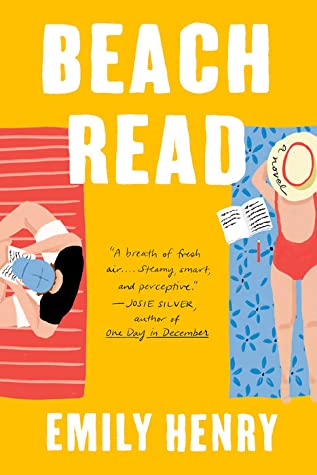
Review: Book Lovers, by Emily Henry #RomCom #BookReview #WomensFiction

Book Lovers is a serious book. Don’t get me wrong, it’s a fabulous RomCom, with countless laugh out loud moments. But it is never trivial, always raw and honest. Emily Henry has turned a classic trope upside down and given us the other woman, the other man, who don’t abandon the fast-paced city and don’t save a small town business and don’t fall in love with the simple life.

Why, you might ask? She’ll tell us, in her own words:

Romance is treated as a guilty pleasure, and in the last ten years or so I have asked myself a lot of questions about guilty pleasures and why I am made to feel guilty for enjoying these narratives. It’s as though these novels are just candy for your brain, bad for you, and do not teach you anything like a more ‘serious’ book would. I wanted to challenge that notion. [London Magazine Interview with Emily Henry]

She absolutely succeeds, with all three of the romance novels that have expanded her genre niche from YA to women’s fiction/romance. In order, these are Beach Read, People You Meet on Vacation, and Book Lovers.

I’d never heard of her until last spring, when my next door neighbor gave me her copy of People We Meet on Vacation before she headed back north at the end of the season. I don’t own or read many print books – when we sold our house in 2012 and lived/traveled/wrote across the country in our motor home for the next six years, Kindle was the way to go. Our most treasured print books lived in our son’s basement until we settled in 2018, and we now live in a tiny house that doesn’t have room for shelves upon shelves of books.

I packed People We Meet on Vacation along for my flight to visit a Chicago friend in July – and could hardly put it down. I was a convert. I gave it to my friend at the end of my visit, but I immediately downloaded and read first Beach Read, and then Book Lovers. I loved all three of these books. It fascinates me that the heroines in each book make their living in the world of writing: a RomCom author (Beach Read), a travel writer (People We Meet on Vacation), and a romance/women’s fiction agent (Book Lovers). Write what you know. Somehow Henry is able to both be in the tumultuous world of authors-agents-editors-publishers that make up women’s fiction while simultaneously seeing through it, poking fun at it, and challenging its tropes and assumptions. Brilliantly.

I love seeing a best-selling author dare to do that. Her characters are far more clever than any real people I know, but I love their snappy repartee. What especially captures me is the intense honesty in each of her protagonists – they may start off not being honest with either themselves or each other, but the choices they must make force the honesty to surface, and that’s the arc of each book. Oh, and a happy ending, which by then is both deeply sought and desirable.

I highly recommend all three books, and it doesn’t matter which order you choose to read them in.

Beach Read

https://www.amazon.com/Beach-Read-Emily-Henry-ebook/dp/B07XNKRV83/

People We Meet on Vacation

https://www.amazon.com/People-Meet-Vacation-Emily-Henry-ebook/dp/B08FZNYQJC/

Book Lovers

https://www.amazon.com/Book-Lovers-Emily-Henry-ebook/dp/B09BTQ9HW6/


Share this:

Like this:

Loading...

Filed Under:

Adriana’s Library

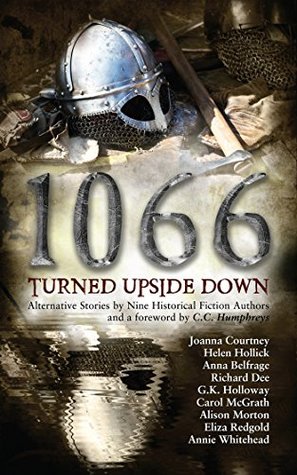
#Review: 1066 Turned Upside Down #HistoricalFiction #Midieval #BattleofHastings @AnnieWHistory @HelenHollick

On my side of the pond, the history lessons I grew up with were woefully inadequate when it came to England. My college Western Civ history began with the Renaissance, as though nothing that came before either was known or would have mattered. I knew nothing about the Norman Conquest or the tribes and kingdoms that had preceded it across the British Isles.

I’ve been filling this gap in the last few years with marvelous history and historical fiction by, among others, Annie Whitehead and Helen Hollick. Annie Whitehead’s Alvar the Kingmaker, suspenseful and rich with cultural details, brings us up to the accession of Æthelred the Unready (978-1016). And Æthelred’s second wife, Queen Emma (984-1052), comes alive in Helen Hollick’s engaging The Forever Queen. It is Emma’s son, Edward the Confessor, whose lack of offspring sets the stage for the Norman invasion of 1066 – and it is Emma’s grand nephew, William the Conqueror, who ultimately won the Battle of Hastings, now being turned upside down in fiction.

So I was intrigued a while back as I scrolled through my morning Triberr posts to discover the title 1066 Turned Upside Down, then further thrilled to realize I was familiar with some of its authors. It takes a special talent to make history come alive, and the nine authors who’ve contributed to this work have succeeded marvelously.

The book is organized chronologically and examines nine turning points in the autumn of 1066, any one of which could easily have led to a different outcome. Each chapter creates a compelling narrative of that different outcome and its consequences.

The stories make great reading, and I was struck that they would be an excellent resource for middle school or high school students to soak up the history that hangs by a thread. But they are also delightful reading at any age. The players were already familiar to me though my earlier reading, and I was entertained and intrigued to explore their actions and motivations at each twist of the story.

Amazon Buy Link:

https://amazon.com/1066-Turned-Upside-Down-Alternative-ebook/dp/B01I1V7G42/

With a forward by C. C. Humphreys, the book brings us stories by the following authors:

Joanna Courtney

Helen Hollick

Annie Whitehead

Anna Belfrage

Alison Morton

Carol McGrath

Eliza Redgold

G.K. Holloway

Richard Dee

Share this:

Like this:

Loading...

Filed Under:

Tagged With:

Follow Adriana

Three-way fantasies? Curious about Swinging? Click above for our Swing Lifestyle series.

What if three (or more) people fall in love? Click above for our polyamory stories.

Looking for one woman, one man, hot sex, and perilous danger? Click above.

REVIEWS

Erotic Romance “Seducing Cat is a Must Read…Hot in all the right places!”

Love Bites and Silk Ties
Romantic Suspense: Mystery and Romance are woven well in The Painter is a Lady.

Romantic Suspense: “The Unmasking is a fascinating tale…some emotionally trying scenes.”

Erotic Romance FFM Menage: “Edgy characters, inclusive sexuality…The Reunion is not for the faint of heart.”

Erotic Romance FFM Menage: “The intimacy is genuine and breathtaking”

Subscribe to Blog via Email

Enter your email address to subscribe to this blog and receive notifications of new posts by email.

Join 1,357 other subscribers

Buy Adriana’s Books

Great Blog Guests!

Like and Follow our Author Page at SwingTowns!

If you’re curious about polyamory and the swing lifestyle, Swing Towns is a great place to check it all out!

Request an Authorgraph!

Categories

Contact Adriana

Want to get in touch? Click here to send us an email.