Do you ever fantasize about having sex with multiple partners? Two hot guys, maybe, or maybe a sexy guy and a hot woman? Or swapping with another couple and enjoying a foursome? If so, read on!
I’m devouring Joan Price’s latest book, The Ultimate Guide to Sex Over Fifty, and hope to post a review in another week or two. Meantime I ran across the following marvelous quote from writer/activist Carol Queen in its pages:
“Sex with many people is actually the most functional form of sex education for many in our culture. In a society that doesn’t value or take seriously the responsibility to teach about pleasure, many of us still derive our most profound understandings about our own sexuality on the hoof, in the street, on the prowl.”
The first thing that struck me as I read those words was that it’s what so many swingers tell us about the impact of swinging on their sex lives with each other. You might think that people who turn to swinging are sexually savvy and experienced already, and many are, but even so, in addition to the thrill of multiple partners, many are surprised that they discover nuances about their own sexuality and each other’s they weren’t aware of. Even more, they learn new activities, toys, and positions they haven’t thought to try.
We’ve spoken with swingers ranging from their thirties to their eighties. Their reasons for getting involved with the lifestyle vary, but almost universally, they report reaping so much more benefit than they ever anticipated, and they’re grateful (especially as they age) for the extra boost to their libidos and their enjoyment.
We began writing our Swinging Games series for similar reasons. In it, we follow a mid-life empty-nest baby-boomer couple who reach the decision to check out the swing lifestyle because the wife thinks she might be bisexual, but doesn’t want to leave her husband out of her sexual exploration. Thirteen installments later, they are still going strong, and you can check out the series at this LINK to see if it can add to your fantasies.
“If you’re lucky, the question of sex for seniors will be relevant to your life, sooner or later.” This is my favorite line from Charlie Glickman’s review of Joan Price’s brand new book, The Ultimate Guide to Sex Over Fifty.
Um, yes. Hubs and I are definitely over fifty, and we do consider ourselves extremely lucky. We write spicy romantic suspense and erotic romance together because we love it, we want to stay sexually active as we grow older (and we hope to grow lots older), and we’d like to entice others to do the same.
So we’re thrilled to see this new book out from Joan Price, whom we’ve been following for a few years, and eager to have it in our hands. It’s available for pre-order now at Amazon and will be released January 13.
While you’re waiting for it, Charlie Glickman’s reviewis definitely worth a read. Oh, you’re not nearly fifty yet, so this doesn’t apply to you? Here’s what he has to say about that: “If you spend the first fifty years of your life ignoring the fact that older folks have sex, or worse, if you make it into a joke or a target of mockery, you’re setting yourself up for a really rough time when you get to that age.”
Here’s to a long life and happiness, all the way around!
Once it was the best little whorehouse in Texas—but now it’s in Nye County, Nevada, where we live, and it’s called the Chicken Ranch. So when friends invited us to Octoberfest at the Chicken Ranch, we decided we shouldn’t pass it up.
Loved it! Like no party I’d ever been to. Football was the theme, and guests were encouraged to wear team jerseys, so of course I hauled out my 2010 Championship T-shirt for the Green Bay Packers. Sad to say, not one of the ladies was a Packer fan – Steelers, Cowboys, Raiders, Broncos, even Seahawks. And I’ll have to admit their jerseys looked a little different than mine…
Drinks, finger foods, like any other cocktail party, with a little something extra. There was a “football” game where one player, blindfolded, had to carry a nerf football through the opposing team and endure a variety of tackles in order to reach the goal line. I won – and so did everyone who played, and I don’t think anyone minded the up close and personal tackles.
My favorite was the musical chairs lapdance. I’ll confess a lapdance has been on my bucket list for a while, so now I can check that off, very happily. Twelve of us, all genders, sat on chairs in a circle, and the ladies danced for us, then moved on to the next guest when someone yelled “switch.” Definitely entertaining.
Both of us also enjoyed a chance to talk with some of the ladies who work there. They’re normal people, making a good living. Some are saving up for hopes and dreams such as graduate school or starting a business. All are glad to be doing work they love in an environment that’s friendly, fully legal, and above all, safe.
I think that’s part of what made this such a fun, special event: a chance to be engaged in risqué, sexy behaviors with a group of like-minded adults, in a safe and legal setting where consent is at the top of the list and is honored.
Just like in the Dolly Parton movie, the brothels in Pahrump pride themselves in giving back to the community. They are often major donors to local charities, and they frequently host events open to the public, like Octoberfest. Next? A Halloween party at Sherri’s Ranch. I have my costume all planned.
Hubs and I write erotic romance together. It goes without saying that we like to bend a lot of rules or sometimes even break them. But I’m learning a lot this week, post eye-surgery, about when to break them and when not to.
It turns out I didn’t receive as many restrictions as I feared – thanks to a very skilled surgeon and catching the condition early, I presume. Some patients have to spend weeks or even a month maintaining a face-down position after retinal surgery, and I was spared that, for which I’m very grateful.
So the rules are few, but rigid:
No lifting over ten pounds for a week. That’s a little more than a gallon of milk (at 8 pounds). Can I guage that? Not so sure. Yesterday evening when we walked down to the lake, I moved a plastic Adirondack chair. I hope it wasn’t too heavy – I was rewarded shortly afterward with the view below.
Confession, ex-post-facto. I just looked up the chair on line – it weighs 7.25 pounds, so I was safe.
No bending at the waist for a week. I’m not sure I ever stopped to think how many simple household tasks automatically involve bending – anything that needs picking up off the floor, for example. I’m trying, I truly am. Step One: Pay Attention!
Exercise. I knew this would be the hardest one and was fearful for my mood and overall attitude if I couldn’t work out at all. No workouts yet, but for the first week, walking is permitted – so we’re taking three nice walks a day, and I only struggled with mood issues the first twenty-four hours. Can’t go dancing yet, but it won’t be long.
Yup, I’m sticking to the rules on this one, as best I can. My reward? A truly miraculous improvement in my vision. Definitely worth it.
Got your attention? Not what you’re thinking, though I’m all for asking for what you like in the bedroom, as well.
It’s about asking for physical therapy. I’ve been chatting on Facebook with the amazing Emma Lai, who has struggled for years with back pain and joint pain, and finally got referred to a physical therapist, where she learned there is actually something she can do that will be effective. Watch for an upcoming blog from her in these pages, and read her interesting journey thus far in this Interview from last April.
Chatting with Emma got me thinking: How did I learn I had to ask for physical therapy?
It shouldn’t have to happen. Doctors, after all, study anatomy, including all those tendons, muscle groups, and how they’re linked up to each other and to our skeletons. Doctors ought to know. Somehow, though, the links get trained out of them, and they’re taught to think in terms of surgery or drugs.
Here’s the scenario, about fifteen years ago. At that time, hubs and I lived on forty acres of tamarack woods in northern Minnesota, not far from the Boundary waters. There’s a LOT of winter in those lands, and if you want to stay active, you have to be outdoors in it. As soon as the snow was deep enough, we’d follow the deer trails on our snowshoes and tramp out a couple miles of trail for our cross country skis. (in case you’re wondering, yes, humans are much taller than deer, and we worked each summer on keeping the branches trimmed so we could navigate). That way we could ski from mid November till sometime in March or maybe even April, some years.
This probably happened as the weather was beginning to enter the cycle of melt and freeze in late winter. I slipped and slid on my ski, tried too hard not to fall, and pulled a hamstring. F.Y.I., a pulled hamstring is serious enough to take an Olympic athlete out of competition. Just saying. It hurt like the blazes. Hubs helped me hobble back to the house, where I grabbed the crutches left over from a son’s knee injury and managed to get around the first floor okay for a day or two.
It didn’t get any better, so I went to the doctor. I have a vivid memory of standing in front of her as she looked up from whatever it was she’d been doing to examine me. Her diagnosis? “Yup, you’ve pulled something.” She went on to suggest pain control medications, rest, and avoiding stairs. In a two story house.
Tried that for two or three days, with no improvement. Then I remembered the very useful physical therapy hubs had benefited from when he twisted his knee downhill skiing, so I called the clinic back and asked for a referral to PT, which they granted.
Like Emma, I learned what to do to strengthen the muscle groups around the hamstring, and what exercises to avoid, at least until it healed. It took a long time. I still carried a special seat cushion as long as two years after the injury, but have no after effects now.
The best consequence of this saga? A very valuable lesson: If physical therapy isn’t offered, ask for it. Even if the referral isn’t given, there’s a lot of information on line. In the last year, I’ve successfully rehabbed a strained knee joint, based on what hubs and I had already learned from his knee therapy and what I was able to find on line. I can go dancing again with the best of them.
I’m not one to sit around and just accept the fate that’s handed me, if I have any options. Sometimes there’s nothing we can control, but if we can, I want to find it and tackle it with my best effort. If it’s not offered to you, ask for it.
Ever wonder what it takes to make the change to a healthy lifestyle? Read on as erotic romance author Mahalia Levey shares her story – you’ll be glad you did, and don’t miss the knock-out photos chronicling the change she’s made!
Welcome, Mahalia, and thanks so much for joining us to talk about staying sexy and healthy. As you know, hubs and I write an occasional column, Stay Sexy, focused on keeping vibrant, healthy, excited and sexy across the life cycle. Both of us have faced some health challenges, and we’ve thrown ourselves into learning and doing whatever’s in our power to maximize our health and our future.
Over the last year we’ve noticed other authors posting about weight loss, diet issues, workouts and health challenges, so we decided it would be great to involve you and others like you in the conversation and give our readers a chance to benefit from what you’ve learned.
Adriana: So my first question is, what are the health-related changes you’ve been focused on recently – what are your goals?
Mahalia: I’ve been focused on eating cleaner, smarter, and exercising daily. I can still eat a variety of foods, just not all the junk that’s available 😛
Adriana: Sounds like a plan J What prompted you to begin making this change?
Mahalia: In 2013, I was at an event and it seemed like everyone I saw was overweight. You hear about how America is the only place you can get food 24/7 everywhere, and how we are the largest obese country in the world. The statistics continue to rise exponentially; it forced me to take a hard look at myself.
With SVT, supraventricular tachycardia, my heart sometimes just races out of nowhere. It’s a common heart arrhythmia that can be maintained by some without medication. If you do the exercises the doctors advise, like bearing down, or plunging your face into ice-cold water, a way to jolt the heart into rerouting the pulse.
What happens is the pulse finds an extra pathway and you end up skipping a beat, the body doesn’t realize at first then tries to compensate, and a person gets dizzy, short of breath and clammy, almost like a panic attack. Mine last about four minutes, before medication I bounced in and out for about a half hour. Once the event is over exhaustion kicks in. The adrenaline rush is down causing a crashing syndrome of lethargy. If the exercises don’t work then the cardiologist will have a pt wear a holter monitor for a month to see if medication is warranted. I’m on a low dose of metoprolol.
With my SVT, the exercise I was doing and eating wasn’t helping. I still gained about 5 pounds a month or retained a steady weight. I thought this will be me soon. I’m behind a desk all day, then at home writing, editing, promoting and marketing. I needed a change before my health declined worse.
Me at 5K Susan Komen walk, August, 2013
I’d tried diet fads, all including exercising and nothing worked for me. So for the next year I began looking into having surgery done. A year later I had it planned. My insurance copay that year was high around October when I was thinking of doing the surgery. In January my insurance company matched copays, which left me with minimal out of pocket expense. I was lucky. Through BCBS they paid 90% of the surgery, my copay was 2,000 but with all of the doctor visits for me, the kids, etc, that copay was complete, then my company matched 2,000. You want to plan so you’re not financially crippled. (If you do the math, less eating out, eating healthy, you’d be amazed at how much money is saved in a given time period.)I needed six weeks of notice for my supervisor to have coverage for my job position and had my surgery in March.
Before I had surgery when I was researching. I went to a six hour seminar, after that I met with my surgeon the first time and told him I wanted the sleeve. I had a friend whose mother had stomach cancer and lived to her mid 80s with almost no stomach. I didn’t want a port placed in my ribs for needle injection for saline for the lap band. I said if I don’t need it just take it out.
After that I met with the Psychologist had to do a battery of tests before signing off on allowing it.
Two days after surgery
I met with the Nutritionist and went over the book we were given with pre and post op instructions, food and beverage consumption, complications etc…
Then I met with the Surgeon again and gave them the clearance from my general physician and cardiologist. We planned the surgery after that.
Adriana: That’s an impressive journey – careful thought, research, professional consultation, and most important, commitment. Good for you! Is there a particular person or event that serves as inspiration and motivation for you?
Two weeks after surgery
Mahalia: No. I motivated me. I was tired of feeling exhausted, not having energy to do simple things. Hated the doom factor and high anxiety related to my heaviness and SVT problems. For instance each year I go on a float trip with ten friends. The last two years, swimming in the river, I always felt like I was going to drown, I was so heavy I couldn’t keep myself afloat as well and I got tired easy. Coming from me, a virtual fish in another life, it made me sad. I also couldn’t do little things like, paint my toes, tie my shoes, the fat got in the way and made it difficult to breathe when bending over. I also showered twice a day. I need to mention that another common problem with too much fat is incontinence, not complete wetting but leaks, with fat weighing on the bladder sometimes movement, or laughing can cause it and at the wrong place could be very embarrassing. With all the extra fat, I sweated like crazy everywhere and never felt clean, even with baby powder in all places. I found my body didn’t carry that weight well and I needed a drastic change if I wanted to live long enough to see grandkids and be able to care for them, play with them in the future.
Adriana: I love that, “I motivated me.” In the end, I think that’s the only place it can come from. What about these changes has been most difficult for you?
Mahalia: So far, family. No one else in my house wants to change his or her eating habits. I do not fry food for anyone anymore. I make them do their own since that’s not something I will do. Eating out. There isn’t much I can have out to eat yet, so we rarely go or if they want to I stay home and eat what I want.
I am pretty much low or sugar free – what that means is my immune system is improved, my energy level is great and maintains and my body doesn’t have the toxins in it sugar gives off. I use truvia or splenda for substitutes and that works well.
Adriana: I love your solution with your family. It’s easier at our house – there are just the two of us (kids grown and gone), and hubs and I have the same goals. I am so with you on the sugar issue! I’ve been refined-sugar free for a decade now, and it’s made an incredible difference. It directly compromises our immune system, and refined sugar is more implicated in heart disease than fat, it turns out. When you bump up against a hurdle, what are your most tried and true tactics for overcoming it? What works for you?
Mahalia: I haven’t come across any hurdles yet. After I had surgery it was pretty rough for a few days, couldn’t move much or dress myself, shower, had to have help getting in and out of our huge bed. After that just playing with what I could have at that time period and making sure I chewed. I learned fast if something bothered my stomach I’d vomit it back up so it wasn’t too difficult, just a bit gross to navigate what to eat or not to eat.
I do have to remind myself to eat since I don’t have the hunger hormone any longer. Sometimes I forget to take all three of my vitamins and don’t take in enough fluids. I have a four ounce stomach. I can’t drink 30 prior or after eating. I have to consume 40-50 oz of fluids a day. So it can be tricky at times. There are nights where I’m trying to down 20 oz of water a few hours before bed.
Now I keep a water bottle in my purse, on my nightstand and in the bathroom to remind myself to drink. When I work out I drink a lot since I sweat a lot!
Adriana: So it truly has been a life-altering, habit-changing experience for you. What do you find most rewarding so far?
Three months post surgery
Mahalia: It’s been a little over 3 months and I’ve lost 60 pounds. I forgot how much I used to enjoy the gym and exercising. I go four or five days a week, and do 2 miles on the Arc trainer, 12 min abs and the 30min strength and toning express workout. So I am at the gym about 1 hr and 45 minutes each day I go. I can’t really see the drastic change. My face is thinner, my body is loosing inches all over, its gradual, but it’s mainly what I feel. I am feeling pretty fantastic. I eat what I should, that doesn’t mean I don’t have treats. I have blue bunny’s sweet freedom icecream bars, sundae cones for fun. I can paint my toes!
Adriana: in a way you’ve already started to answer this one – sometimes we start out with one purpose and goal, and as we get going, we find that the changes we’re making spill over into other areas of our lives, hopefully in a good way. Has anything like that been happening for you?
Mahalia: I think my fiancé Mr Hales sees me smile more. I want to make this clear. Surgery was never part of making myself feel pretty, not an issue with self confidence or lack of self esteem, it was a health related choice for me.
Because I feel better physically, I am happier, I smile more, joke more, the abundance of energy I have feels good and makes me less crabby 😛
Adriana: That’s some wonderful positive spillover. What has been the reaction of other people you’re close to? (family, friends; support? Any undermining?)
Mahalia: Before the surgery people were like you’re going to what?Don’t do that, there are other ways. Or my unfavorite comment was you know this is not a cure all you’ll have to change your lifestyle. I hated that one the most. I’m in the health field and was surrounded by Debby Downers or people. I also heard you’ll never drink alcohol again. I take a beta blocker so I rarely drink. I have SVT can’t have caffeine, including chocolate and most soda, so those weren’t things I had to work on.
Post Surgery- A lot of praise, and I keep getting it because they see the difference in the pics I post. I have a handful of friends in our writing community, fellow authors who have had bariatric surgery and are always around to talk to me and offer advise or questions on foods or exercise, or just to chat and see how they’re doing. I am not alone. I do have a ton of support, but even if I had no support, I’d do it myself because in the end it boils down to who I need me to be, not any other individual.
You know, as you and I were chatting the other day, you also talked about the risks of sedentary occupations, like our writing. Could you say more about that?
Sure. For a majority of my young life I had a very physical job. I was an exotic dancer at least four nights a week. I was fit and extremely healthy. Pole work is not easy and it isolates so many different muscle groups, along with dancing for others. I transitioned into a regular nine to five about nine years later and found out if I wanted to stay fit, I had to work out twice as hard by going to the gym or running.
From there I moved back home years later, finished college and worked three 12 hour shifts a week as a Respiratory therapist, still on the go and active. Somewhere along the line, I quit working out, no big deal I was super active at work. Then came downsizing, and moving to part time. Without that exercise I gained weight. Then came layoffs and I spent two years unemployed, in sweats, and didn’t go to the gym. I think I gained forty pounds in three or four years due to inactivity. I spent my days writing, editing, proofing, at times I think I was in pj’s all day, it’s easy as a writer to forget about the outside world and become so enmeshed with what we’re doing that we slowly start on the train to kill ourselves with lack of exercise, bad snacking habits, horrible eating habits and we don’t see it coming until we look in the mirror and notice we’ve gone up ten sizes. Below is a link I found about sitting being fatal, not just in the writing community but in any occupation.
At my previous job, I walked during breaks and during lunch, made sure to get up and take the long route to the ice machine and not the short cut to get my blood moving.
Adriana: Have you written a character who faces any of these same issues? Tell us about him or her.
Mahalia: I actually have a few curvy women books but I’ve not done one yet with this experience.
Rhapsody is a hotflash and the novella that started the Kiss Me Rock Series. Neveah is a plus size woman who is the girlfriend of a lead singer 😛 She and Garrick have some great chemistry. I’m working on their full-length novel now, little spoiler…pregnant with twins she has enormous body issues and insecurity, esp when he’s on tour with all the hotties. You’ll have to wait and see if her insecurities will rip them to shreds or if they’ll work it out together.
Neveah Harris finally has her chance. Two albums in a row she’s worked with Crimson Rage’s vocalist/lead guitarist. From his perfectly styled hair to the faded jeans and tee’s he sports, she’s quickly becoming groupie fan number one.The only problem is, he doesn’t notice her dropped jaw every-time he enters the same room. Her age and weight are issues she must face in order to drum up enough courage to get his number.
Wade ‘Garrick’ Stevens is psyched to work on the newest cover for his band mates. They have a vision that only one sexy graphic artist can bring to life. The last two sold goldmines thanks to her brilliance. Underneath her professional front he senses she may be into just more than a working environment, which is just fine with him.
Years younger than her, he plans to convince her on one date. He’s sure sparks will ignite.
Adriana: What advice or tips would you like to pass on to our wonderful readers?
Mahalia: I think my biggest advice is not to let others deter you from making a change you may want. No one knows what’s going on in your body better than you do yourself. Research, research procedures, doctors, all avenues of options that may best help you, surgery related or not.
Know that just because you may change your lifestyle in your house, doesn’t mean that your husband, or sig O, kids will do the same. Be confident and strict on what you feel. Don’t get roped into cooking unhealthy for others. They should have enough respect not to ask you to cook what you can’t have, whether you have surgery or choose another option.
Don’t fall for the gimmicks on radio or tv boasting about weight-loss without a lifestyle change, including healthy eating and exercise. You have to do both for a significant change to occur.
Make time to work out everyday for at least 45 minutes. Even if it’s just walking. For me since I’m losing rapid weight, I do strength toning and cardio. I belong to Planet Fitness and do some weights, then to get my heart rate up I do the arc trainer for 25 minutes so that I can do the 30 min power cardio/strength toning routine. (I take a beta blocker so before I can do a hard core workout I have to get my heart rate up and pumping which is why I do the arc trainer for a mile or mile and a half so that I’m sweating buckets) Keep in mind that when you exercise you diminish the possibility of having anxiety attacks, if you’re prone to them ask your doctor if working out more can help reduce them.
Because of my racy heart, I can’t tell by my heart rate or the heart rate chart, so I sing to myself with my Ipod workout playlist. I can tell how well I’m getting a work out by how well I can sing (or talk.)
If you don’t take a beta blocker you can just jump into a power workout like the 30 min one at Planet Fitness.
Adriana: That’s a brilliant solution to gauging your cardio level. Sing your heart out! So many important lessons in your advice. Staying healthy is hard work – but the payoff is almost miraculous.
If you follow author/publisher Emma Lai at all – and I do – you know she’s come through some tough times that have helped shape the power and depth of her stories. What I did not know, until I ran across it on Facebook a few weeks ago, was this:
“Want to know my life goal? Help 10 people become better, healthier people. Will I ever succeed? I don’t know, but I keep trying.”
I just knew there was a story there, and I’m pleased she’s willing to share it as part of our occasional Stay Sexy column, where my husband and I focus helping others stay vibrant, healthy, excited and sexy across the life cycle.
Adriana: For starters, could you tell us how long this has been your goal?
Emma: The day I wrote that was a couple of days after I had the thought, but if you ask my dad, it’s been my lifelong goal to make everyone around me happy. He was always telling me while I was growing up that I couldn’t please everyone. On its face, that statement could be read to mean that I wanted people to like me so I’d bend over backwards; but for as long as I can remember, I just wanted everyone around me to be as happy as I am (for the most part. I have my bad days, too.).
Adriana: And of course the next question is how it got started – what happened that made you take up this cause?
Emma: I’m a very empathic person, as opposed to just sympathetic. Sympathetic means you feel bad for other’s misfortunes. Empathic means you feel as if those misfortunes are your own as much as the other person’s. So being prone to mild depression, it behooves me to keep those I care about as healthy as possible because I can’t help but adopt their woes, which could send me deeper into depression—a place I prefer not to be.
Adriana: I’m assuming since you want to help others be “better, healthier people” that you have the same goal in your own life. What’s the story there – when, why?
Emma: I’m just now coming to terms with this, but I suffered from PTSD from traumatic delivery and postpartum depression for years. My son, who is four now, didn’t sleep much as an infant and toddler and then around 18 months went through a development reversal. (And yeah, people obviously thought autism, but it’s way more complicated a story than slapping so simple a label on it.) Anyway, my depression didn’t cause me to not want to take care of him, but rather I was hyper-aware of him and only him and doing whatever was necessary to help him overcome his obstacles. Needless to say, I had no thought for myself. I hardly slept; I ate junk; I didn’t exercise; and I ended up weighing as much as I did right before I gave birth to him—that’s an extra fifteen pounds of weight I didn’t need.
By the time he turned three, I was thirty-eight and got winded walking up one flight of stairs. My arrhythmia was making itself known. Anxiety and panic attacks were becoming my constant companions. I realized if I didn’t start taking care of myself I might not be around to fight for my son anymore. (Think I’m overreacting? Look up heart attacks for women.) Not to mention I didn’t relish the thought of leaving my wonderful, kind, caring husband to be a single parent.
So I decided to start taking care of myself. No one could do that for me. I had to realize that. I had to love myself as much as I loved everyone else.
Adriana: Wow. That’s a profound awareness – and no, not overreacting one iota.
Could you share the components of your own health regimen – exercise? Diet? Meditation? What’s key for you?
Emma: All of it is key. It’s not just enough to eat right or exercise or be self-aware. We are complex creatures and for balance, we need both physical and mental exercise, and it needs to be fueled with good food.
I started by cutting out any foods with high fructose corn syrup and sodas—that stuff is super-addictive and changes the entire way my taste buds functioned—and got out and walked (which is also when I would think about myself and how I was feeling and what I wanted out of life, etc) and started doing 10 minutes of Pilates every other day—two things I enjoy. That’s key—finding things to do you enjoy because it’s hard enough to stay motivated.
Nowadays, I try to eat fresh as often as possible, but I do allow myself indulgences. Perfection isn’t the goal, but rather feeling better. I can run a 5K. I still do Pilates, though it’s up to a 30- or 40-minute routine, and I lift weights.
Adriana: You started exactly where I did – cutting out the sugar, walking, and identifying which higher-energy aerobic activities you would enjoy. I agree. All of it is key.
I’m always looking for the bottom line – what keeps you motivated? What’s the one thing that keeps you going when you don’t feel like staying on top of your regimen?
Emma: This is a real tough one. (I just had a conversation with my sister’s boyfriend about this a couple of days ago. He’s in his mid-twenties and works out every day.) Even knowing my health is on the line and that my family needs me healthy sometimes aren’t enough.
Nike’s slogan fits well here: Just Do It. Even when I don’t feel like it, just starting the process kicks in the body’s muscle memory and once I get started I can’t stop until I reach the end. Though I’ll freely admit to reducing sets or time if my body’s not feeling it. (I listen to my body. It reduces the risk of injury. If something doesn’t feel right, I stop.)
Adriana: I’m with you, though my slogan is slightly different: Just start. Just begin. I have a warm-up and stretch routine that begins with simply standing in place and swinging my arms. Once you’ve started moving, it’s so much easier to keep going.
If you had one single piece of advice for others who struggle with this, what would it be?
Emma: Stop thinking of all the reasons you can’t do something and find the reasons that you can. Loving yourself enough to realize you can and should come first isn’t being selfish, it’s being smart–only you can do what needs to be done to get yourself healthy.
Adriana: Have you written a character who faces any of these same issues? Tell us about him or her.
Emma: I haven’t written any characters as complex as what I feel like I’ve been through because like I said, I’m just now coming to grips with all my issues. Maybe as time goes on and there’s a little more distance between me and the rawness of those emotions, I’ll be able to capture it in a story and do the character justice.
For now, most of my heroines are sexually self-aware and self-confident to a degree (much how I recall myself pre-pregnancy), but that doesn’t mean they don’t have their insecurities. People often don’t act the way they feel. We live in our heads a lot. I love writing because it gives me a chance to show others that people shouldn’t always be judged on the face of their actions; if you really want to know someone, you have to delve deeper than the surface.
Annabelle from At Least Once More was one of my favorite heroines to write. She’s coming into her own and brave enough to admit her attraction to an ineligible man, inexperienced enough to not know how to fight it, and smart enough to realize when the right man comes along. Some readers have hated her, calling her a slut, but to me, she’s so very real.
Adriana: And of course our readers would love a brief bio and your web links.
Emma: I like nothing more than a challenge. I’ve been an engineer in the oil services industry, worked in education at a military boarding school for high school and junior college students, owned an engineering consulting company, and now run a small digital press.
I write because it keeps me sane. I hear voices and if I don’t purge them, they nag me. The characters are very insistent about me remaining faithful to their individual adventures, and as a result, I write a range of genres and levels of heat.
And here’s my question to readers: how do you know when whatever you’re doing is enough? I never think I’m doing enough, but that’s a lot of pressure to be under all the time. That’s my latest project brought about by my endeavor to be self-aware, realizing when I’ve done enough.
We all know the brain is the most important sex organ – so today’s Stay Sexy column is about keeping your brain supple, happy, engaged and excited. In short, exercising your brain!
It’s one of those basic use-it-or-lose-it phenomena – the more we stay interested, curious, open to new situations and eager to learn, the healthier our brains will be. “Anything that closely engages your focus and is strongly rewarding… will kick your brain into learning mode and necessarily notch it up,” according to a recent article.
So today I’m going to share our newest curiosity – the Saguaro Cactus, Arizona’s famous trademark cactus with its arms pointing to the sky. It’s new to me. I’ve never (before) lived where they grow and hardly ever traveled where they were common. But for the month of March, we’ve parked our motorhome at an RV park in the Sonoran desert west of Tucson, Arizona. The edge of our park opens onto desert trails that lead to Tucson Mountain Park and beyond it, Saguaro National Park.
We’ve started hiking those trails – a mile and a half yesterday, two miles today. We can observe the entire life cycle of the Saguaro on our wanderings. Yesterday, under the protection of a Palo Verde tree (which is a story for another day), we found a virtual Saguaro nursery. The baby cactus plants need just enough protection from the occasional freezing temperatures in this region that they thrive best with a little shelter. There must have been over a dozen “babies” under this tree, ranging from less than an inch to over a foot.
These two babies in the middle of the photo are two or three inches tall – a year or two old.
You can see the green “bark” of the Palo Verde tree in the upper left. It’s hard to find, but in the lower left corner are the spines of a very tiny baby, only half an inch tall. A one-foot Saguaro is on the right side of the photo.
Saguaros typically don’t grow their arms until they’re several decades old. The arms are needed for the blossoms – night-opening blooms pollinated by bats. The cactus can grow as tall as 70 feet and live as long as 150 years.
Hubs is just under six feet tall, and the Saguaro on the left is rooted in a gully behind him, so it’s close to thirty feet tall. We don’t know what anomoly caused the arms in the lefthand cactus in the next photo to grow straight out instead of up – winds? Drought? Genetic variation?
At the other end of the life cycle, we saw the carcasses of several of these fallen giants, their outer shells long gone and their long white inner spines exposed and lying in a log-like pile. Those spines are what holds the water – up to several tons, in a large cactus, able to sustain life through the long desert droughts.
When our Tucson friends first told us about hiking in the desert, I’ll confess it didn’t sound very inviting to me – I’m used to hiking in forests, surrounded by trees. But both of us are falling in love with this desert and its impressive diversity. I’m sure you’ll be hearing more about it in future posts.
Not what you’re thinking, probably – today I’m talking about the healthy eating part of staying sexy, with some tips on satisfying substitutes you can reach for when you bump up against a craving for something you know isn’t good for you.
Caveat: I am not a dietician. I’m sharing what works for hubs and myself, things we’ve learned by trial and error and a little advice from our friends.
We all know one of the biggest threats to healthy eating is the list of favorite foods we should hardly ever eat – the things we need to cut way back on if we want to keep our bodies fit and energized and – of course – sexy. Do you struggle with cravings for some of those things? We do – so here are some alternatives we’ve come up with:
I love chips and dips – especially taco chips. But I want to avoid the empty calories of simple carbs whenever possible. I’ve just discovered Trader Joe’s Quinoa and Black Bean infused Tortilla Chips. Compared to most ordinary corn taco chips, there’s less fat, double the fiber, and fabulous southwest flavor. Very hearty and satisfying, goes with my favorite hummus perfectly.
Speaking of hummus: Did you know it makes a tasty sandwich spread? Use it in place of mayonnaise, to add even more healthy legumes to your diet. Far less fat, more fiber and protein, too.
Another great chips substitution – popcorn! Nutritionally, it’s lower fat, higher fiber (twice as much per serving), and fewer calories than potato chips. At our house we air-pop it, then add a tiny taste of butter: 1 teaspoon for the entire batch, or 1.8 grams of fat per serving, and just a touch of salt. Hot out of the microwave, it’s very satisfying.
Ice cream? Not even on my radar, since I can’t eat dairy products – but my husband, as a cardiac patient, has become very fond of Greek yogurt, from the dairy case or frozen. Higher in protein, lower in fat, and (if you pay attention to the nutrition label and select carefully) lower in overall sugar. His favorite? Chobani Dark Cherry Greek Yogurt: Half the sugar of the equivalent amount of ice cream, zero fat, and three times as much protein.
Here’s a LINK to more “reach for this” tips I shared last March. What is your worst unhealthy food craving, and what healthy substitutions have you come up with? We’d love to hear from you!
Want to stay vibrant, healthy, exciting and sexy across the life cycle?
Here’s what it takes:
Think differently.
Do something different.
Keep on doing it.
Not new, not earth shaking, not something I haven’t said in my own way, but I ran across it yesterday in a place I wouldn’t have looked for it.
I follow (and hardly ever miss reading) Bob Mayer’s blog – initially because I heard him speak with Jennifer Crusie and I read the books they wrote together, then because he was a pioneer in indie publishing, and because I started reading and love his solo fiction. Here’s a shout-out to Duty, Honor, Country and The Jefferson Allegiance. Great reads.
He’s a West Point graduate with a Special Forces career, and he draws on that experience to write his fiction and run his life. Truly. He’s been a traditionally published best-selling author, but he saw the wave of change coming and established an indie publishing house for his back list, his new releases, and a few additional brave authors. Lots of traditional authors got swamped by the wave – he’s still riding it, and thriving.
So when he says something, I pay attention.
The opening line to his blog yesterday was “If I’m not where I want to be, then I must change.” Exactly. How do we do that? We all have the same basic material to work with – think differently, do something different, keep on doing it. Not new. What was new (to me) was the meta-analysis: in order to make a change, it helps if we know which of these three steps is most difficult for us. Then we can focus our energy on figuring out why that step is our barrier, and doing something about that.
For me, #3 is the bugaboo: sustaining the change. My something different is my twelve minute morning workout. That means I have to do the same “different” thing every morning, and some mornings I just don’t feel like it.
I’ve learned I need a huge laundry list of reasons that can get me up off the couch and moving, a combination of sticks and carrots. Some mornings, frankly, it’s vanity. I really like looking trim and fit. Sometimes it’s my osteopenia – the fear of ending up someday in a nursing home with a broken hip. Often it’s the specter of Alzheimer’s – my gene pool is just loaded with good reasons to sustain the change. Right now I’m rehabbing an injured knee, and if nothing else gets me going, the knowledge that I’ll have less knee pain later in the day works just fine. Sometimes, even, it’s knowing that I’ll be writing this Stay Sexy blog post every week: accountability. And on a really good morning, it’s just knowing how very good I feel all day when I’ve started my day with the core routine.
I’ll close with his closing words. I highly recommend reading his entire post.
“Sustained action equals change. Sustained action is training. Sustained action brings about new, healthy and productive habits.”
 Do you ever fantasize about having sex with multiple partners? Two hot guys, maybe, or maybe a sexy guy and a hot woman? Or swapping with another couple and enjoying a foursome? If so, read on!
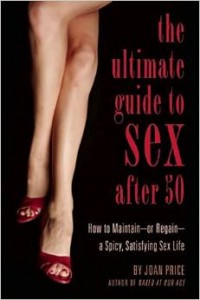 I’m devouring Joan Price’s latest book, The Ultimate Guide to Sex Over Fifty, and hope to post a review in another week or two. Meantime I ran across the following marvelous quote from writer/activist Carol Queen in its pages: